

Yields Stay Stubborn as Wall Street Faces a Tariff Storm
Wednesday, April 09, 2025
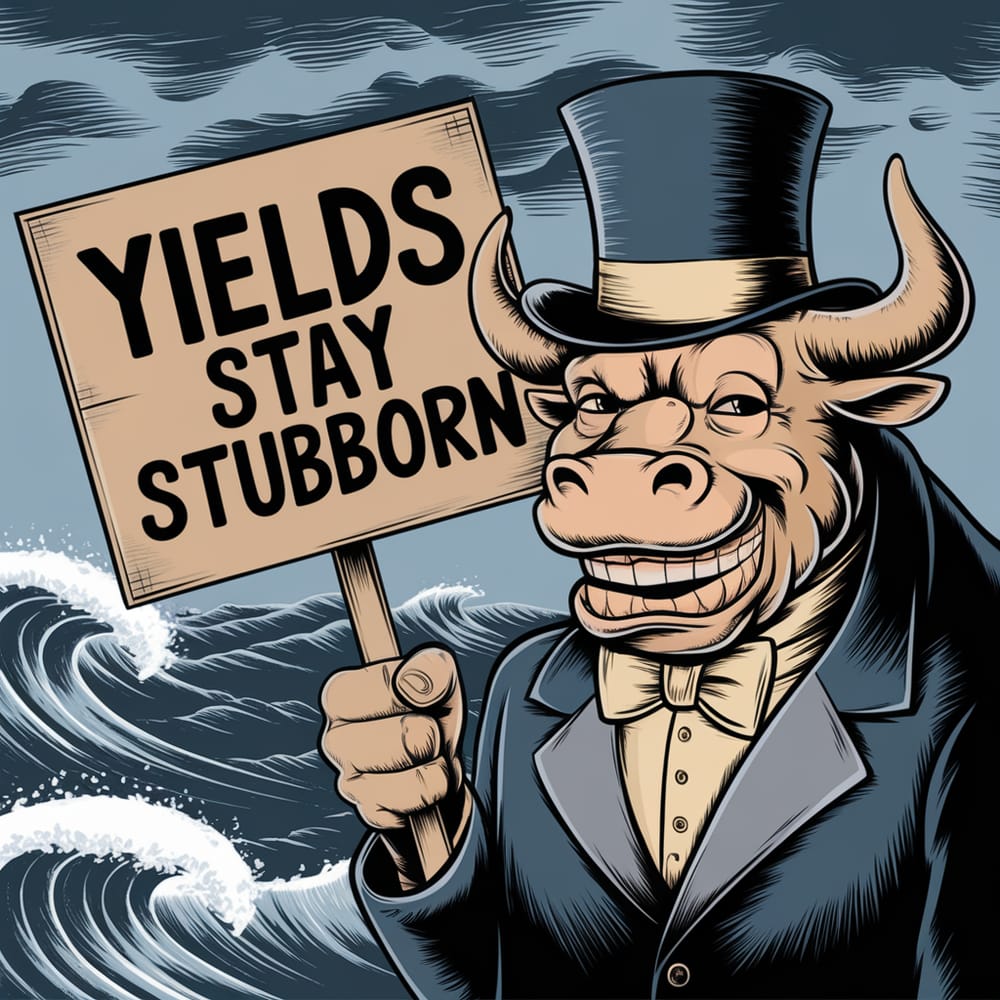
While the S&P 500 flirts with bear market territory and stocks reel from the fallout of Trump’s latest tariff barrage, bond traders are sending a puzzling signal: Treasury yields are staying higher than you’d expect in a panic.
Normally, when stocks dive, Treasurys surge as investors run for safety. But not this time. Even as equities dropped for a fourth straight session, long-term Treasury prices also fell—pushing yields up instead of down.
Why? Wall Street may be betting on a short, sharp shock rather than a lasting downturn. Traders appear to believe the economic pain from tariffs will be brief, and that the Fed will cut rates to cushion the blow.
But it’s not that simple.
Trump’s tariffs bring a tricky side effect: inflation. Import prices are poised to jump, which means the Fed might hesitate to cut rates even if the economy slows. It’s a classic tug-of-war—slower growth on one side, rising prices on the other.
This standoff is reflected in the bond market. Short-term yields are drifting lower, as markets bet on near-term rate cuts. But long-term yields remain sticky around 4.3%, hinting that inflation might linger longer than expected.
And there’s another twist: investors may be selling Treasurys to buy the dip in stocks—or even pulling out altogether amid global volatility. Some are bracing for a flood of new government debt, with the U.S. deficit already topping 6% of GDP. If a recession hits, that gap could widen fast, spooking bondholders.
Still, don’t count Treasurys out just yet. Inflation-protected bonds (TIPS) are gaining ground, and many see them as a smart hedge in a world of slow growth and disrupted supply chains.
Bottom line: this isn’t your typical flight to safety. It’s a market stuck between fear of inflation and hope for a Fed bailout. And until the dust settles, bond traders will keep second-guessing which risk matters more.
© Copyright 2024. All Rights Reserved.
© Copyright 2024. All Rights Reserved.