

Yields Reignite: How a Return to 5.2% Treasury Yields Is Shaking the U.S. Equity Landscape
Tuesday, September 29, 2026
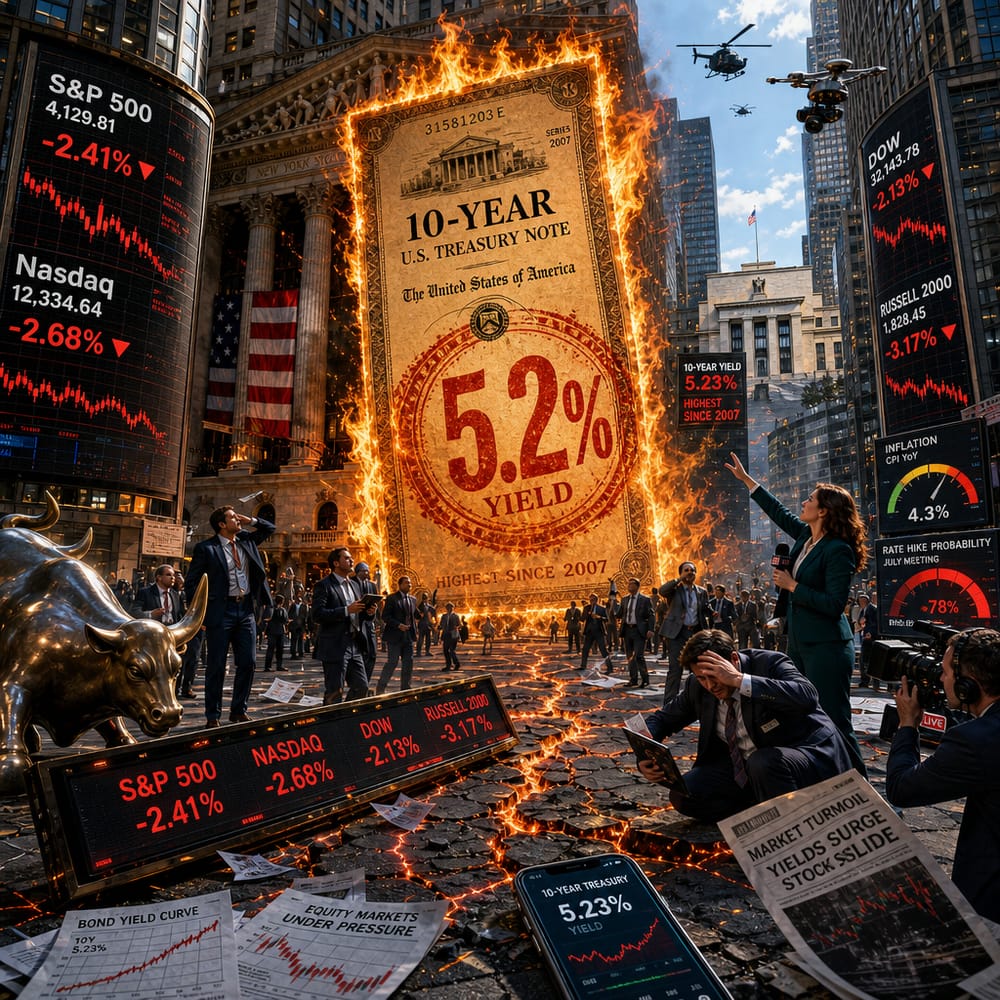
When a 10-year Treasury yield hits 5.23%, it’s like a financial earthquake rumbling through Wall Street, shaking the very foundations of equity markets far and wide. It's the highest level we've seen since 2007, back when Blackberrys were cutting edge and the housing market was hotter than a jalapeño. But today isn't just about reminiscing; it's about understanding the seismic shifts in the investment landscape and what it all means for your portfolio.
WHY YIELD SPIKES MATTER
First, let’s break down why this number is more alarming than your bank balance after holiday shopping. Rising Treasury yields essentially mean Uncle Sam is offering a juicier return for lending him money. And when government bonds become more attractive, stocks can lose some luster, creating a headwind for equities. Imagine stocks throwing a party, and suddenly, bonds show up with a better playlist and free cocktails.
Yields are a big deal because they affect borrowing costs across the board – from mortgages to credit cards to corporate debt. Higher yields mean higher borrowing costs, which can gnaw away at corporate profits and consumer spending alike.
THE MARKET’S CURRENT DANCE
The recent yield spike is putting pressure on major indices like the S&P 500, Nasdaq, and Dow. When borrowing becomes pricier, companies tend to tighten belts, and investors start to rethink those growth stock darlings promising future profits. In this environment, value stocks, which offer solid revenue right now, might start to look like the more responsible date to the investment prom.
But it’s not just about sectors shifting. The Russell 2000, which tracks small-cap stocks, also gets hit hard. Smaller firms with tighter cash flows and less margin for pricey capital tend to feel the squeeze when borrowing costs rise.
HISTORICAL FLASHBACKS
If history teaches us anything, it's that rising yields can signal a brewing storm—or sometimes a false alarm. Back in 2007, the last time yields were this high, they were a precursor to the financial crisis. But before you panic-fire your broker, remember that today's economic conditions are different. The economy is currently grappling with a hangover from pandemic-era stimulus and inflation concerns rather than systemic credit risk.
It's also worth noting that during past yield spikes, certain sectors have actually thrived. Financials often benefit from rising rates because they can charge more for loans. Meanwhile, utilities and real estate, which rely heavily on debt, might feel the heat.
SECTOR SPOTLIGHT: WHO'S HOT, WHO'S NOT
Let’s talk winners and losers in this new yield reality. Financial stocks could be the unlikely beneficiaries here—banks make more money on loans when interest rates are higher. Meanwhile, tech stocks, especially those in the growth category, might find themselves in a bit of a pickle. Their allure lies in future earnings, and when yields rise, those future dollars are worth less today.
Industrials and consumer discretionary sectors may also face headwinds. When borrowing costs rise, companies may pull back on expansion plans, and consumers might rethink that big-ticket purchase.
WHAT'S AN INVESTOR TO DO?
So, what’s the game plan? Investors navigating this landscape should consider sector rotation – shifting investments into those sectors poised to benefit from rising yields. Bonds might be getting a moment as they offer better returns, but savvy investors know diversification is key. It’s not about ditching equities altogether but rather recalibrating your holdings to ride the wave rather than getting swallowed by it.
And remember, Treasury yields also impact the broader economy, affecting everything from the cost of a new dishwasher to your monthly mortgage payment. So it’s worth keeping an eye on how these yields evolve and how they might signal future Federal Reserve actions.
In a financial world full of moving parts, staying informed and agile is more crucial than ever. Yields are indeed spiking, but with a keen eye and a strategic approach, you can navigate these choppy waters successfully. The 5.23% yield might have shaken things up, but it doesn’t have to shake your confidence.
This article is for informational purposes only and is not investment advice. Always do your own research or consult a licensed financial professional before making investment decisions.
© Copyright 2024. All Rights Reserved.
© Copyright 2024. All Rights Reserved.