

Yield Volatility in Focus — Treasury Auction Eases Spike After Surging to Two-Decade Highs
Monday, October 12, 2026
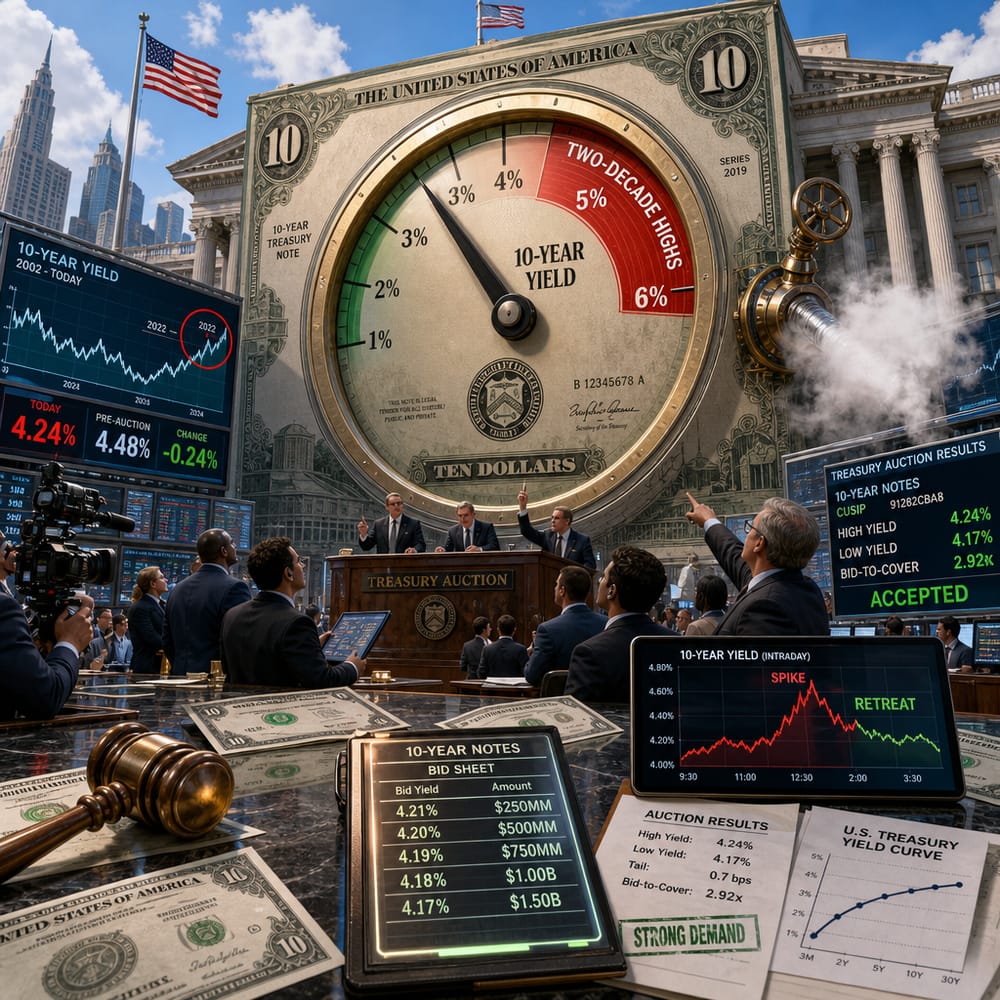
YIELD VOLATILITY IN FOCUS — TREASURY AUCTION EASES SPIKE AFTER SURGING TO TWO-DECADE HIGHS
If you thought your rollercoaster ride through the financial markets had ended, think again. The U.S. 10-year Treasury yields recently pulled off the financial equivalent of a Six Flags coaster, surging to heights not seen since the days when your phone had actual buttons (hello, 2002). But just as investors were bracing themselves for the next dizzying loop, along came a Treasury auction with a calming effect akin to a cup of chamomile tea.
Now, you might be wondering, "Why should I care about these Treasury yields?" Well, these little numbers are like the financial world's meteorologists. They forecast everything from your mortgage rates to how much bang for your buck you get when investing in stocks. When they spike, borrowing costs climb and equities often feel the heat.
THE INITIAL SPIKE: WHAT’S GOT YIELDS GOING BONKERS?
The surge in yields wasn't just a random act of financial gravity. Inflation fears and the Federal Reserve's interest rate hikes were the main culprits, acting like a double espresso shot to wake up the sleepy bond market. Investors started demanding higher returns to compensate for the anticipated decline in the purchasing power of their money. It's the economic equivalent of insisting you get extra fries with your burger to make up for yesterday's lousy meal.
Couple that with concerns over growing fiscal deficits, and you've got the perfect recipe for investors to demand higher yields. It’s like they’ve turned into Persuasion 101 professors, demanding more to loan their cash for a decade.
AUCTION TO THE RESCUE: HOW IT BOOSTED INVESTOR CONFIDENCE
Enter the Treasury auction, stage left. Investors lined up like it was Black Friday, snapping up U.S. debt with gusto. This renewed faith in government bonds helped to anchor the yields, pulling them back from their head-spinning heights. The market’s response? A collective sigh of relief that could be heard from Wall Street to Main Street.
With the successful Treasury auction, investor confidence got a much-needed boost. Think of it as the market equivalent of a group hug after a tense family meeting.
LONG-TERM EFFECTS: WHY THIS ISN’T JUST ABOUT TODAY
While the immediate aftermath of the auction has been stabilizing, the long-term implications could play out like a season of your favorite drama series. If yields remain elevated, borrowing costs could soar like a hot air balloon. This means everything from mortgages to corporate loans could get pricier, putting a damper on spending and investment.
In the grand tapestry of the economy, high yields might also mean rocky times for equity valuations. As yields climb, they tend to make bonds more attractive, which can lead to investors ditching stocks faster than you’d delete an embarrassing tweet.
However, it’s not all storm clouds. High yields can also attract investors seeking safe havens, which could ultimately stabilize the economic ship. And let's not forget, the Fed might play knight in shining armor if things get too dicey, by adjusting interest rates to keep everything ticking smoothly.
THE BIG PICTURE: STAYING THE COURSE
For everyday investors, the recent yield rollercoaster might feel like a heart-racing episode straight out of a thriller. But knowledge is power. Keeping an eye on these economic pulses can help guide your investment strategy, whether you’re diving into stocks or playing it safe with bonds.
As the yield saga continues to unfold, remember that while volatility might be the villain today, it could very well turn into an opportunity tomorrow. So, keep your wits about you, and don't let those headlines throw you off track. After all, in the ever-changing world of finance, today’s chaos could be tomorrow’s calm.
In the meantime, buckle up, because the Treasury yield ride is far from over — and it’s bound to keep the financial theater exciting in the months to come.
This article is for informational purposes only and is not investment advice. Always do your own research or consult a licensed financial professional before making investment decisions.
© Copyright 2024. All Rights Reserved.
© Copyright 2024. All Rights Reserved.