

Yen Weakens Further Amid BOJ Caution, As Dollar Gains from Oil-Driven Risk Aversion
Friday, October 09, 2026
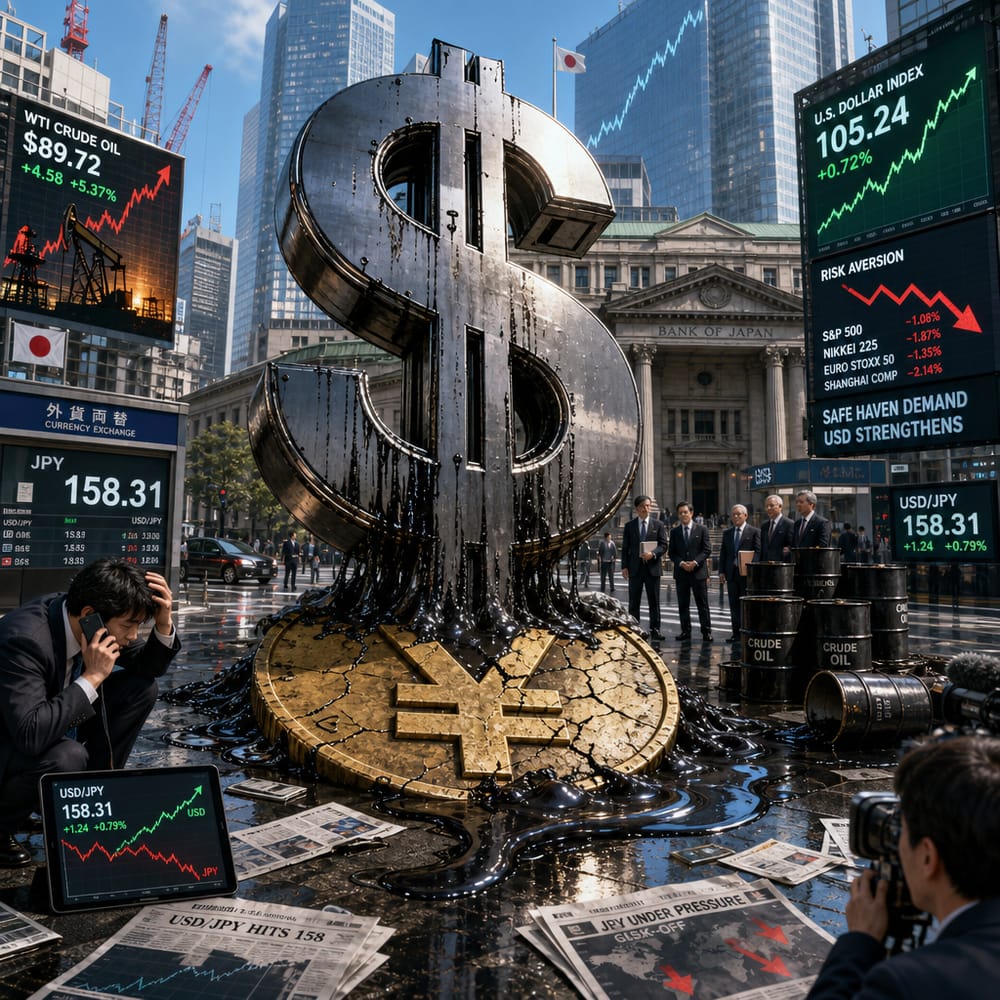
The yen is currently taking a dive of Olympic proportions, and it’s making waves in the currency swimming pool. Facing off against a strong U.S. dollar, the yen has slumped to 158.31 per dollar, its weakest level in years. With the Bank of Japan (BOJ) maintaining a cautious stance, the yen is under pressure. Meanwhile, Uncle Sam is flexing financial muscles, aided by rising oil prices sparking risk aversion across the globe.
So why should you, the everyday investor, care about the yen trying out for a synchronized diving team? Simply put, it’s about the broader picture of market dynamics and what the BOJ’s dovish posture spells for your investments.
THE RISKY BUSINESS OF YEN DEPRECIATION
Think of the yen right now as that one friend who always says, “I’m fine,” while clearly not being fine at all. The risk of yen depreciation isn’t just a blip on the radar; it could escalate into an economic headache. A weaker yen means Japan's imports, like oil and gas, become more expensive. This could potentially lead to inflation, which Japan, with its aging population and stagnant wage growth, has been trying to avoid like the plague.
But that’s not all. There’s a real danger of a vicious cycle: as the yen falls, Japanese investors might start looking for better returns overseas, further weakening the yen. This is akin to kicking someone while they’re down, financially speaking. For U.S. investors, this might mean reconsidering your exposure to Japanese markets if the yen continues on this slippery slope.
BOJ VS. GLOBAL CENTRAL BANKS: WHO’S THE DOVISH DIVA?
In the world of central banks, the BOJ is currently playing the role of a cautious dove against a backdrop of hawkish hawks. While other major central banks, like the Federal Reserve, have been on a rate-hiking spree to combat inflation, the BOJ is sticking to its guns of ultra-low interest rates. It's like everyone else is training for a marathon, and the BOJ is chilling with a nice cup of tea.
This divergence is one reason the yen is losing its footing. The Fed’s aggressive stance makes the dollar more attractive, prompting investors to flock to the greenback and away from the yen. This isn’t just a currency tug of war; it’s a full-blown wrestling match, with the yen currently tapping out.
OIL PRICES: THE UNEXPECTED PLAYER
Now, let’s throw in some spicy seasoning with rising oil prices and geopolitical tensions. With Russia’s recent moves to supply diesel globally, there's potential relief on the horizon, but uncertainties remain. High oil prices generally trigger risk-averse behavior in investors, and guess where they run for cover? The good ol’ greenback. It’s a classic case of running to the safest house in the storm.
For markets already jittery from rising Treasury yields and market volatility, oil prices are the ghost in the machine, pushing investors to seek stable ground—often at the expense of the yen.
WHAT DOES THIS MEAN FOR YOU?
If you’re holding assets in yen or are thinking about investing in Japanese markets, it’s time to pay attention. Monitor the BOJ’s moves and read the financial tea leaves. The BOJ could intervene if the yen's fall becomes too steep, but for now, it’s more about watching and waiting.
On a broader scale, consider what global currency dynamics mean for your portfolio. A stronger dollar has implications for U.S. exports and multinational companies. When the dollar flexes its strength, it can act as a double-edged sword—hurting those earning revenues abroad while making imports cheaper back home.
In the end, this currency drama is a reminder of how interconnected our financial world is. A yen in Japan cries out, and the echoes are felt in portfolios around the globe. So, fellow investors, keep your eyes peeled and your ears to the ground. In the world of currency, today’s twist could be tomorrow’s tumble.
This article is for informational purposes only and is not investment advice. Always do your own research or consult a licensed financial professional before making investment decisions.
© Copyright 2024. All Rights Reserved.
© Copyright 2024. All Rights Reserved.