

Workday (WDAY): Analyst Downgrade Amid Valuation Concerns
Saturday, August 29, 2026
WORKDAY WONDER OR WORKDAY WOE?
Ah, the stock market: where what goes up doesn't always stay up and what goes down sometimes gets a mysterious boost. Case in point: Workday (WDAY). While everyone else is buzzing about Trump's latest 250-foot monument to himself or deciphering whether tennis-inspired cocktails are worth thirty bucks, let’s talk about something really spicy: Workday's recent analyst downgrade.
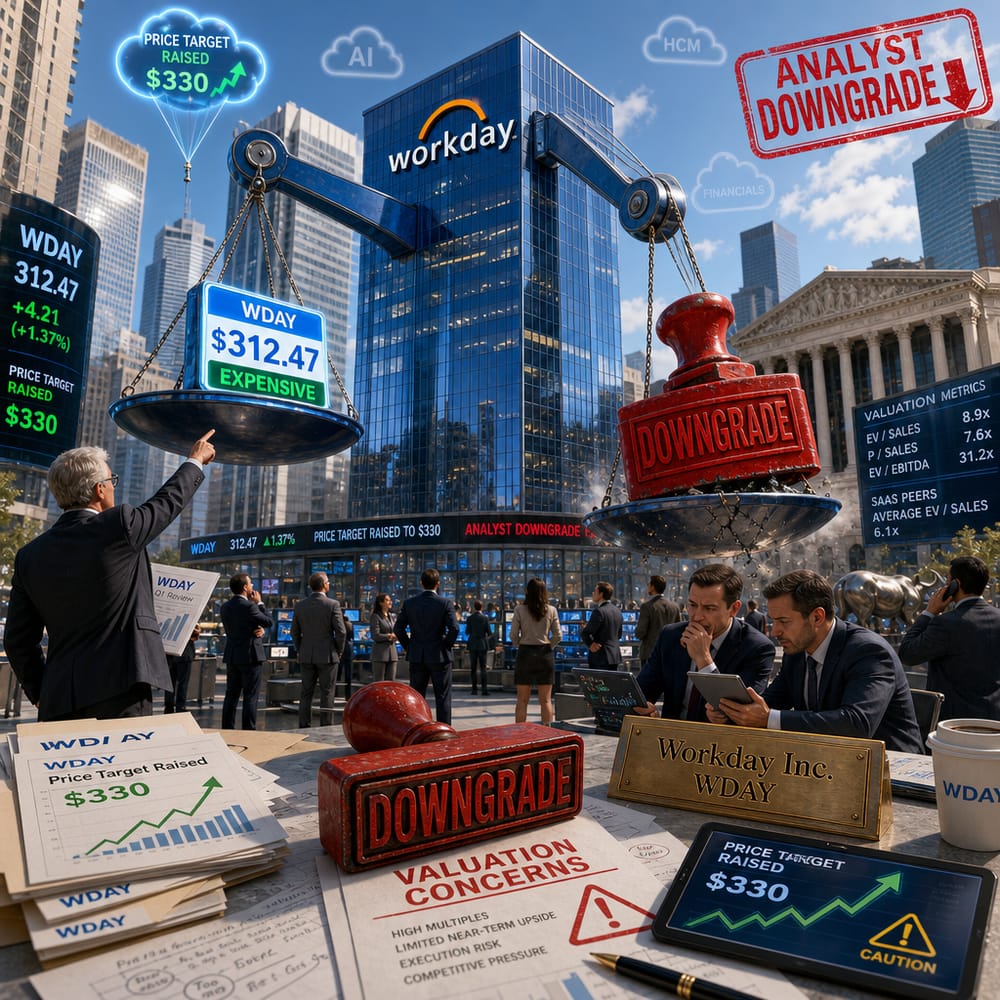
Here's the juicy bit. Freedom Broker, an esteemed name in the world of stock whispers, just downgraded Workday. But hold onto your hats, folks—they also raised its price target. If that sounds more perplexing than a caviar-coated chicken nugget, you’re not alone. So, what’s the scoop here?
THE GREAT PRICE TARGET PARADOX
You’d think a higher price target signals sunny skies ahead, right? Not quite. The analyst downgrade usually implies some clouds are forming. The paradox here is rooted in that elusive concept of "valuation." Think of it like this: it's not about having the fastest car in the race; it's about getting the most bang for your buck, or in market terms, the most return on your investment.
So why did Freedom Broker play this confusing game of financial Twister? Well, Workday’s price target hike means they expect the stock to rise. But before you run to buy, the downgrade suggests it's overvalued at current levels. Imagine walking into a luxury car dealership and realizing the car's sticker price might be just a tad too aspirational for what you're getting.
VALUATION 101: THE WORKDAY SITUATION
Let’s break down the valuation metrics that have investors sweating more than a tennis fan shelling out for a Ralph Lauren ball crew shirt. When analysts talk valuation, they mean things like price-to-earnings ratio (P/E), which measures a company's current share price relative to its earnings per share. A high P/E ratio for Workday means investors are willing to pay a premium for expected future growth, but it also hints that the stock might be more expensive than it’s worth.
Then there's the price-to-sales ratio (P/S), giving us the company’s market value compared to its revenue. A ballooning P/S might mean investors are overly optimistic about sales growth. And Workday’s numbers? Let’s just say they’ve been on the loftier side of things, raising eyebrows among the number crunchers and bean counters alike.
FEELING THE MARKET SENTIMENT
In this wild world of tech stocks, Workday isn’t the lone ranger facing valuation scrutiny. Tech companies are like the cool kids in school — everyone’s watching, and many are shelling out premium prices just to sit at their table. But as Freedom Broker’s move suggests, the market's love affair with tech is getting a little more... discerning.
Investors are starting to wonder if they're paying too much for tech's promise of the next big thing. It's like buying concert tickets only to realize you might be better off listening on Spotify. So, Workday's downgrade might be a bellwether, hinting at a broader re-evaluation in the tech space.
WHAT’S NEXT FOR WORKDAY?
So, what’s on tap for Workday investors? While the downgrade might feel like a splash of cold water, it’s also a nudge to take a good look under the hood. The stock’s future isn’t doomed; it’s just adjusting to a new reality. Investors will need to decide if they're willing to ride out the valuation wave or if it’s time to pivot to stocks with a more appealing price tag.
In the grand arena of the stock market, where drama is second only to reality TV, keeping an eye on companies like Workday can offer valuable lessons. Namely, that price tags aren't always the biggest indicator of value, and a dash of skepticism can be your best companion.
So, next time you sip your overpriced tennis cocktail or ponder a Trumpian arch, remember: in the market, like in life, it's all about balancing the act and not getting swept away by the high tides of hype.
This article is for informational purposes only and is not investment advice. Always do your own research or consult a licensed financial professional before making investment decisions.
© Copyright 2024. All Rights Reserved.
© Copyright 2024. All Rights Reserved.