

Wildfire Threat in British Columbia’s Wine Region Spreads Market Ripples
Saturday, August 08, 2026
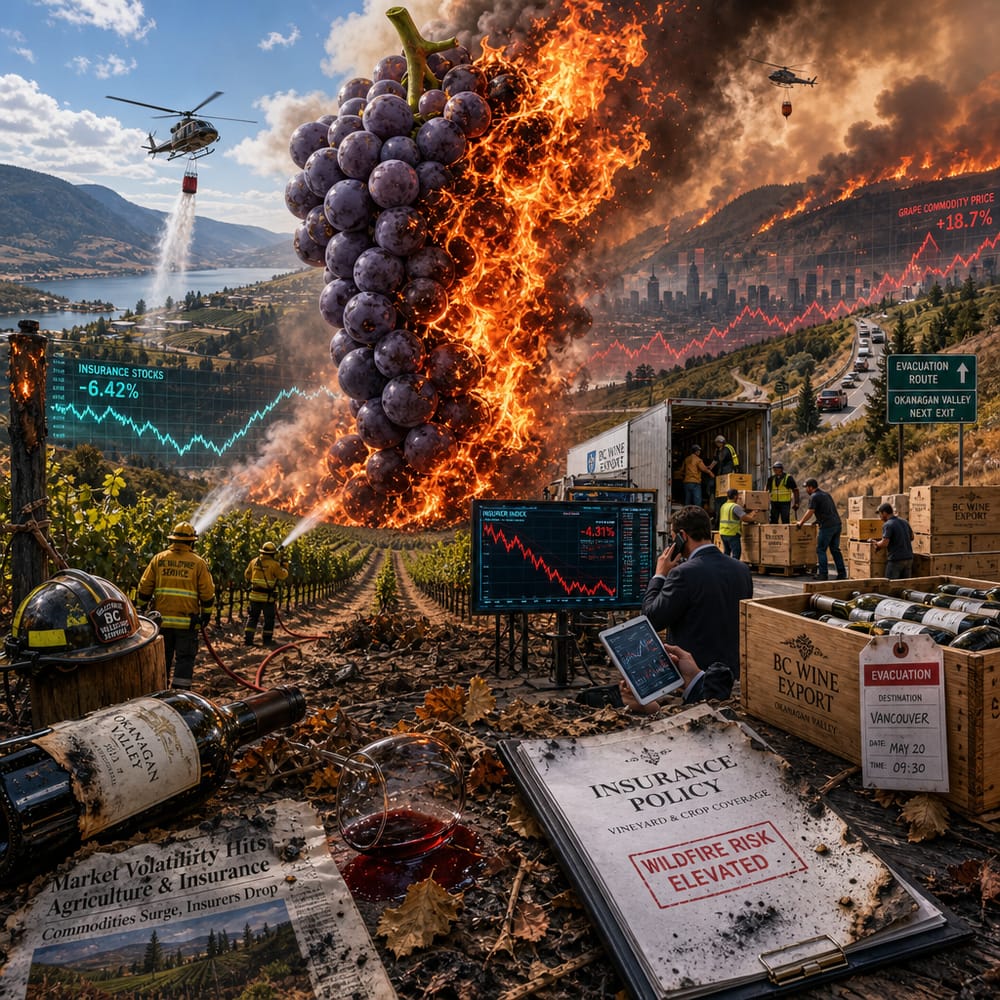
THE HEAT IS ON: THE WILDFIRE IN BC'S WINE COUNTRY AND ITS RIPPLE EFFECTS
Picture this: a wildfire the size of a small country rampages through British Columbia's wine heartland, leaving charred vines and panicked vintners in its wake. As flames lick the vineyards of this picturesque Canadian province, the financial world is feeling the heat. Why? Because when it rains ash, it pours market tremors.
Welcome to British Columbia's Okanagan Valley, the Napa of the North. Normally, this region is a serene paradise known for its lush vineyards, award-winning wines, and idyllic landscapes. But thanks to Mother Nature's fiery tantrum, it's currently playing the unwelcome host to one of the region's most severe wildfires in recent memory. Thousands are fleeing the flames, and the market isn't far behind.
Supply chain disruptions are the name of the game here, and it's causing some serious déjà vu. Remember those toilet paper shortages? Well, grab your wine glasses, because we might be in for a soggy sequel. When a major wine-producing area like this gets torched, the ripple effects can stretch all the way to your local wine aisle in the U.S.
COULD THIS LEAD TO PRICE HIKES OR SUPPLY SHORTAGES?
Short answer: absolutely. First, think about all those luscious grapes that won't make it into a bottle this year. That’s a lot of Cabernet Franc and Pinot Gris up in smoke. With a reduced supply, we could see a spike in prices on our favorite bottles. Scarcity has a funny way of making things more expensive.
And it's not just about fewer bottles. Supply chain bottlenecks could make it even harder to get Canadian wine across the border. Expect delays, fewer selections, and perhaps a few disappointments when you can't find your go-to merlot at the local liquor store.
WHICH COMPANIES ARE FEELING THE BURN?
Now, who’s in the direct line of fire? Well, any company that’s been banking on Canadian grapes is likely sweating a bit more than usual. Consumer packaged goods (CPG) companies with product lines relying on these wines could see their costs rise, margins shrink, and headaches grow.
Then there are the insurers. Oh, the poor, beleaguered insurers. Those tasked with covering agricultural losses in the Okanagan might be re-evaluating their life choices right about now. They’ll likely be hit with a barrage of claims from vineyard owners, many of whom might have underinsured their properties or produce.
Agricultural insurance companies already have a tough job, balancing the risks of acts of god and nature. Now, they'll be facing potentially hefty payouts, which can ripple through the sector, affecting stock prices and profit margins.
SO, WHAT DOES THIS MEAN FOR INVESTORS?
If you’re heavy on wine investments or insurance stocks, you might want to brace yourself. The market might be getting a little frothy. As the wildfire's embers cool (fingers crossed), watch for short-term volatility.
For the long-term investor, opportunities might arise. Companies that manage to adapt quickly and innovate could emerge stronger. Remember, grapevines grow back, and so does market confidence. It's all about weathering the storm—or, in this case, the inferno—as companies adjust, pivot, and rise from the ashes.
And, of course, as the wine world deals with this fiery curveball, it’s also a reminder of the broader impacts of climate change. As extreme weather becomes more frequent, regions like the Okanagan might have to rethink how they protect their vineyards and businesses.
In the meantime, keep an eye on those stocks and perhaps pour yourself a glass of wine—while supplies last. Cheers to staying informed and making smart moves, even when the flames are high and the market's on edge.
This article is for informational purposes only and is not investment advice. Always do your own research or consult a licensed financial professional before making investment decisions.
© Copyright 2024. All Rights Reserved.
© Copyright 2024. All Rights Reserved.