

Why the Fed May Stay on Hold Longer Than Wall Street Hopes
Monday, June 16, 2025
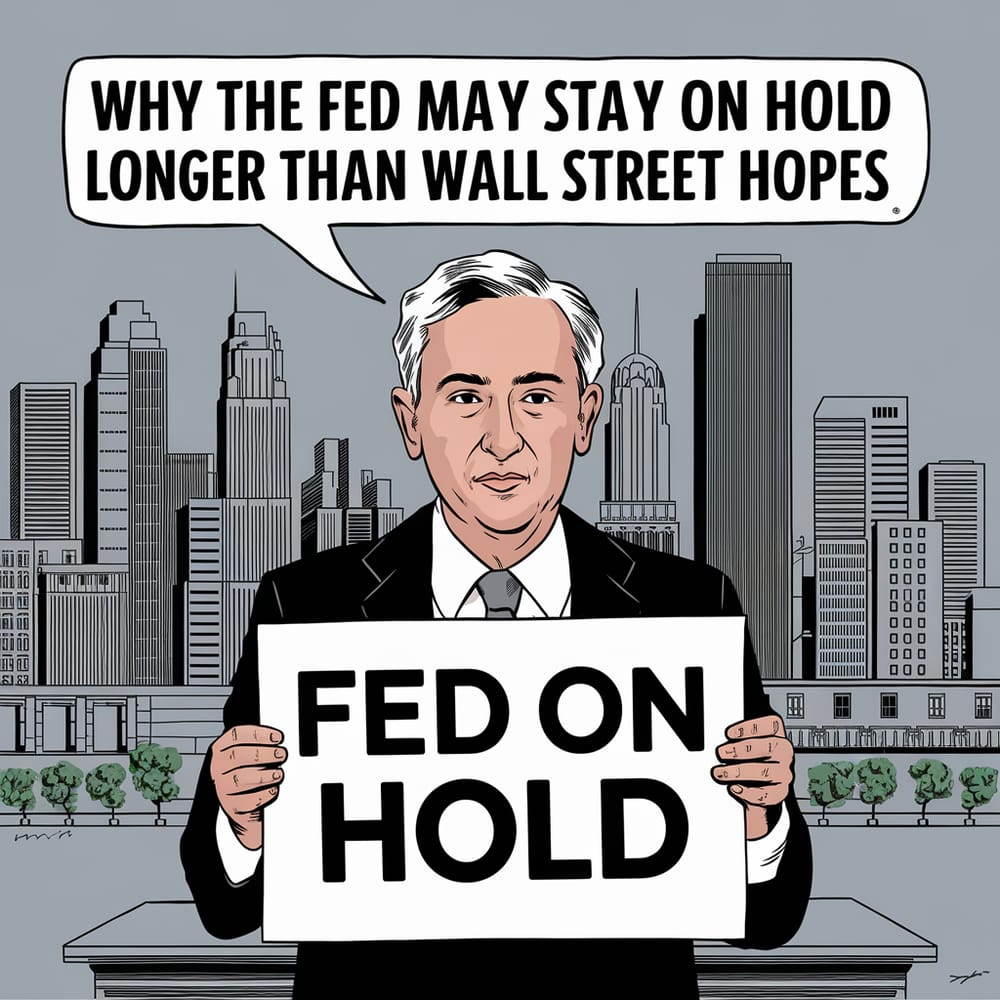
Wall Street may be warming to the idea of interest rate cuts, but the Federal Reserve appears to be in no rush to act—especially with economic uncertainty still lingering.
The case for patience? A mix of moderating inflation, a stable labor market, and rising doubts about the long-term impact of President Trump’s tariffs. While consumer sentiment recently rose for the first time this year and unemployment remains at a healthy 4.2%, Fed officials say it’s too soon to declare victory over inflation.
Former Fed official Loretta Mester pointed out that although recent data has been encouraging, the second half of the year remains a question mark—particularly as the full effects of Trump’s tariff regime are still playing out. The Fed, she said, needs more clarity on how tariffs, fiscal policy, and potential labor market shifts will impact inflation and growth.
Trump’s 10% baseline tariffs remain in place, with unilateral hikes expected soon. Although some “reciprocal” tariffs were paused, industry-specific levies on steel, aluminum, and autos are still active. A recent U.S.–China agreement may ease some tensions, but details remain sparse.
For now, markets are betting on a September rate cut, with a smaller chance of one in July. But Fed watchers caution that unless there’s clear labor market weakness or a confirmed inflation decline, the central bank is likely to hold steady. Inflation data is still clouded by businesses and consumers stockpiling ahead of tariffs, which may be skewing the numbers.
HSBC economist Ryan Wang warned that the Fed won’t move until it’s confident inflation isn’t rising in an “uncontrolled fashion” and economic activity isn’t slipping too quickly.
Bottom line: The Fed isn’t convinced it’s time to cut rates. With mixed signals from inflation, tariffs still in flux, and a resilient job market, policymakers are staying in “wait-and-see” mode. Wall Street may want cuts—but the Fed wants confirmation.
© Copyright 2024. All Rights Reserved.
© Copyright 2024. All Rights Reserved.