

Wholesale Prices Ease Further as Input Costs Ease, Reinforcing CPI Trends
Tuesday, August 18, 2026
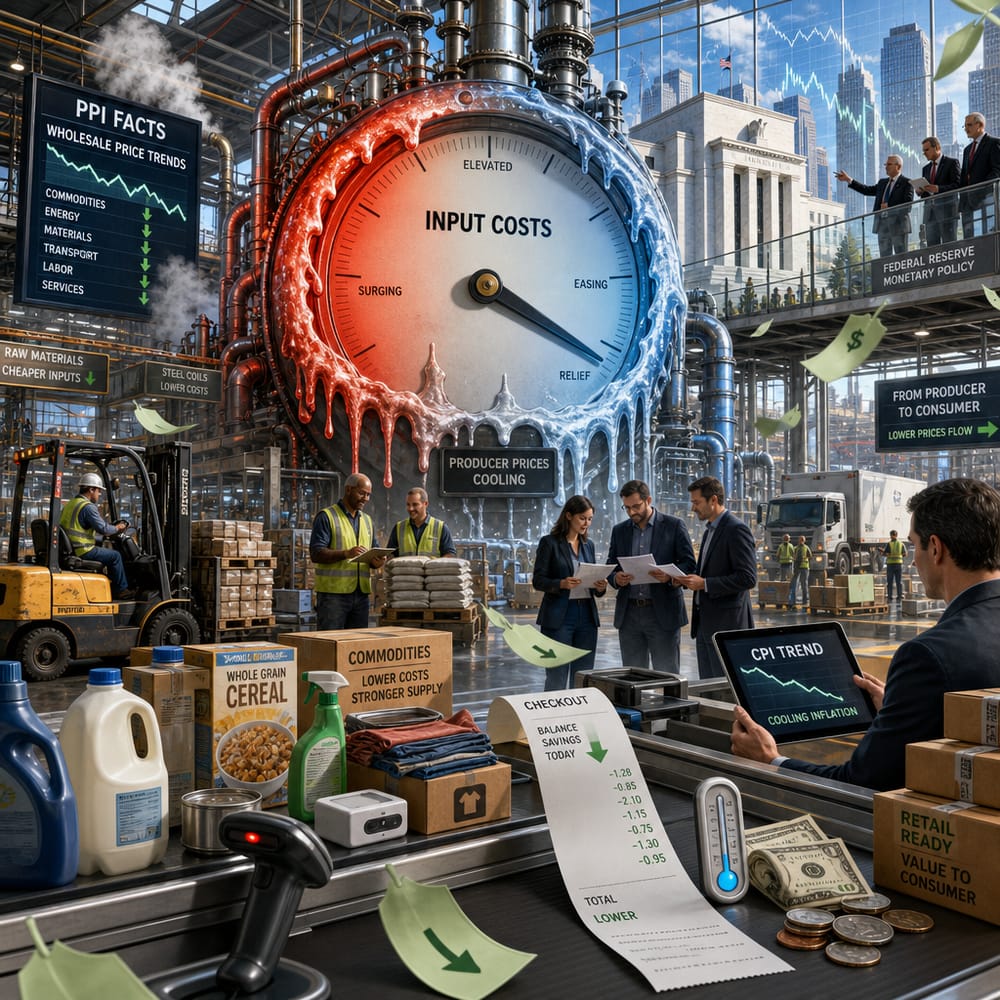
WILL THE FED DANCE TO THE TUNE OF FALLING WHOLESALE PRICES?
The Producer Price Index (PPI) just dropped more hints of disinflation than a conspiracy theorist’s forum. Wholesale prices are easing, providing a glimmer of hope that your grocery bill might not make you weep next month. But hold your horses—or shopping carts. Let’s break down what’s really going on here and why the Fed’s coffee break just got a lot more interesting.
First, what the heck is this PPI? Imagine it as the backstage pass to the economy’s concert, where wholesale prices are the roadies setting the stage for the Consumer Price Index (CPI) to rock the house. If PPI takes a nosedive, CPI might just follow suit, making everything from Cheerios to shampoo less of a wallet-buster.
But before you start planning what you'll do with all this new ‘found’ money, it’s worth asking: which sectors are sliding down this price ladder? While it’s not quite a landslide, there’s a definite shuffle going on.
MANUFACTURING CHEERS, ENERGY JEERS
Manufacturers are throwing a mini-party as input costs recede, like a tide pulling back to reveal more reasonable price tags. Raw materials and transportation costs have loosened their grip, which could mean cheaper goods down the line. Think of it as a domino effect where the first piece is the cost of steel, and the last is how much you pay for your bicycle.
On the flip side, energy prices are trying to steal the show with a stubborn refusal to drop significantly. Even though crude oil prices have had their moments of mellowing out, geopolitical tensions seem to love throwing curveballs just when we think we’ve got it under control. The U.S. president's social media antics regarding the Strait of Hormuz don't help either—just when we thought we could enjoy a breath from high energy costs, in comes a gust of uncertainty.
CONSUMER GOODS: THE WATCHED POT
So where does this leave us with the CPI? Cue the suspenseful music. Cheaper wholesale prices usually play the leading role in pushing consumer prices down eventually, but like any good drama, timing is everything. If you’re waiting for the CPI to budge, grab some popcorn. While it’s likely to shift, it’s going to take a little time before the whole cast catches up.
Key sectors like consumer goods are poised on the edge of their seats. If manufacturing costs continue to decline, expect a ripple effect reaching your local store shelves. That means potential relief in the cost of everything from your morning coffee to the couch you keep threatening to replace.
WILL THE FED SWEAT OR SWAY?
Then there’s the question of how the Federal Reserve will respond. Falling wholesale prices might make them pause and rethink their strategy of hiking interest rates to combat inflation. After all, lower input costs could reduce inflationary pressures on consumer prices, allowing the Fed to take a breather rather than reaching for the rate-hike stick.
But here’s the twist: the Fed doesn’t only consider current data; it’s all about what’s down the road. They’ll be watching to see if these trends stick or if they're just a temporary blip in the data matrix. If this disinflation trend gains momentum, it could alter their monetary policy path and, by extension, the interest rates that steer everything from your mortgage to your car loan.
THE WAITING GAME
So, should you start counting your savings just yet? Not exactly. While the trend is promising, it’s still like being promised rain during a drought—you're hopeful but skeptical. Keep an eye on the manufacturing and consumer goods sectors, as these will be the ones to watch for early signs of a ripple effect.
In the meantime, let’s appreciate the irony of economics: as much as we’d like the Fed to react like a short-order cook, the markets are a slow-cooked stew, simmering with flavors old and new. The recent PPI data is a spice in this mix, and whether it makes the stew savory or sour remains to be seen.
For now, let’s keep our fingers crossed and our wallets ready—just in case we get to keep a little more of what’s in them.
This article is for informational purposes only and is not investment advice. Always do your own research or consult a licensed financial professional before making investment decisions.
© Copyright 2024. All Rights Reserved.
© Copyright 2024. All Rights Reserved.