

Wholesale Prices Decline, Stabilizing Inflation Outlook
Tuesday, August 18, 2026
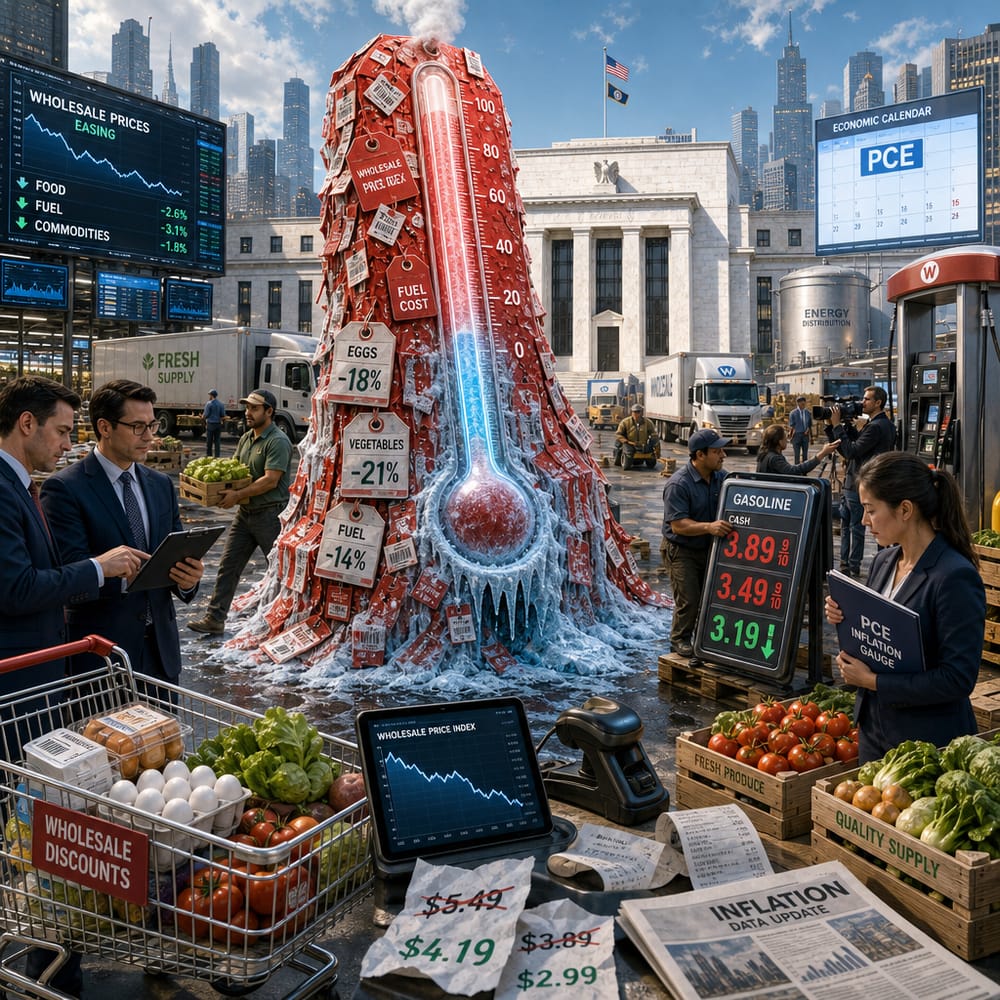
If you’ve ever found solace in the sweet reprieve of stable prices at the gas station or the grocery store, then you’re in for a treat. Wholesale prices just took a delightful dip, thanks to a decrease in food and gas costs. It’s like the economic equivalent of finding a 20-dollar bill in an old coat pocket. This decline could signal the dawn of a more stable inflation landscape just before the Federal Reserve releases its much-anticipated PCE (Personal Consumption Expenditures) inflation report.
WHY WHOLESALE PRICES MATTER
First off, let’s talk about wholesale prices. They’re like the secret backstage pass to the world of retail. When wholesale prices drop, it doesn’t guarantee instant savings at the checkout counter, but it’s a hint that those savings might be on their way. Think of it like a chef’s tasting menu for inflation. If the ingredients get cheaper, eventually, the meal costs less.
The recent decline comes courtesy of reduced prices in food and gas—two major players everyone loves to hate when they’re high. The wholesale price index is our trusty guide through this murky economic terrain, and right now, it’s charting a course toward calmer waters.
FED POLICIES AND YOUR WALLET
Now, here’s where it gets spicy for the Federal Reserve and, by extension, your wallet. Stable inflation means the Fed gets a bit of breathing room. Instead of reaching for the panic button on interest rates, they might just lean back a bit. Lower interest rates can mean cheaper loans and mortgages, giving the economy a jolt of energy like a double-shot espresso.
The Fed has been playing a high-stakes game of chess with inflation, trying to manage economic growth without scaring off investors or causing a market meltdown. With lower wholesale prices setting the stage for potential stability, the Fed might just have the room it needs to make interest rate decisions that don’t tighten the screws on economic growth.
THE INFLATION EXPECTATION GAME
You’re probably wondering, how does all this tie into the inflation expectations? Well, when prices at the wholesale level begin to taper off, it implies that future inflation might also take a breather. For retail investors, this is huge. Imagine trying to plan a family budget or make investment decisions when you don’t know what the cost of goods will be next month. It’s like trying to hit a moving target while blindfolded.
Stable inflation gives everyone—from giant corporations to mom-and-pop shops—a better chance to plan and invest in the future. If investors expect inflation to stabilize, they’re more likely to make long-term investments, which can drive economic growth.
THE RIPPLE EFFECT ON THE ECONOMY
A more predictable inflation environment helps the Federal Reserve take a measured approach to monetary policy. This stability is beneficial for maintaining economic growth. When inflation is low, consumers have more purchasing power—meaning your dollar stretches further. Plus, businesses are more likely to pass on savings to consumers, potentially leading to a virtuous cycle of spending and growth.
But let’s not get carried away on a unicorn ride through an economic utopia. While the dip in wholesale prices is promising, the global economic landscape is still peppered with uncertainties. Tensions in the Middle East and fluctuating bond yields remind us that there are always new obstacles on the horizon.
BOTTOM LINE
The decline in wholesale prices is a promising development on the inflation front. It’s like a glimmer of hope in an economic landscape that’s been shaky at best. For the Federal Reserve, this could mean a steadier hand in crafting policy decisions, influencing everything from your mortgage rate to your investments.
So, as we eagerly await the Fed’s PCE release and the ripple effects it might have on the economy, take a moment to appreciate that little bit of breathing room in the world of wholesale prices. It might just mean fewer surprises the next time you fill up your tank or buy groceries. And for retail investors, this stability offers a more predictable playing field, making those financial decisions just a tad less daunting.
This article is for informational purposes only and is not investment advice. Always do your own research or consult a licensed financial professional before making investment decisions.
© Copyright 2024. All Rights Reserved.
© Copyright 2024. All Rights Reserved.