

Wholesale Price (PPI) Flattening Signals Potential Consumer Relief Ahead
Monday, August 17, 2026
WHOLESALE PRICE (PPI) FLATTENING SIGNALS POTENTIAL CONSUMER RELIEF AHEAD
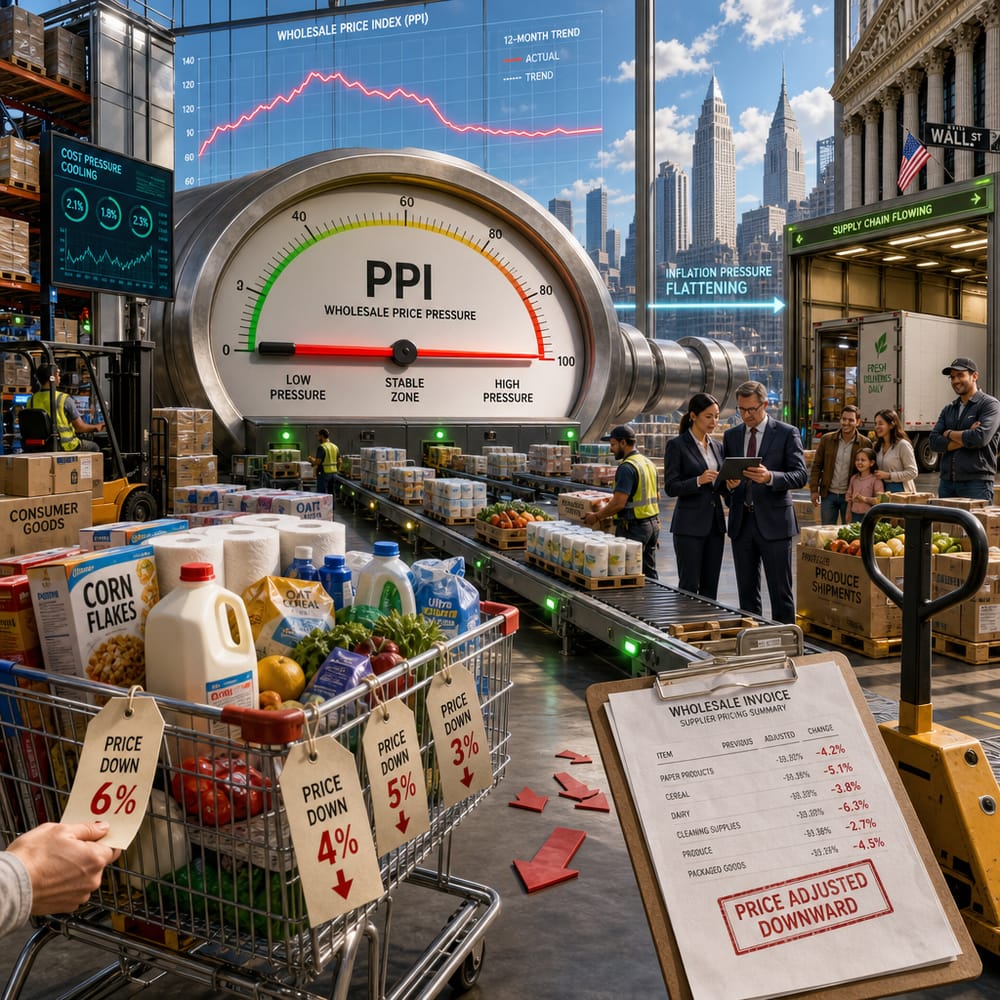
If you’ve been wincing at the grocery store checkout, relief might finally be on the horizon. Buckle up, because there's some intriguing news from the world of wholesale prices. The Producer Price Index, the Wall Street equivalent of a fever thermometer for wholesale prices, is showing signs of mellowing out, and this could mean a little less heartache for your wallet.
So why is the PPI important to you, the person who just wants to buy that cup of coffee without feeling like you've contributed to someone's college fund? Well, for starters, it's a precursor to consumer prices. Wholesale prices are like the whispers of what's to come on the shelves. If they're cooling off, it often means that retail prices might, in due time, follow suit. Let's break down why this is happening and what it might mean for your bank account.
IS THE PPI PULLING A FROZEN?
It’s not quite an Elsa-level freeze, but the Producer Price Index has definitely been doing a convincing impression of a sloth on a hammock. For the uninitiated, the PPI measures the average change over time in the selling prices received by domestic producers for their output. It's a vital piece of the economic puzzle because it tells us how much producers in various sectors are charging for goods, before they end up in the shopping cart.
The slowdown in wholesale price inflation can be attributed to a few key factors. Supply chains, which seemed to be as tangled as a pair of headphones left in a pocket, have started to unknot. Global logistics are taking a collective exhale as shipping costs retreat from their Everest-like heights. Additionally, energy prices have taken a breather from their previously frenetic pace. With crude oil prices stabilizing somewhat, the ripple effect is being felt across industries like transportation and manufacturing, keeping a lid on their input costs.
THE TRICKLE-DOWN EFFECT
So, what does this mean for you, dear consumer? If wholesale prices are flattening, there’s a good chance that the extra costs manufacturers and retailers have been absorbing won’t be passed onto you, or at least not at the same breakneck speed. This is promising news for anyone who buys stuff—so, basically, everyone. If you're a regular at the cereal aisle or a frequent flyer in the electronics department, this could translate to less steep price hikes or even (gasp) stable prices.
But hold the celebratory fanfare for a moment. It’s important to remember that consumer prices don’t immediately echo changes in the PPI. Think of it as a slow dance rather than a sprint—there’s a lag as these shifts work their way through the supply chain and onto store shelves.
BROADER ECONOMIC RAMIFICATIONS
The implications of this trend are considerable. A cooldown in wholesale prices could ease the relentless inflationary pressure that has been a thorn in the side of economic growth. Consumer spending might get a new lease on life, especially crucial as it constitutes the lion's share of economic activity in the United States.
For markets, this could be a bit of a bellwether. If consumer prices start to stabilize, it could encourage investor confidence and spur more spending. Stocks in consumer goods sectors could find themselves on a sunnier path, given that reduced inflationary pressures often lead to better profit margins.
However, it’s not all roses and rainbows. A significant slowdown in inflation might nudge central banks to reconsider their monetary stance. Faced with a cooler inflation climate, they might take their foot off the interest rate pedal, which could have its own set of consequences for borrowers and savers alike.
THE ROAD AHEAD
While we can't whip out the crystal ball to predict the exact trajectory of consumer prices, the signs emerging from the PPI camp are cautiously optimistic. Keep an eye on key economic indicators and sector-specific reports to better gauge how these changes might pan out. If the stars align, that frozen food aisle might just become a bit friendlier.
In the meantime, stay tuned and keep watching those receipts. The world of prices might just become a bit less frantic, one PPI report at a time. And if you're a retail investor, perhaps consider the implications for consumer goods stocks—there might be some opportunity lurking amidst the price tags.
This article is for informational purposes only and is not investment advice. Always do your own research or consult a licensed financial professional before making investment decisions.
© Copyright 2024. All Rights Reserved.
© Copyright 2024. All Rights Reserved.