

Wholesale Price Inflation Falls as Input Costs Ease, Further Evidence of Disinflation
Saturday, August 15, 2026
WHOLESALE PRICE INFLATION: WHEN CHEAPER GAS MEETS YOUR WALLET
Imagine you're standing at the gas pump, ready to fill up your tank, and suddenly the numbers don't spin quite so fast. No, you haven’t entered a time warp back to the good old days of cheap gas; you might just be witnessing the impact of a trend that's slowly unfurling across the economy. Wholesale price inflation is down, and it’s bringing good tidings for your wallet—or is it?
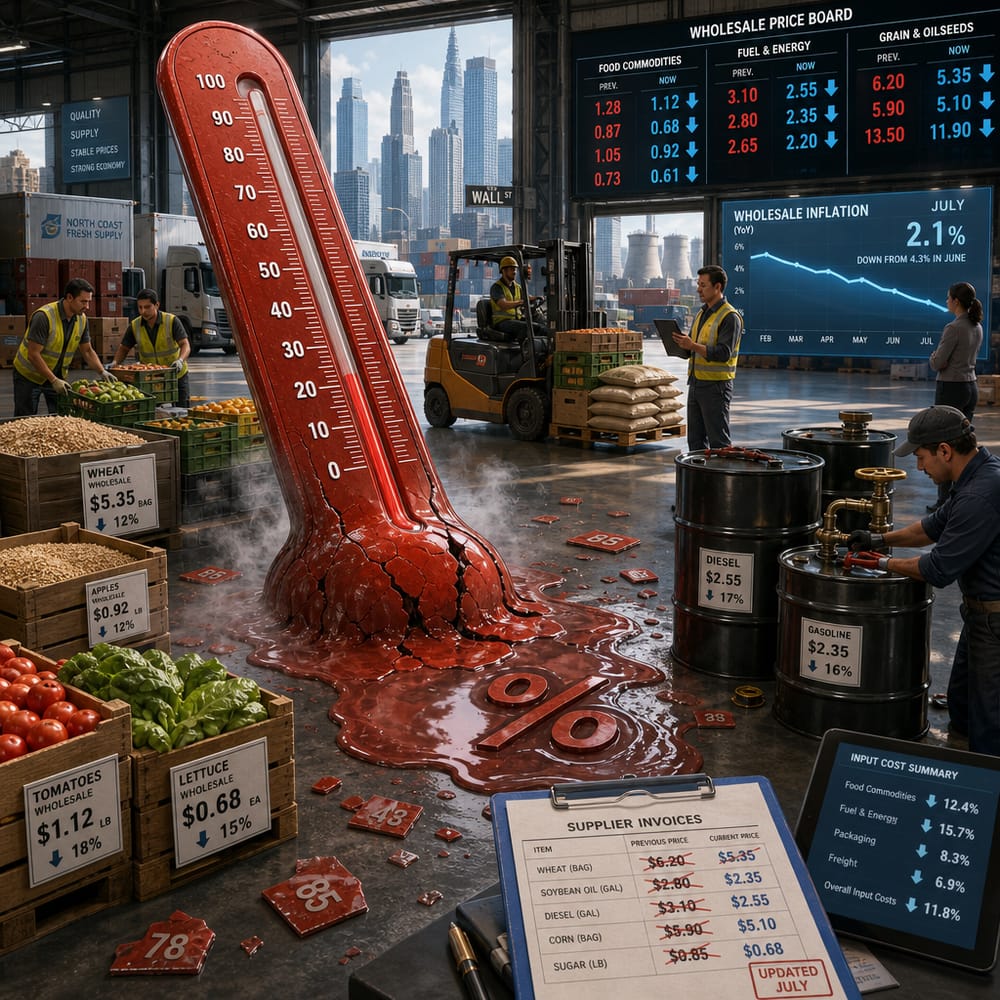
Wholesale price inflation, the change in price producers pay for goods before they hit the shelves, dropped like a stone in July. Lower costs for gas and food were the heroes this time around, giving the larger disinflation trend some added muscle. If you’ve been feeling the pinch every time you hit the checkout counter lately, these changes might be a reason to breathe a tiny sigh of relief. But hold that breath; let’s see what this truly means.
SHOW ME THE DRIVERS
So, what’s causing this dip in wholesale prices? Mainly, it’s a combination of decreasing input costs. Gas prices have taken a breather, trickling down from the stratospheric levels we saw last year. Less money spent on gas means producers aren’t passing as much of those costs onto you. And when it comes to food, some prices have seen a mild cooldown. The result? A softer impact on the overall costs producers face.
But before you picture yourself in a utopia where prices drop while your wages inexplicably rise, let’s temper expectations. The journey from wholesale to retail doesn’t happen overnight. It’s more of a winding path, and potholes could slow things down—supply chain issues, geopolitical tensions, or even fluctuating demand could all play party poopers.
WHAT DOES THIS MEAN FOR YOU?
Here’s the good news: If wholesale price trends continue their downward jig, it could mean less pressure on consumer prices in the coming months. Retailers, once they’ve caught their breath from the whirlwind of past cost increases, might start passing along some savings. But don’t start planning your shopping spree just yet.
Historically, fluctuations in wholesale prices take a bit to ripple through to consumer prices. Think of it as trying to turn the Titanic around—slow and steady wins the race… eventually. In the meantime, prices might not necessarily drop, but they could stabilize or rise more slowly, giving your wallet some much-needed respite.
RISKS ON THE HORIZON
However, as with all good things, there’s a catch. If disinflation persists and becomes more significant, it could imply slower economic growth. Why? Well, when prices stagnate or decline, companies might start tightening their belts, leading to less investment in growth or even job cuts.
Deflation, or a drop in prices, is the grim cousin of disinflation, and it's not the party guest anyone wants. It can lead to reduced consumer spending, as people hold off on purchases in anticipation of even lower prices, kicking off a downward spiral in economic activity. Not quite the “cheaper is better” scenario most would hope for.
WATCH YOUR SECTORS
As wholesale prices find their footing, investors should keep an eye on sectors most sensitive to input costs. Energy companies might face a squeeze if prices stay low, impacting profitability. Meanwhile, companies in the consumer goods sector could see a boost as they manage their costs more efficiently. Understanding where the pressure points are can turn a savvy investor into a strategic one.
The story of inflation, disinflation, and consumer prices is a slow unfolding drama, one that requires patience and a keen eye on the horizon. For now, enjoy the thought of potentially lighter grocery bills and a more budget-friendly life, but do so with the caution of someone who knows there’s more to the story than meets the eye.
So, the next time you’re at the gas station or supermarket, perhaps you’ll grin and bear those prices just a little bit better, knowing that behind the scenes, a quiet economic ballet is working to ease the pressure on your pocketbook. Just remember, the only thing certain is change—and your ability to adapt is the best tool you’ve got.
This article is for informational purposes only and is not investment advice. Always do your own research or consult a licensed financial professional before making investment decisions.
© Copyright 2024. All Rights Reserved.
© Copyright 2024. All Rights Reserved.