

Wholesale Inflation Slows Sharply: PPI Flat Month-to-Month
Monday, August 17, 2026
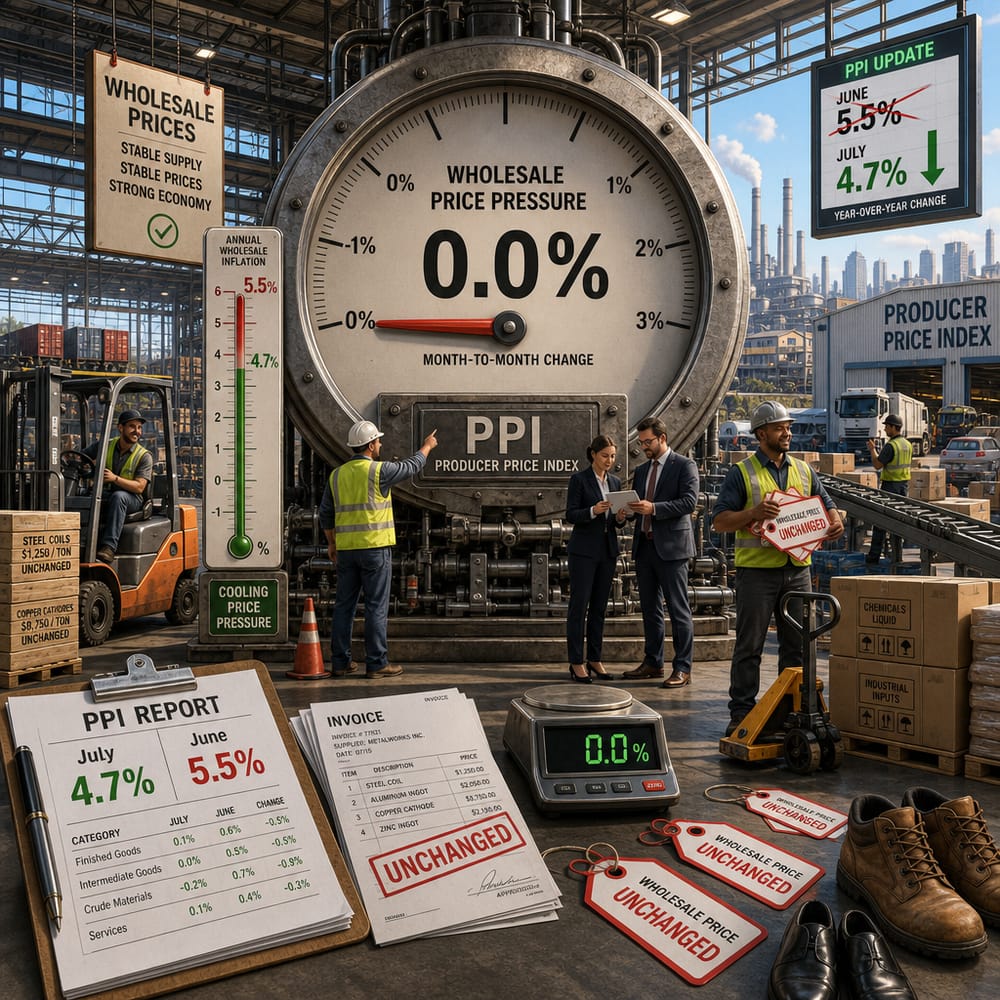
If you’ve ever stood at the grocery store checkout, gawking at the receipts in disbelief, wondering if your shopping cart has suddenly morphed into a luxury vehicle, here’s a glimmer of hope: wholesale inflation is taking a breather. The Producer Price Index (PPI) stayed flat month-to-month, and the year-over-year gain dropped from 5.5% in June to a more palatable 4.7% in July. But what does this mean for your wallet, and should you even care? Absolutely, and here's why.
Wholesale prices are like the backstage crew of a play — unseen, but they pull all the strings. When wholesale inflation slows, it could eventually ease the burden on consumer prices. Think of it as a domino effect: if the cost for businesses to make stuff holds steady, there's a chance they won't have to pass on higher costs to us, the consumers. Eventually, we might stop clutching our chests each time we buy a loaf of bread.
Let’s peek behind the curtain at which sectors are seeing a shakeup in wholesale prices. Not all industries are following the same script. Energy prices, for example, have been on a rollercoaster worthy of a theme park, influenced by global tensions and oil market fluctuations. Meanwhile, some goods like food and beverage have seen less dramatic changes. It's like watching a drama where some actors are overacting while others underplay their roles.
But hold your popcorn — there’s a plot twist. Inflation is only one half of the story when we look at its chief rival: wage growth. Ideally, our paychecks should outpace inflation, giving us more purchasing power. But in this melodrama, wage growth has been lagging behind. So, even if the stage is set for lower prices, many households are still acting out the struggle of stretching every dollar.
The tension between slowing wholesale prices and less-than-stellar wage growth is like watching a dance where one partner is slightly out of sync. When wages can’t keep pace with inflation, disposable income takes a hit. That means less money for those little luxuries — or even necessities. Imagine the frustration of getting a discount on a product, but still not being able to afford it because your paycheck hasn't kept up.
Now, how might this play out in the broader economy? If wholesale prices head south while wages lag, businesses could feel the pinch. They might have to decide between absorbing costs or passing them onto consumers, which could affect their bottom lines — and potentially, their stock prices. Investors might want to keep an eye on consumer staples and discretionary sectors, as these are the ones that often feel the heat first.
For the everyday investor, the current scene is a call to stay vigilant. Don’t just watch the headline inflation numbers — pay attention to the supporting acts. Are your wages keeping up? Are your investments in sectors that can weather the storm of inflation better than others? Think of it as crafting a diversified portfolio that can handle a plot twist or two.
In the grand narrative of the economy, the PPI is just one storyline. Watching its trajectory can give investors a hint of what’s coming up next. But like any good drama, surprises are part of the package. Whether this intermission in wholesale inflation will translate into more significant relief for consumers is still up in the air.
So the next time you find yourself at the checkout, receipt in hand, remember: there’s more to the story. Wholesale inflation might be taking a breather, but the tale of wages versus inflation is still being written. Stay tuned, keep your eyes on the market trends, and make sure your financial script is ready for whatever comes next. Your wallet might just thank you.
This article is for informational purposes only and is not investment advice. Always do your own research or consult a licensed financial professional before making investment decisions.
© Copyright 2024. All Rights Reserved.
© Copyright 2024. All Rights Reserved.