

Wholesale Inflation Slows Amid Falling Energy and Food Prices
Sunday, August 16, 2026
WHEN WHOLESALE INFLATION GOES ON VACATION: WHAT IT MEANS FOR YOUR WALLET AND THE FED
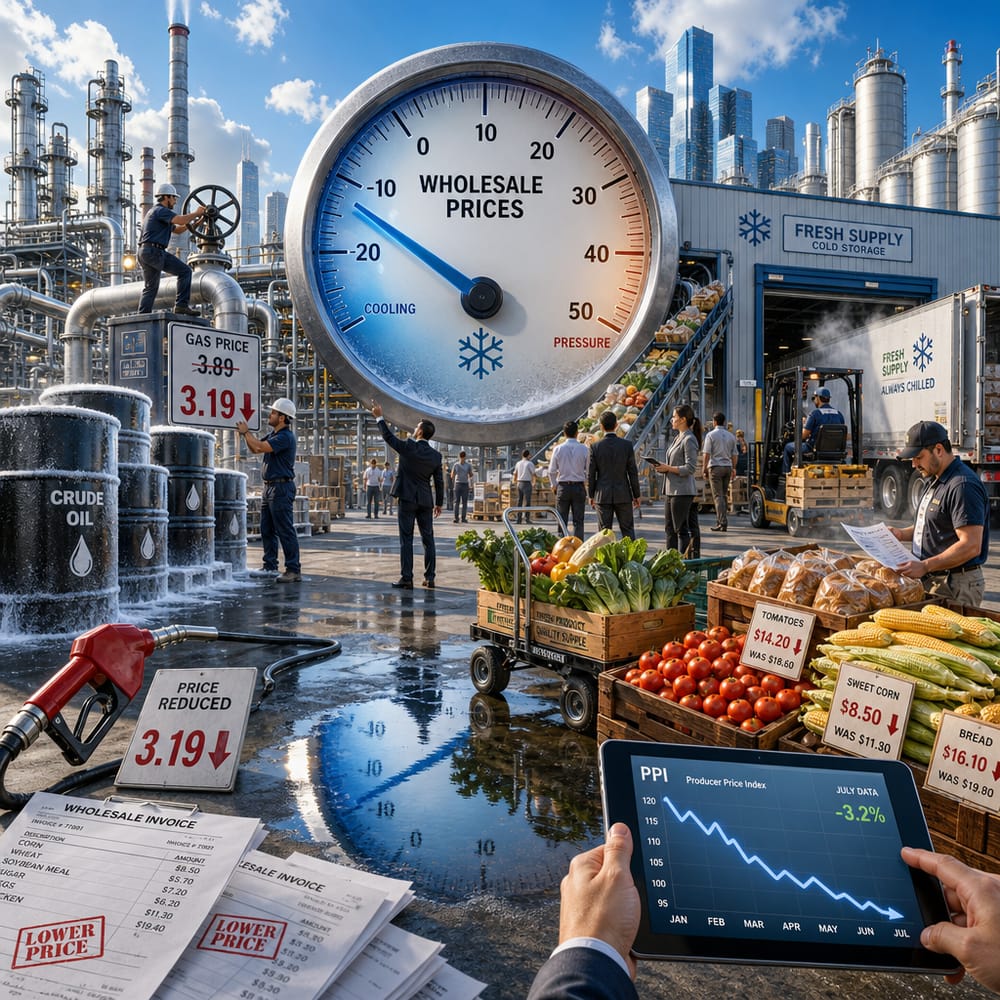
Brace yourselves, retail investors, because the latest news on wholesale inflation might just feel like a breath of fresh air. The Producer Price Index (PPI), that handy little metric that measures how much stuff costs before it hits the shelves, has thrown us a surprise party. For the first time in what feels like forever, wholesale inflation is taking a breather, thanks to some serious chill vibes from energy and food prices.
Picture the economy as a massive conveyor belt loaded with goods, chugging along at a consistent pace. Now imagine a giant hand reaching over to turn down the speed dial. That’s what’s happening with the PPI right now, and everyone from Wall Street to Main Street is watching closely. But what’s really at play here, and how might it affect your wallet and the Federal Reserve's next moves?
THE PRICE IS (NOT) RIGHT
Wholesale inflation slowing down means that the price of goods at the production level isn’t climbing as fast as it used to. Energy and food prices, notorious for their rollercoaster tendencies, are finally giving us a break. Oil prices have cooled, giving the energy sector a much-needed reprieve, while food prices are playing nice, largely due to improved weather and supply chain stability. It’s like the economic version of a snow day - a rare event that everyone can appreciate.
Why should you care? Because changes in wholesale prices often trickle down to consumers. If producers aren’t charging more, retailers might not either. That could mean that your weekly grocery bill might not make you sweat as much, and filling up your gas tank might leave you enough change for that fancy coffee you’ve been eyeing.
FEDERAL RESERVE: TO HIKE OR NOT TO HIKE?
Now, let's talk about the financial gossip of the century: the Fed's interest rate decisions. With the Fed watching inflation rates like a hawk, the latest PPI data may give them pause. If wholesale inflation is cooling, the Fed might decide to ease off on those infamous rate hikes. Why crank up the rates when prices are slowing down on their own, right?
A ‘wait-and-see’ approach could be the game plan here. If the Fed decides to sit tight and not touch those rates, borrowing costs could remain stable. This would mean businesses can borrow without breaking a sweat, potentially leading to more investments and, fingers crossed, a healthier economy.
But hold your horses before you pop the champagne. The Fed's actions are as unpredictable as a reality TV cliffhanger. They’ve been burned by inflation before, and they're unlikely to make rash decisions based on a single month's data. The central bank will likely wait for more evidence that this trend is sticking before they make any major moves.
THE BIGGER PICTURE
While the PPI data is giving us some optimism, it’s important to keep perspective. Other areas, like labor costs and housing, might still have inflation running hot. The housing market, for instance, hasn’t been following the script, with prices in many areas remaining stubbornly high.
And let’s not forget the global scene. International events can upend expectations faster than you can say “supply chain disruption.” The recent geopolitical tensions, climate events, or even a surprise from OPEC can send the energy sector into a tizzy, undoing all the PPI good news.
So, what does this mean for your investing strategy? As always, diversification is your friend. Keep an eye on sectors that might benefit from stable rates, like tech and consumer goods, while staying cautious about those still feeling the inflation blues, like housing and certain raw materials.
In conclusion, wholesale inflation hitting the brakes is a delightful twist in the economic plotline, offering a glimmer of hope for stable consumer prices and potentially steadier Fed policies. Yet, it’s not time to throw caution to the wind just yet. Keep your strategies sharp and your eyes on the broader economic horizon. After all, in the world of finance, the only constant is change – and sometimes, a few surprises along the way.
This article is for informational purposes only and is not investment advice. Always do your own research or consult a licensed financial professional before making investment decisions.
© Copyright 2024. All Rights Reserved.
© Copyright 2024. All Rights Reserved.