

Wholesale Inflation Eases Slightly but Remains High
Friday, November 13, 2026
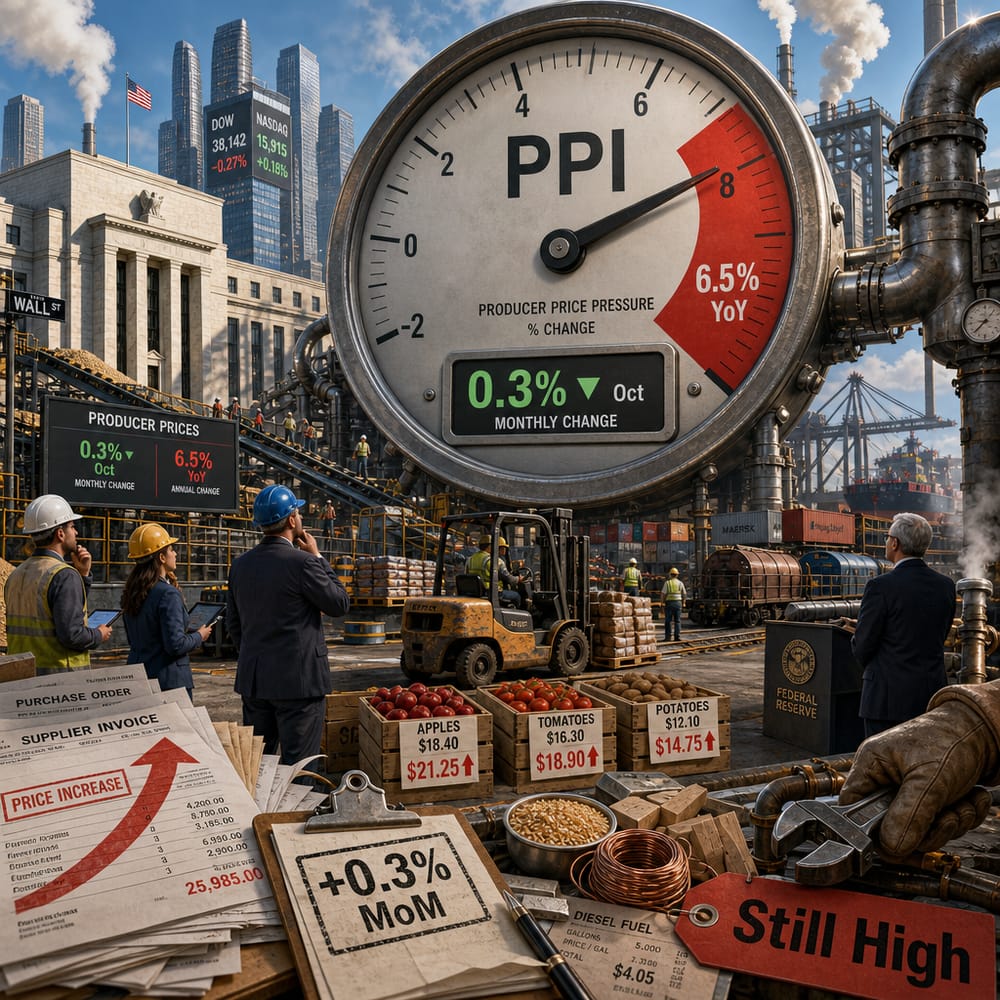
WHOLESALE INFLATION HINTS AT FED'S NEXT MOVE AS PRICES STAY STUBBORNLY HIGH
If you were hoping the October Producer Price Index (PPI) would be the soothing balm to your inflation worries, it's time to pour another cup of coffee and sit down. The PPI rose by 0.3% last month, which sounds like a win compared to the 0.4% spike economists feared. But don't let that minuscule victory fool you. Year-over-year, wholesale prices are still up a staggering 6.5%, marking the steepest climb since late 2022. It's like finding a sale at your favorite store, only to realize it’s not on the items that matter.
But what does this inflation tango mean for the Federal Reserve, and more importantly, for you, the retail investor? Well, pack your patience, because the ride isn't over. The Fed, with its hawk-like vigilance, is probably feeling the heat to consider yet another rate hike in its upcoming December meeting. While no one likes to see their mortgage rates inch up, the Fed’s got a single-minded mission: tackle inflation before it becomes chronic.
The Fed’s policy implications are like a soap opera episode that just won’t end. The storyline is clear: persistent wholesale inflation could push the Fed closer to raising rates again. And why wouldn’t they? Inflation at these levels can wreak havoc, making everything from groceries to gasoline a financial squeeze. By nudging interest rates upward, the Fed aims to cool the economy just enough to curb inflation without triggering an economic winter. It's a delicate dance, and every move counts.
But why is inflation being such a stubborn guest? A peek under the hood reveals sectors driving the relentless PPI surge. Energy prices, for instance, are having a field day. Fuel costs have soared, thanks in part to geopolitical wranglings and supply chain hiccups that seem to have no expiration date. And it's not just the energy sector fueling the inflation bonfire. Look at the food sector, where price hikes are as common as pumpkin spice in autumn. Farmers and food producers are grappling with higher costs, which they inevitably pass onto us at the checkout line.
So, while we’re talking about inflation, let's also talk about where you might want to park your investment dollars. Inflation-sensitive sectors like consumer staples and utilities might offer a cushion against the rising tide. These sectors often manage to weather inflation storms, as they deal in necessities that consumers continue to buy, come what may.
Yet, the Fed's potential rate hike isn't all gloom and doom. Sure, it might make borrowing a bit pricier, but for those sitting on cash or looking to lock in yields, rising rates could mean better returns on bonds and interest-bearing accounts. Plus, if you’ve been holding out for the housing market to slow its roll, a rate hike might cool home prices, creating opportunities for buyers who've been sidelined by the recent frenzy.
In essence, while the PPI report didn't deliver a knockout punch to inflation, it did lay down some interesting plays on the investment chessboard. The Fed's next moves will be critical, and they'll be watching every economic data point like a hawk. And as retail investors, watching the Fed can be just as instructive as watching the stock market itself.
So, whether you’re considering your next stock move or just hoping for a break at the gas pump, keep an eye on those Fed meetings. They might just hold the key to unlocking the next chapter of this inflation saga. After all, in the financial world, staying informed is half the battle.
This article is for informational purposes only and is not investment advice. Always do your own research or consult a licensed financial professional before making investment decisions.
© Copyright 2024. All Rights Reserved.
© Copyright 2024. All Rights Reserved.