

Wholesale Inflation Eases—Implications for Fed Rate Outlook
Sunday, August 16, 2026
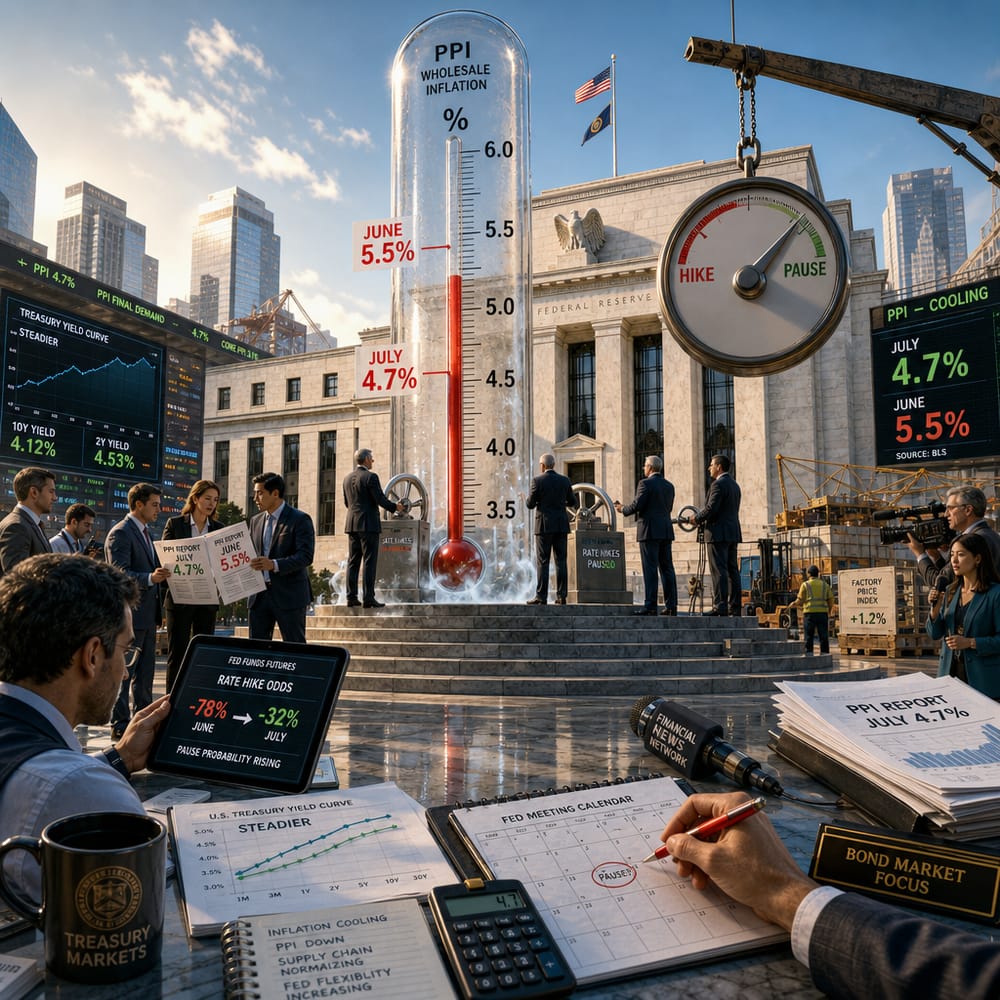
WHILE WHOLESALE INFLATION EASES, THE FED STAYS IN THE HOT SEAT
We’ve all felt the pinch at the grocery store or gas station, but there's a glimmer of hope on the horizon for our wallets. Wholesale inflation, which is the price producers receive for their goods, has taken a breather. The Producer Price Index (PPI), a significant indicator of wholesale inflation, rose by 4.7% year-over-year in July. Now, before you shrug that off as just another bunch of numbers, consider this: it's down from 5.5% in June. In the financial world, that’s a pretty big deal.
So, why does this matter? Well, if you’ve got a mortgage, a car loan, or even if you plan on buying anything on credit, keep reading. Easing wholesale inflation could be the magic wand that slows down the Federal Reserve's interest rate hikes. High inflation usually makes the Fed's palms itch to crank rates higher, aiming to cool off spending. But if inflation is easing, the Fed might just put away their rate-hiking shoes.
The Fed’s rate decisions are like dominoes: when one falls, it triggers a cascade of impacts throughout the economy. Your borrowing costs, the interest rates on your savings, the health of the job market—all are affected. Let’s dive into the implications of this dip in wholesale inflation.
WHAT DOES THE PPI DATA SAY ABOUT FUTURE INFLATION TRENDS?
The lower PPI could signal that inflation is finally beginning to mellow out. When producers aren’t jacking up their prices as much, it often trickles down to us consumer folk, reducing the rate at which our cost of living escalates. It’s like getting a shot of Novocaine at the dentist—it won’t fix all your problems but will certainly take away some of the sting.
Economists often look at PPI as a forecasting tool. If producers start paying less to make stuff, it usually means the prices consumers face will also drop—or at least increase less steeply. It’s a bit like the weather forecast: not always perfect, but it gives us a gauge of what’s to come.
HOW MIGHT THE FED RESPOND TO THIS DATA IN ITS UPCOMING MEETINGS?
Ah, the classic game of 'will they or won't they?' The Fed’s interest rate decisions have been the talk of the town. With the newest PPI data, there might be a collective sigh of relief from households and businesses alike. The pressure cooker might be cooling, giving the Fed some room to pause on rate hikes.
Jay Powell and his merry band at the Federal Reserve will be dissecting these numbers like Sherlock Holmes on a mystery. They've promised to tame inflation, but easing wholesale inflation might give them enough evidence to consider a timeout. It’s worth noting though, the Fed is like that one cautious friend who insists on checking every traffic light twice before crossing. They’re likely to wait for more data before making any sudden moves.
WHAT ARE THE POTENTIAL IMPACTS ON INTEREST RATE MARKETS?
Interest rate markets might just start to simmer down, too. When inflation looks like it’s taking a back seat, it nudges interest rate markets to stabilize. For you, this could mean slightly less eye-watering interest rates on loans. Think of it like getting a small discount on your credit card bill—you’ll still owe money, but it’s a little less painful.
Investors, those ever-watchful hawks, are likely sniffing around for clues on how various sectors might react. A stable or pausing Fed could light a fire under interest-sensitive sectors like housing and tech. Of course, Wall Street’s crystal ball is notoriously murky, but a glimpse of steadier rates has historically been a bit of a boon for these sectors.
THE FEDERAL LANDSCAPE
With the S&P 500 enjoying a breezy three-week winning streak, investors seem to be in a more optimistic mood despite the usual global uncertainties. The promise of easing inflation could keep that momentum going, but remember, markets are fickle beasts—prone to mood swings at the slightest hint of drama.
In the grand scheme, this dip in PPI could be the canary in the coal mine, hinting that the economy is starting to stabilize. For everyday folks and retail investors, it might mean a bit more breathing room in your budget and less anxiety about what’s around the economic corner.
In essence, keep an eye on how the Fed reacts to this. They have the power to either turn this into a gentle economic landing or, dare we say it, a more turbulent descent. Either way, strap in. The Fed’s next moves could spell the difference between a friendly economic breeze or a gusty gale.
This article is for informational purposes only and is not investment advice. Always do your own research or consult a licensed financial professional before making investment decisions.
© Copyright 2024. All Rights Reserved.
© Copyright 2024. All Rights Reserved.