

Wholesale Inflation Eases, But Fed Hawks Remain Vocal
Saturday, August 15, 2026
WHOLESALE INFLATION EASES, BUT FED HAWKS REMAIN VOCAL
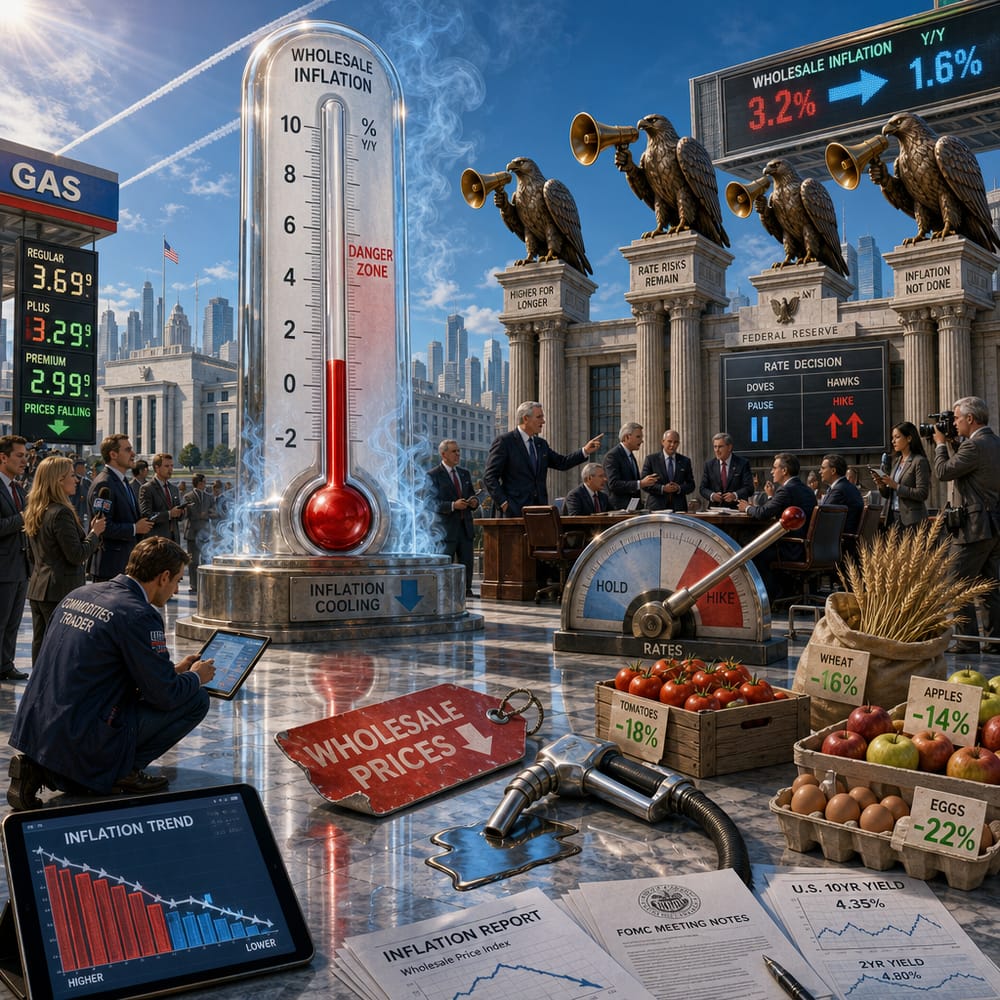
If you’ve ever tried holding a heated debate with someone about how long to microwave a hot pocket, then you have a glimpse into the current dynamics at the Federal Reserve. Their classic love affair with interest rates is getting spicy again. Recent data reveals that wholesale inflation is cooling off as gas and grub prices take a welcome dip. But hold on before you pop the champagne. Our friends at the Fed are still a bit too fond of their hawkish jargon. So, what's brewing behind those closed Fed doors?
Let’s break it down. Wholesale inflation, also known as the Producer Price Index (PPI), is a secret kind of shopping spree for businesses, reflecting how their costs change. When it's on the rise, companies could up their prices, and you end up paying more for your favorite latte. Recently, though, wholesale prices have simmered down, largely thanks to a drop in gas and food costs. The question buzzing around trading floors and coffee shops alike is: How does this affect the Fed’s rate decisions?
Picture this: if inflation were an unruly dog, the Fed would be the owner, cautiously eyeing the leash. With inflation on its best behavior recently, you'd think they'd loosen that leash a bit. Logic says if prices aren't skyrocketing, interest rates don’t have to either. But alas, the world of economics is never that straightforward. The Fed, like a sitcom character who can’t quite let go of a grudge, is keeping the hawkish rhetoric alive.
Why, you ask? Well, even though wholesale prices are cooling, the Fed bigwigs aren’t convinced that the danger has passed. It’s not just the price of avocados they’re worried about; it’s the broader economic picture. The Fed’s mandate is a tricky balance of promoting employment while keeping inflation in check, all without tripping over into a recession.
Now, about those hawks. A hawkish stance means they’re leaning towards higher interest rates. In plain English, borrowing could get pricier. For you and me, that might translate to steeper mortgage rates or those pesky credit card debts getting a bit more burdensome. For businesses, it's about calculating every investment decision twice. The Fed aims to tame inflation without smothering economic growth, which sometimes feels like trying to balance a spoon on your nose while tap dancing.
So, what happens if the Fed continues this tough talk? The economy could feel the chill. Higher rates can slow down spending and investment, risking slower economic growth. It’s like trying to thread a needle while riding a roller coaster. The risk is that caution could lead to an overcorrection, potentially pulling the U.S. economy into a slowdown.
But before you start panicking, it’s important to note that the Fed isn’t a solitary beast. They’re continually reassessing with each new data morsel. And yes, the Fed has a plan, or at least a very detailed flowchart somewhere in their offices. As they navigate these choppy waters, they’ll keep their eyes peeled on various economic indicators, adjusting their approach as needed.
So, what should you do, sitting there in your living room wondering how to interpret all this? It’s all about being alert. Keep an eye on those Fed announcements; they pack quite the punch for your wallet and investments. Whether you're looking at buying a home, starting a business, or just trying to make the most of your savings, understanding the Fed’s mindset is crucial.
In a nutshell, while wholesale inflation might be taking a breather, the Fed’s not ready to call it a day. Their hawkish stance suggests that interest rates might stay elevated for a while. For investors and everyday folks alike, this means staying vigilant and bracing for a few more plot twists in the economic saga.
Stay curious, stay informed, and maybe keep an eye on those gas and grocery receipts. You never know when they’ll become the central characters in the next chapter of the inflation story.
This article is for informational purposes only and is not investment advice. Always do your own research or consult a licensed financial professional before making investment decisions.
© Copyright 2024. All Rights Reserved.
© Copyright 2024. All Rights Reserved.