

Wholesale Inflation Cools Sharply
Monday, August 17, 2026
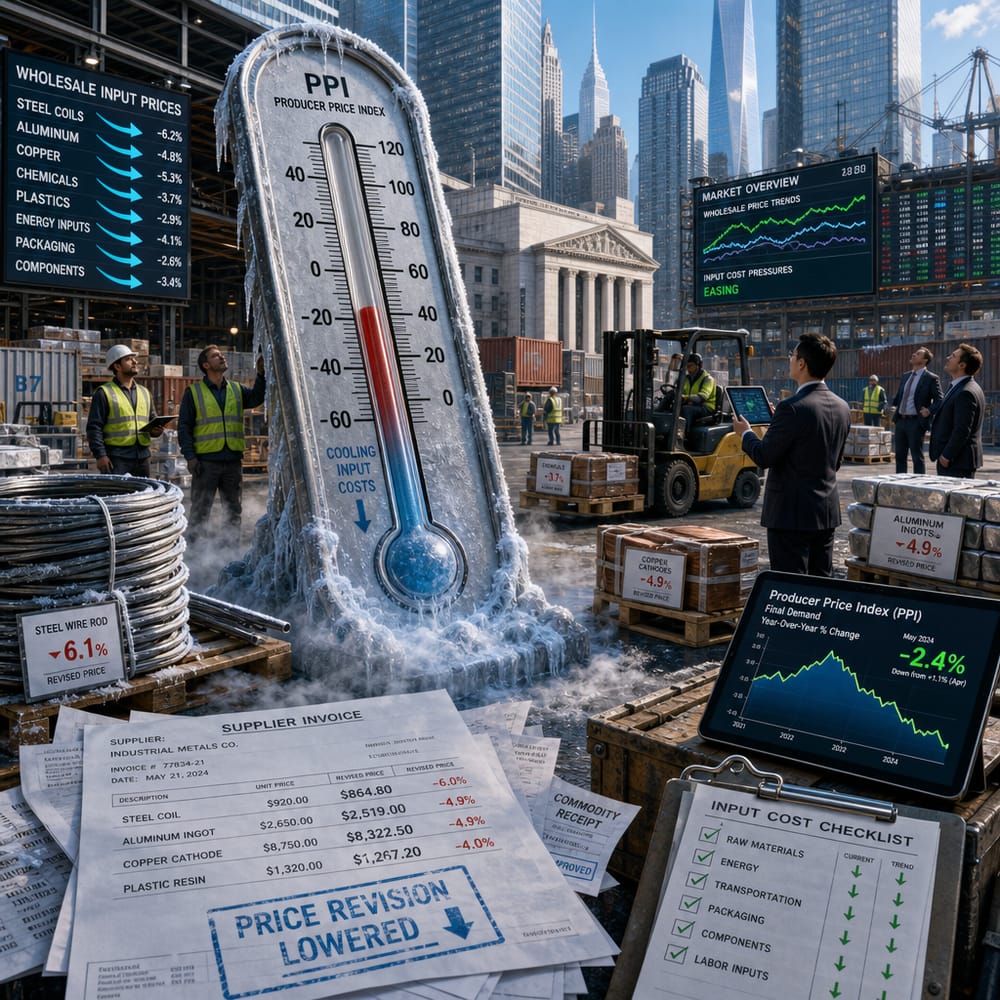
WHOLESALE INFLATION COOLS SHARPLY: HERE'S WHAT IT MEANS FOR YOUR WALLET
Hold onto your wallets, folks, because the latest numbers are in, and it looks like wholesale inflation is finally taking a chill pill. The Producer Price Index (PPI), which measures how much producers receive for their goods and services, is showing some serious signs of cooling off. And that’s not just good news for the manufacturers; it’s potentially great news for you and your wallet.
So, what exactly does a drop in PPI mean for consumer inflation? Picture this: when wholesale prices slow down, the domino effect might soon trickle down to the price tags you see on store shelves. Think of it as the calm before a price storm that never hits. Retailers, with a little luck and a lot of pressure, could start passing on some of those savings to consumers. And let’s be real, who doesn’t like a good old-fashioned price drop?
This slowdown in wholesale inflation is also playing the part of a trusted advisor whispering into the ears of the folks over at the Federal Reserve. You know, the ones who’ve been dabbling in the high-stakes game of interest rate roulette. With price pressures easing, the Fed might just decide to keep those interest rates steady instead of hiking them up like an overzealous mountain climber looking for a new peak. This is a relief for anyone with a loan or heading to the bank for one — lower interest rates make borrowing cheaper and saving less rewarding.
But let’s not get ahead of ourselves. The Fed is like the seasoned gambler who never reveals their hand too soon. They’ve been on a relentless mission to curb inflation by cranking up interest rates, making it more expensive for everyone to borrow money for things like houses, cars, and business expansion. So, while the dip in PPI is promising, the Fed might want to see a bit more evidence before changing course. The economy is like a stubborn mule; it takes more than a gentle tug to get it moving in the right direction.
Now, if you’re wondering which sectors are gossiping about this cooling off, take a peek at industries like transportation and warehousing, which often feel the inflationary burn hardest. With PPI easing up, these areas might get a breather, potentially translating into lower shipping costs and more manageable prices for the goods you buy every day.
But let's not get too comfortable just yet. The oil sector has been on a wild ride recently, with prices climbing faster than a scared cat up a tree. Geopolitical tensions and supply chain hiccups keep the energy market on its toes. Iran’s recent saber-rattling and oil price hikes could stir the inflation pot once more, offsetting some of the cooling we’ve been seeing elsewhere. Remember, oil prices have a funny way of sneaking into every nook and cranny of the economy, from the cost of gas to your morning cup of joe.
So, what’s the takeaway for you, the everyday investor and consumer extraordinaire? Well, this could be the time to pay attention, keeping an eye on how businesses and the Fed react to these new inflation numbers. If companies start lowering prices, or if the Fed decides to hold back on interest rate hikes, that could mean more money staying in your wallet instead of sneaking out when you least expect it.
In the ever-turbulent sea of financial markets, these PPI numbers are a hopeful sign that calmer waters may be on the horizon. So, keep your eyes peeled, your wallets ready, and remember that in the world of finance, nothing is set in stone — except for maybe this: inflation's vacation might just be the break we all need.
This article is for informational purposes only and is not investment advice. Always do your own research or consult a licensed financial professional before making investment decisions.
© Copyright 2024. All Rights Reserved.
© Copyright 2024. All Rights Reserved.