

Wholesale Inflation Cools: PPI Slows Sharply in July
Monday, August 17, 2026
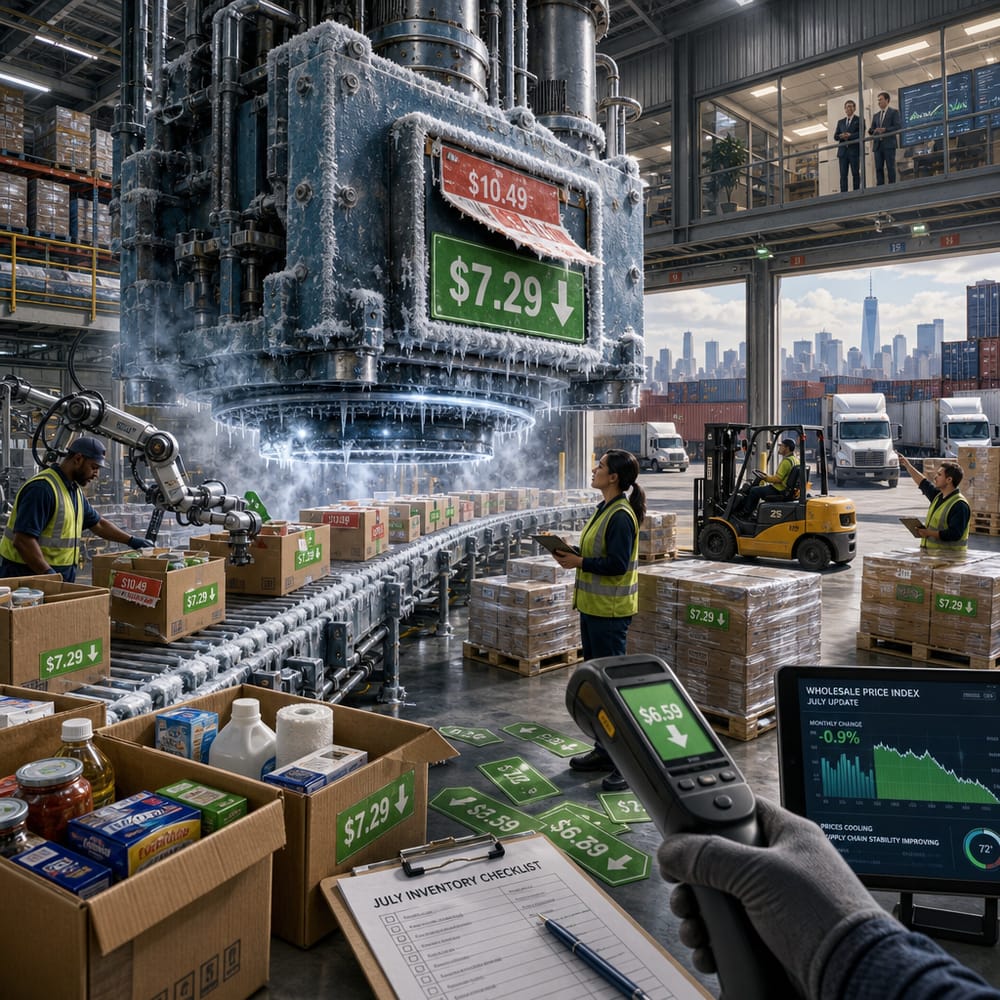
WHOLESALE INFLATION COOLS: PPI SLOWS SHARPLY IN JULY
Picture this: you're sipping your morning coffee, scrolling through the flood of news, and suddenly the U.S. Producer Price Index (PPI) splashes across your screen. Snooze fest? Think again. This little number represents wholesale inflation, and it just eased its foot off the gas, rising 4.7% year-over-year in July. Now, why should you care? Because when wholesale prices chill, it could mean cooler days ahead for consumer prices—and your wallet.
Let's decode this. The PPI is a measure of what producers get for their goods. Basically, it's a preview of what might hit our pockets next. If producer costs spike, it's usually just a matter of time before those higher costs trickle down to us consumers. If they cool, that's potentially good news for anyone not wanting their grocery bill to resemble a Monopoly game gone wrong.
So, what's behind this slowdown in wholesale inflation? It's like peeling an onion—multiple layers. One factor is the easing of supply chain kinks that have been the bane of everyone's existence since the pandemic started. As these issues untangle and production costs stabilize, producers don't have to slap on those hefty price tags. Think of it as a backstage pass to a calmer pricing concert for goods.
Now, take out your crystal ball and let's gaze into the future of consumer inflation. If the trend in PPI continues, we could hope to see a similar pattern trickling down to consumer prices. Meaning, less stress when shopping for strawberries—unless, of course, that Trump administration investigation into Mexican strawberries kicks tariffs into gear. But let’s stay on the bright side for now.
This easing of producer prices has another significant side show: the Federal Reserve. Remember those guys? They're the ones who've been battling inflation like it's a relentless video game villain, raising interest rates to keep it in check. The logic is simple: higher rates mean more expensive borrowing, which can cool spending and inflation. But if inflation starts minding its manners on its own, the Fed might ease up on the rate-hike accelerator.
Let's play out a scenario. If the PPI continues to cool, it could signal to the Fed that its inflation-fighting campaign is working. Picture Jerome Powell and his team giving each other a small, satisfied nod. This could mean fewer rate hikes—or even a pause—making borrowing more affordable for homes, cars, and businesses. And that could be a shot in the arm for economic growth, as businesses expand and consumers spend a bit more freely.
Of course, the Fed won't base their decisions on PPI alone; they'll keep an eye on various economic indicators, including employment numbers and consumer spending. But in the world of central banking, where every decimal point matters, a cooling PPI is like a gentle breeze on a stifling day.
Now, before you start celebrating by planning a splurge at your favorite store, remember that economic numbers are like weather forecasts—useful but not infallible. There are still variables that could spin this narrative in another direction. Geopolitical tensions, energy prices, and unforeseen supply chain disruptions are just a few wild cards in the deck.
In the grand scheme, the current slowdown in PPI is a small, but positive signal that the inflation dragon might be tamed without too many battle scars. For now, retail investors, consumers, and Fed watchers alike can keep a cautious, but hopeful, eye on the horizon, knowing that for every index point shaved off the PPI, there's potential relief for pocketbooks and policy makers alike.
So, next time you stumble upon the PPI figures, remember: it’s not just a bunch of numbers. It’s a forecast, a financial weather vane guiding the storm of pocketbook pressures and policy moves. Who knew wholesale inflation chat could be so enthralling? You're welcome.
This article is for informational purposes only and is not investment advice. Always do your own research or consult a licensed financial professional before making investment decisions.
© Copyright 2024. All Rights Reserved.
© Copyright 2024. All Rights Reserved.