

Wholesale Inflation Cooling Slightly—but Still Elevated: What It Means for Fed Rate Path
Tuesday, November 17, 2026
WHOLESALE INFLATION COOLING SLIGHTLY—BUT STILL ELEVATED: WHAT IT MEANS FOR FED RATE PATH
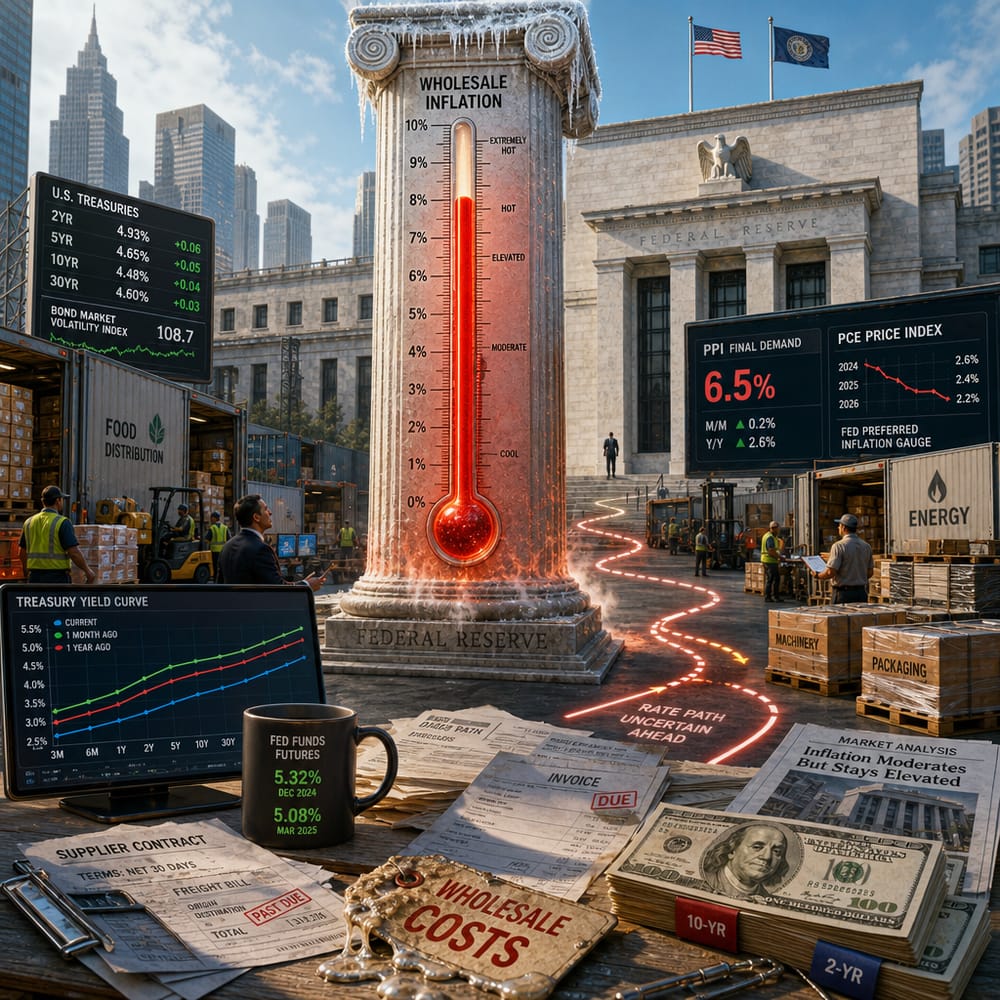
If you thought inflation was a thing of the past, buckle up because we’re not out of the woods yet. The latest data shows that while inflationary pressures are taking a breather, they're still lurking in the shadows, ready to pounce on unsuspecting wallets. U.S. wholesale inflation rose by 6.5% year-over-year in October, a tad hotter than September’s 6.3%. That might not sound like a dramatic shift, but in the world of economics, it's enough to keep the Federal Reserve on its toes.
So, what's the deal with this persistent inflation? Let's break it down. The Producer Price Index (PPI), which measures the average changes in prices received by domestic producers for their output, is a key gauge of wholesale inflation. It's like taking the economic temperature before the fever hits consumers. And right now, the thermometer is still registering on the high side.
THE FED'S DANCE WITH INFLATION
This brings us to the Federal Reserve, the ever-watchful guardian of economic stability. The Fed's main job is to keep inflation in check while fostering employment. It's a delicate balancing act, kind of like juggling chainsaws while riding a unicycle. When inflation starts acting up, the Fed has a few tricks up its sleeve—namely, raising interest rates to cool things down.
But here's the kicker: if wholesale prices keep climbing, the Fed might have no choice but to consider more rate hikes. That’s the financial equivalent of hitting the brakes hard, hoping to avoid a crash. The tricky part is figuring out how many more times they need to tap the brakes without sending the economy into a tailspin.
IMPLICATIONS FOR CONSUMER PRICES AND THE BROADER ECONOMY
You might be wondering, how does this inflation tango affect your everyday life? Well, when wholesale prices rise, it usually means that consumer prices aren't far behind. Businesses facing higher costs often pass those expenses onto you, the customer, in the form of higher prices on everything from groceries to gadgets.
This also has ripples throughout the economy. Higher consumer prices can erode purchasing power, making it feel like your dollar isn't stretching as far as it used to. And if the Fed decides to hike rates again, borrowing costs for everything from mortgages to car loans could rise, putting even more pressure on your budget.
THE BOND MARKET'S TWO CENTS
What's the silver lining here? For one, the bond market has been doing its own little dance. Rising bond yields have been a headache for investors, but they could also be signaling where interest rates are headed. Bond traders, those savvy crystal ball gazers of the financial world, are constantly trying to predict the Fed’s next move. If they expect more rate hikes, you can bet bond yields will reflect that anticipation.
But don't fret just yet. Rising yields aren't the end of the world. They might make bonds more attractive to investors looking for safer, higher returns, which could stabilize the market somewhat. So, while your stock portfolio might look a little bruised, your bonds could be the calm in the storm.
WHAT'S NEXT?
As we look to the horizon, the big question is: will the Fed feel compelled to keep pushing rates higher to tame inflation, or will the economic engine cool down on its own? The future's uncertain, but one thing's for sure—those inflation numbers will be watched like a hawk by everyone from Wall Street to Main Street.
In the meantime, keep an eye on those price tags and your investment portfolio. A little vigilance can go a long way in these turbulent times. Tomorrow's financial landscape might be a mystery, but at least you'll be prepared to face it with a bit more knowledge and a lot more confidence.
This article is for informational purposes only and is not investment advice. Always do your own research or consult a licensed financial professional before making investment decisions.
© Copyright 2024. All Rights Reserved.
© Copyright 2024. All Rights Reserved.