

Wholesale Inflation Cooldown Spurs Bond Yield Drop
Sunday, August 16, 2026
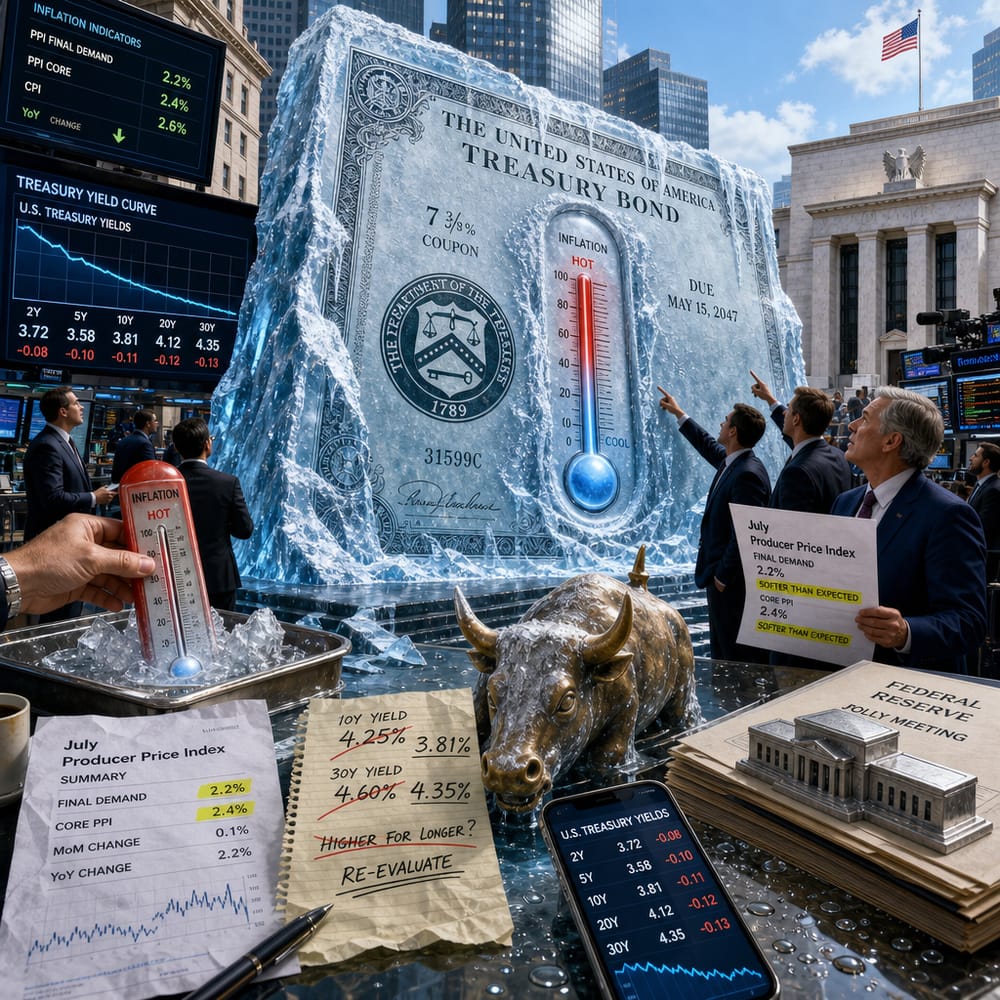
WHOLESALE INFLATION COOLDOWN SPURS BOND YIELD DROP
In a twist that might make the ghost of inflation past shiver, the July Producer Price Index (PPI) delivered a cooler performance than a popsicle in a polar vortex. The result? A flurry of excitement in the bond market, where Treasury yields decided to take a little dip, making headlines and giving investors something to talk about over their morning coffee.
The PPI, which measures the average change over time in the selling prices received by domestic producers for their output, came in softer than the market's expectations. This surprise move suggested that perhaps, just perhaps, wholesale inflation isn't the snarling beast everyone feared. And when inflation fears ease, bond yields tend to follow suit. Like clockwork, Treasury yields took a nosedive.
Let’s break down what happened. The 10-year Treasury yield, often seen as a crystal ball for future economic expectations, dropped like a stone. This decline sends ripples across the financial pond, affecting everything from mortgages to the money Uncle Sam pays on its debt. Meanwhile, the 2-year yield, a darling of rate watchers, also eased, indicating that investors might be lowering their expectations for future rate hikes from the Federal Reserve.
What does this mean for Jerome Powell and his merry band of rate-setters over at the Fed? Simply put, it means they might be able to take their feet off the interest rate gas pedal. If wholesale prices aren't rising as fast, the urgency to hike rates to keep inflation in check might lessen. And for consumers and businesses alike, that's a spot of sunny news.
But before you pop the champagne, remember that the Fed isn’t just watching wholesale inflation. They're like the all-seeing eye of Mordor, keeping tabs on a smorgasbord of economic indicators before deciding whether to hike, hold, or cut rates.
In the bond market, the reaction was immediate. Investors, ever the eager beavers for safety and returns, started snapping up Treasury bonds, driving prices up and yields down. This is a classic seesaw in finance: as bond prices rise, yields fall. It’s like magic, with math.
So, with yields dropping, what’s a retail investor to do? Well, it depends on where you’re standing. If you're holding onto bonds, lower yields mean your existing bonds might be worth more, as new bonds will offer less attractive returns. But if you’re looking to jump into the bond pool, the water just got a tad more tepid, as future returns might not be as enticing.
Looking ahead, the big question is: will this trend stick? If inflation continues to cool, bond yields could remain subdued, potentially easing the path for businesses looking to borrow and invest. And if the Fed decides to tap the brakes on rate hikes, that could mean a more stable rate environment for the foreseeable future.
Of course, there’s always the wildcard factor. Geopolitical tensions, unexpected economic data, or even a sudden shift in consumer demand could turn the tide. But for now, the bond market seems to be breathing a sigh of relief.
For the savvy retail investor, keeping an eye on these movements is crucial. Bond yields and Fed policies wield enormous influence over everything from stock prices to personal finance decisions. Whether you’re a bond enthusiast or a stock market aficionado, understanding the undercurrents of the bond market can give you an edge in navigating the ever-turbulent waters of investing.
So, as we savor this moment of easing inflation fears, let's keep our eyes peeled. Because in the world of finance, today's headline is tomorrow's footnote. And as investors, staying ahead of the curve is what keeps us in the game.
This article is for informational purposes only and is not investment advice. Always do your own research or consult a licensed financial professional before making investment decisions.
© Copyright 2024. All Rights Reserved.
© Copyright 2024. All Rights Reserved.