

Wholesale Inflation Accelerates—Heightened Rate Hike Pressure for Fed
Wednesday, November 18, 2026
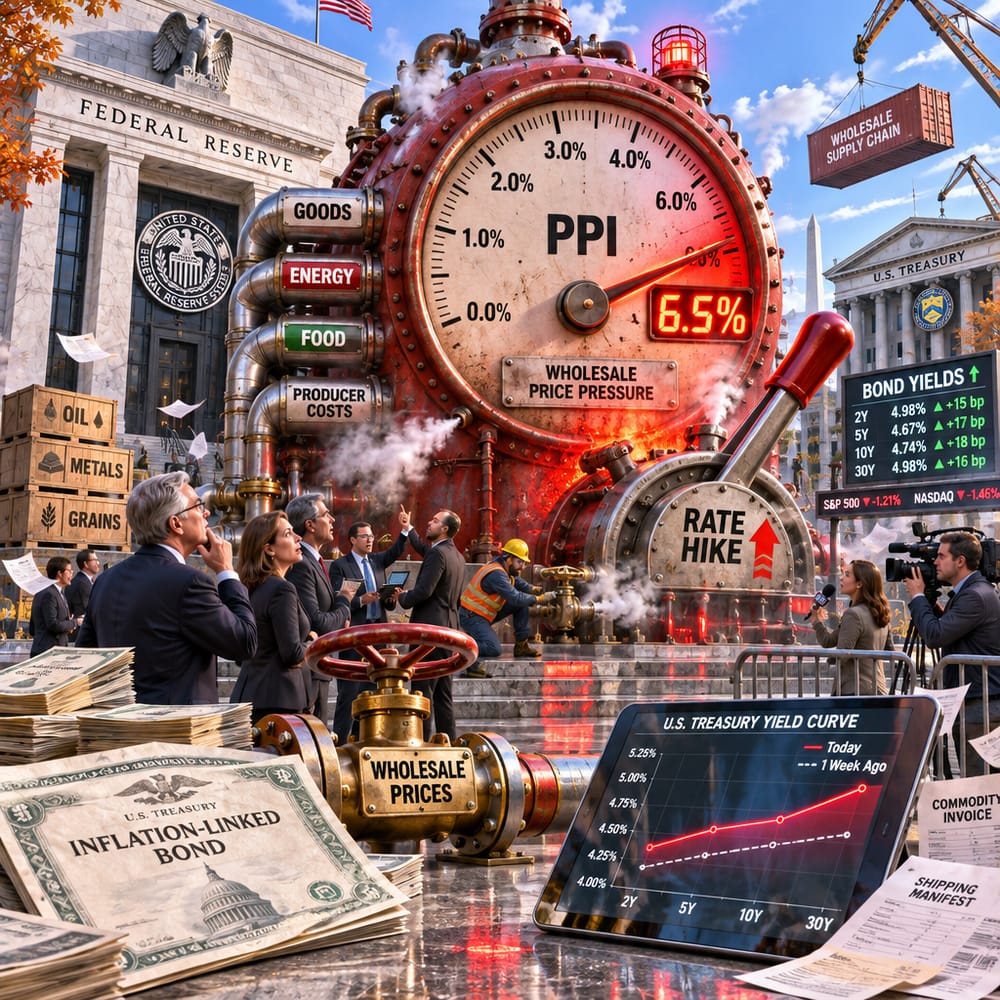
WHOLESALE INFLATION ACCELERATES—HEIGHTENED RATE HIKE PRESSURE FOR FED
In the rollercoaster world of economics, wholesale inflation is like that mischievous little brother who always seems to stir the pot. And boy, is he causing a ruckus right now. U.S. wholesale inflation is on the rise, clocking in at a year-over-year increase of 6.5% in October. It's the sharpest climb since November 2022, and it's got everyone from Wall Street to Main Street on edge. Why? Because wholesale inflation, my friends, is often a sneak peek at what's coming down the pipe for consumer prices.
THE RIPPLE EFFECT
Think of wholesale inflation as the canary in the coal mine for consumer prices. When the cost for producers to make goods and services rises, it’s only a matter of time before these costs trickle down to consumers. You know, the folks who are just trying to get by without shelling out half their paycheck for groceries and gas. So, when we see wholesale prices spiking, it tends to signal that the cost of living is about to follow suit. It’s like getting a weather alert for an economic storm.
THE FEDERAL RESERVE IN THE HOT SEAT
And while we’re talking about alerts, let’s turn our gaze to the Federal Reserve. With this surge in wholesale inflation, the Fed's December meeting just got a whole lot more interesting. Picture those Fed officials sitting around a table, probably nursing a few extra cups of coffee as they debate whether to hike interest rates once again. Their goal is to keep inflation in check without stifling economic growth. It's a tightrope walk even the best circus performer would envy.
What’s on the line here is more than just a numbers game. Rate hikes mean borrowing becomes more expensive—think mortgages, car loans, and those pesky credit card interest rates. So, if the Fed decides to raise rates to curb inflation, it could cool down consumer spending and business investment. And if they don’t raise rates? Well, we might just have to buckle up for a wild inflation ride.
INVESTOR SENTIMENT—A FRIEND OR FOE?
Naturally, all this uncertainty sends investors into a tizzy. The stock market is a temperamental beast, and news like this can trigger everything from cautious optimism to full-on panic. If the Fed signals a rate hike, we might see investors getting skittish, pulling money out of equities and seeking safer havens like U.S. Treasury bonds or inflation-linked securities. These safe investments usually become more attractive when the market gets jittery.
On the flip side, if the Fed decides to hold steady, we could see a rally as investors breathe a collective sigh of relief—at least until the next economic data point grabs everyone's attention. Either way, market forecasts are likely to be as volatile as a teenager's social calendar.
WHAT DOES THIS MEAN FOR YOU?
So what does all this mean for the average retail investor? For starters, it’s time to keep an eye on those interest rate projections. If you're thinking about buying a home or a new car, you might want to consider locking in a loan rate sooner rather than later. And if you’re in the market for bonds, those inflation-protected securities might start looking mighty appealing right about now.
Also, be prepared for a little turbulence in your investment portfolio. Stock markets don’t like uncertainty, and with inflation and Fed policy in the spotlight, you can count on some ups and downs. Diversification is your friend here, helping you spread out risk and cushion against potential losses.
THE BIG PICTURE
Wholesale inflation's latest spike is a classic example of economic dominoes. It starts with producers feeling the pinch, then consumers, and finally, it lands squarely on the shoulders of the Federal Reserve. How the Fed responds could set the tone for the economy in the coming months, impacting everything from investment strategies to the cost of your next vacation.
So keep your wits about you, because in the grand drama of economics, wholesale inflation might just be setting the stage for the next big act. And if history tells us anything, it's that the only constant in the financial world is change.
This article is for informational purposes only and is not investment advice. Always do your own research or consult a licensed financial professional before making investment decisions.
© Copyright 2024. All Rights Reserved.
© Copyright 2024. All Rights Reserved.