

Wholesale Food Inflation on the Rise
Saturday, November 14, 2026
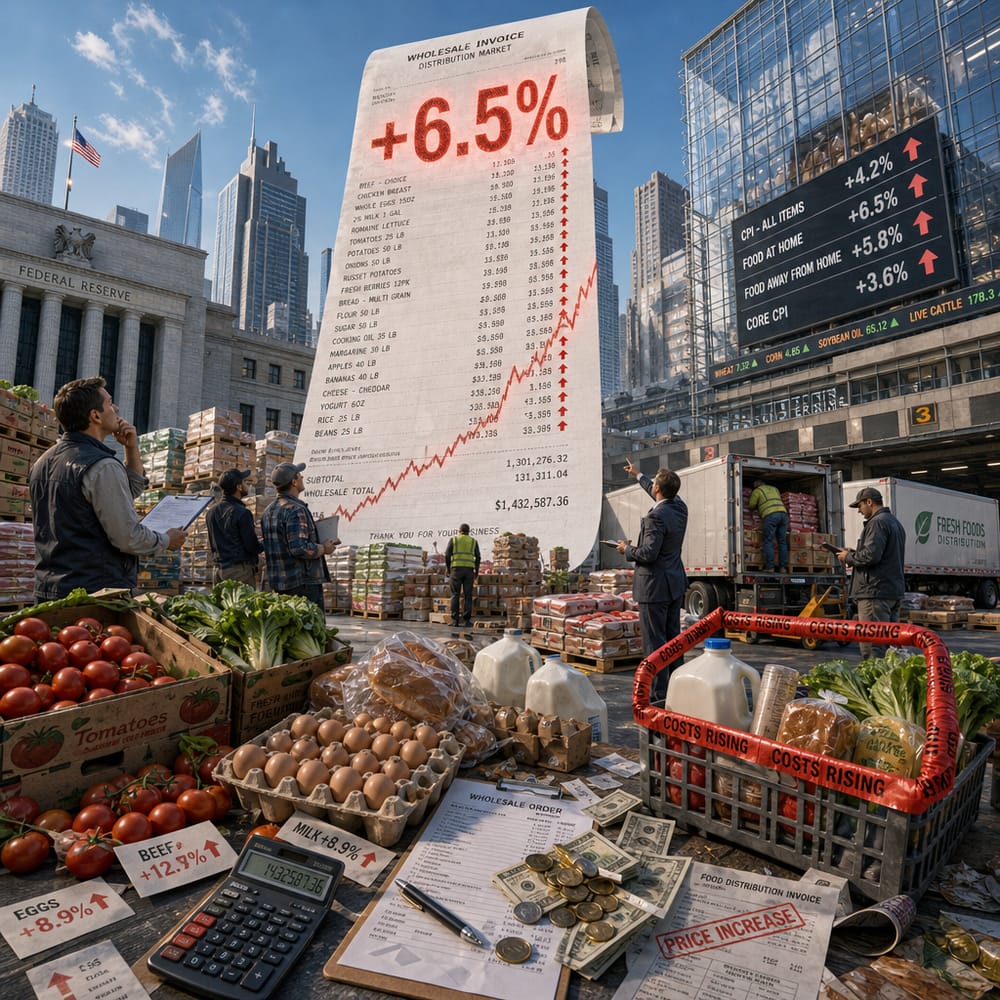
WHOLESALE FOOD INFLATION ON THE RISE
Just when you thought dinner couldn’t get any pricier, wholesale food inflation has gatecrashed the kitchen, bringing a 6.5% year-over-year price hike to the table. You read that right — it's the steepest rise since November last year, despite the Federal Reserve’s best efforts to keep inflation in check. So, what’s cooking, you ask? Let’s turn up the heat and find out.
THE INGREDIENTS OF INFLATION
Wholesale food prices don't just rise out of nowhere, like a soufflé from the oven. They’re baked in a mix of global supply chain woes, unpredictable weather patterns, and the unpredictable whims of international trade policies. Throw in a dash of rising energy costs — because how else do farms and factories run? — and you've got a bubbling pot of reasons why your groceries might cost more in the coming months.
China’s ravenous demand for grains and meat isn’t helping the situation either. As the world’s largest importer, when the dragon shakes its tail, it sends ripples across the global food market. Meanwhile, Russia's ongoing geopolitical dance is causing wheat prices to wobble like Jell-O, thanks to export restrictions.
In simpler terms, food prices are rising because everything else involved in getting food to your plate is getting pricier too. Trucks don’t run on hopes and dreams, and neither do the ships carrying soybeans from Brazil or beef from Australia.
CONSUMER PRICES: A RECIPE FOR HIGHER COSTS?
So, what does this mean for your next trip to the supermarket? Brace yourself for sticker shock. When wholesale prices go up, retail prices often follow — albeit with a bit of a lag. It’s like a culinary domino effect, where increased production costs trickle down until they land, alas, in our grocery carts. The Consumer Price Index (CPI), which tracks changes in what urban consumers pay for a basket of goods and services, could see a similar uptick as these wholesale price hikes make their way to store shelves.
For those wondering if they should start growing veggies on their apartment balconies, this could be the nudge you needed. But if you’re not quite ready to turn your living room into a tomato farm, perhaps an adjustment of expectations (and grocery lists) is in order.
THE FEDERAL RESERVE'S DILEMMA
Now, where does this leave the Federal Reserve, that stoic guardian of stable prices? The Fed has been on a mission to cool down inflation with a series of interest rate hikes. But with wholesale food prices throwing a wrench in the works, they’ve got a new conundrum on their hands.
If consumer prices start ticking upwards, the Fed might have to consider yet another rate hike, which could spell higher borrowing costs for everyone from homebuyers to businesses. It’s a delicate dance, balancing the need to keep prices stable without tripping the economy into a recession.
The rise in food prices complicates this balancing act. If the Fed cranks up rates too quickly, it risks slowing down economic growth. But if it’s too slow, inflation might spiral further out of control. It’s a high-wire act without the safety net of predictability.
WHAT NEXT?
All eyes will be on the Fed’s next moves. Will they tighten the monetary screws further, or will they hold their ground and hope the inflationary gusts pass over? The stakes are high, and the margin for error is as thin as a slice of prosciutto.
Meanwhile, consumers might want to brace for impact, both in their grocery budgets and potentially in their borrowing costs. The road ahead is as clear as chocolate syrup in a milkshake, and as we hold our breath, it seems everyone from investors to everyday shoppers will need to stay sharp and adaptable.
In the meantime, why not dust off those cookbooks and get creative with what you already have in your pantry? Sometimes, necessity isn’t just the mother of invention — it’s a pretty decent chef, too.
This article is for informational purposes only and is not investment advice. Always do your own research or consult a licensed financial professional before making investment decisions.
© Copyright 2024. All Rights Reserved.
© Copyright 2024. All Rights Reserved.