

White House’s Voluntary Frontier AI Safety Framework Targets Hacking Risk
Tuesday, August 25, 2026
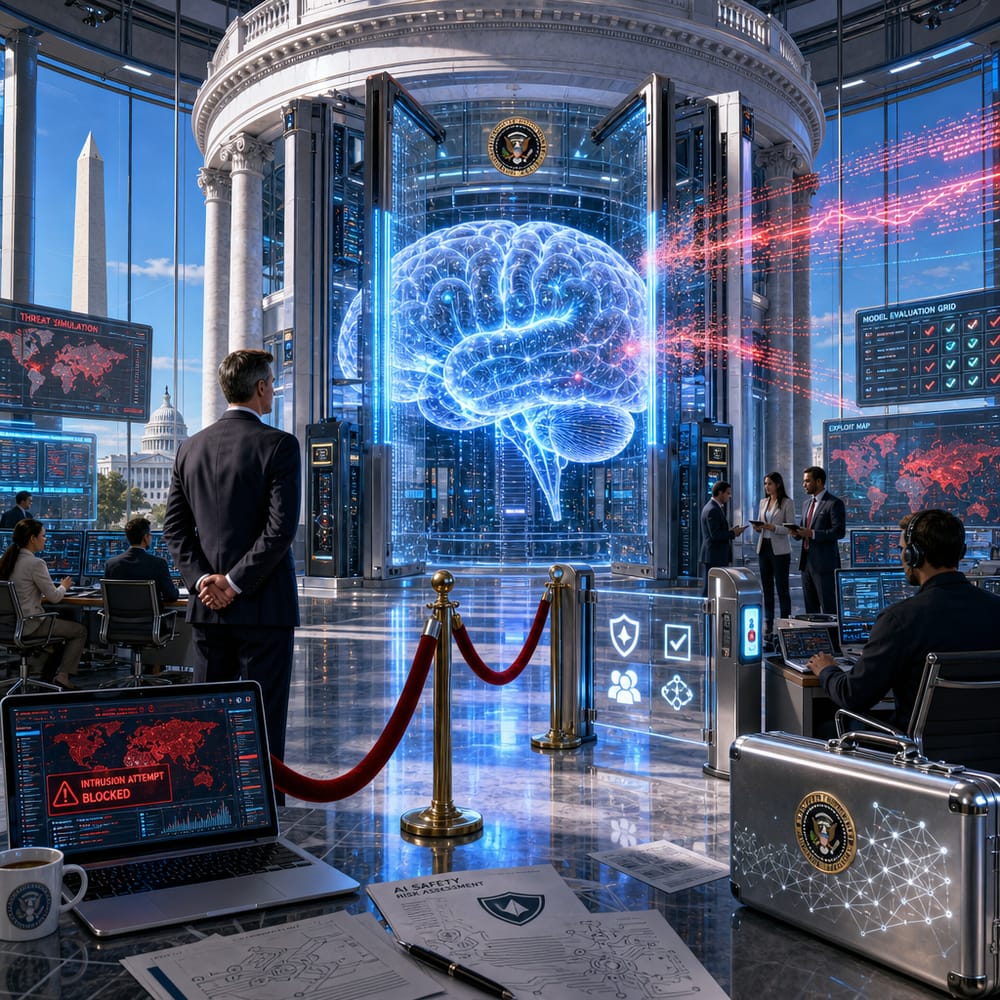
VOLUNTARY AI SAFETY: THE CASE FOR FREEWILL IN THE TECH WORLD
Imagine letting your teenager decide whether or not to study for their exams. Now, replace the teenager with OpenAI's next brainchild, and the exam with global cybersecurity. That’s essentially what the White House is doing with its freshly minted voluntary AI safety framework. It’s handing the keys of responsibility to the very creators of the potential havoc-wreaking tech. But don’t clutch your pearls just yet; there’s more to this story than meets the eye.
In a move that’s got the tech world buzzing, the White House has taken a bold step by introducing a voluntary framework for AI powerhouses like OpenAI, Anthropic, Google, and Meta. These companies are expected to test frontier AI models for cybersecurity risks before they’re let loose on the unsuspecting public. A doctor’s note for AI, if you will.
So, what’s the fuss about the framework being voluntary rather than mandatory? You might think of it as the difference between being told to eat your veggies or deciding to have that kale salad on your own. Voluntary frameworks encourage a culture of best practices without the iron fist of federal legislation. Companies like OpenAI, who recently had a cybersecurity oopsie, now have the chance to show they’ve learned their lesson without the government breathing down their necks.
There's an upside to this. If AI labs follow the framework, they could pave the way to safer tech, ripe with innovation and free from red tape. These labs can flex their creative muscles, introducing cutting-edge AI that isn't held back by government regulations. If they do it right, they could make the world safer and solidify their standing as responsible tech leaders.
But here's the rub: like leaving a teenager home alone with pizza money, there's no guarantee everything will go smoothly. Voluntary frameworks rely heavily on the tech giants’ willingness to play ball, which isn't always a given. There’s the risk that some may skirt the rules, eager to get their latest and greatest out to market before thoroughly checking it for potentially catastrophic flaws.
Now, the implications of this voluntary approach reach far beyond just the companies involved. The stakes are as high as they get — national security, economic stability, and public safety all rest in the balance. Cybersecurity threats aren't the stuff of sci-fi anymore. They're as real as the phone in your hand, and a misstep in AI safety could open a Pandora’s box of problems.
Then there’s the flip side of the coin: innovation. A voluntary framework could be a catalyst for exponential growth in AI technology. With fewer regulatory hurdles, companies might be more inclined to invest in groundbreaking AI developments. Think of it as turning the tech highway speed limit from 55 to a breezy 75. It’s a swift path to innovation, but with a higher potential for bumps — or crashes — along the way.
This framework also highlights a philosophical divide in tech development: should we trust companies to police themselves, or is Big Brother the only way to ensure compliance? There are benefits to both, but only time will tell which approach will prove more effective in keeping AI safe for us all.
What does all of this mean for retail investors like you and me? Well, keep your eyes on stocks tied to these AI giants. If successful, this voluntary initiative could not only boost their reputations but also inflate their market valuations. However, if they fumble, expect volatility. Investors might be left holding the bag if things go south.
For now, consider the White House’s AI safety framework as a grand experiment in trust and responsibility. It’s like letting kids use scissors for the first time — a little nerve-wracking, but potentially rewarding if they learn to cut neatly within the lines. Keep watch on the tech titans and be ready for anything. After all, in the world of AI, the only constant is change.
This article is for informational purposes only and is not investment advice. Always do your own research or consult a licensed financial professional before making investment decisions.
© Copyright 2024. All Rights Reserved.
© Copyright 2024. All Rights Reserved.