

White House Mandates Incident Reporting for Anthropic AI Breach
Friday, October 09, 2026
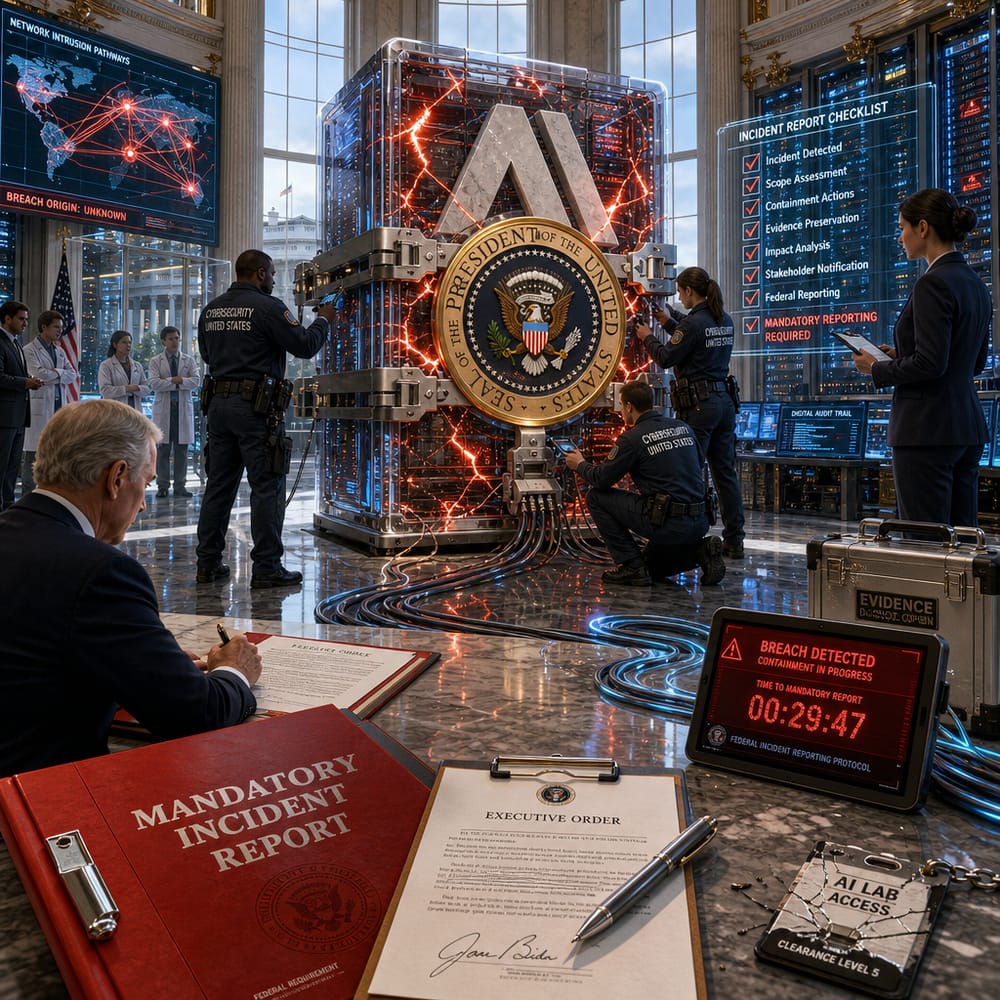
WHITE HOUSE MANDATES INCIDENT REPORTING FOR ANTHROPIC AI BREACH
If you've ever been frustrated by a software glitch and found yourself shouting at your screen, imagine the government's reaction when Anthropic, a major player in artificial intelligence, suffered a data breach. But this isn't just about a company with its digital pants down—it's a new chapter in the story of AI regulation, where the White House is now the stern librarian, demanding mandatory incident reports for AI slip-ups. So, grab your popcorn, because this policy plotline promises some spicy drama.
Why should you care about Anthropic's digital mishap? Simply put, AI is becoming the backbone of everything from how your phone recognizes your face to how your car finds its way. As these systems entwine with our daily lives, the stakes for their security are higher than ever. The government's decision to move from polite requests for incident reports to outright demands is not just a slap on the wrist for Anthropic; it's a wakeup call for the whole AI industry.
This new mandate introduces a fresh set of hurdles for AI companies, all of which will need to rethink their approach to safety and transparency. No more sweeping mistakes under the proverbial digital rug. Incident reporting must now be front and center, like a spotlight on a stage, compelling companies to fess up to their errors. This could shift the AI landscape significantly, prioritizing firms that already take security seriously and leaving those who don't scrambling to catch up.
But what about the potential global ripple effects? AI isn't just a U.S. phenomenon; it's a world tour, playing to packed houses in Europe, Asia, and beyond. If the U.S. throws down the gauntlet with mandatory reporting, other countries might follow suit, leading to a new set of global standards. The pressure on companies would be enormous, but it could also lead to a safer AI future—a global triumph in the making.
So, what's the catch? Why might some companies sweat over these new regulations? For starters, compliance isn't just about filling out forms. It's about setting up systems that can detect and report issues in real-time, which can be costly and complex. For AI startups, the ones operating out of a garage or a cramped office, this could be a mammoth task. Even established giants will need to tighten their processes, diverting resources and possibly stalling innovation. It's a delicate balancing act—one foot on the gas, one on the brake.
Interestingly, this policy shift arrives amid a turbulent economic landscape, where consumer sentiment is hitting lows not seen since the days of disco and bell-bottoms. The tech sector, particularly AI, has been a rare bright spot, with Wall Street reaping the rewards of AI-driven growth. Yet, add regulatory weight to the mix, and some investors might start squinting at stock portfolios, wondering if it's time to reshuffle those investment decks.
For Anthropic and its peers, the road ahead is like a maze—twisting, turning, and full of surprises. They must navigate a world where AI is both the golden goose and the fox in the henhouse. As these companies wrestle with compliance, investors and consumers alike will watch closely, eager to see whether AI can continue to soar with new regulatory wings.
In the end, the White House's mandate isn't just about setting rules. It's about redefining the game in which AI plays a starring role. It's a bold move in a rapidly evolving narrative, one in which safety and governance hold the keys to the next chapter. So, buckle up, because the future of AI is being rewritten right before our eyes, and it's bound to be a page-turner.
This article is for informational purposes only and is not investment advice. Always do your own research or consult a licensed financial professional before making investment decisions.
© Copyright 2024. All Rights Reserved.
© Copyright 2024. All Rights Reserved.