

White House Crypto Summit: Implications for Policy and Market
Thursday, August 20, 2026
WHITE HOUSE CRYPTO SUMMIT: WHAT DOES IT MEAN FOR YOUR DIGITAL WALLET?
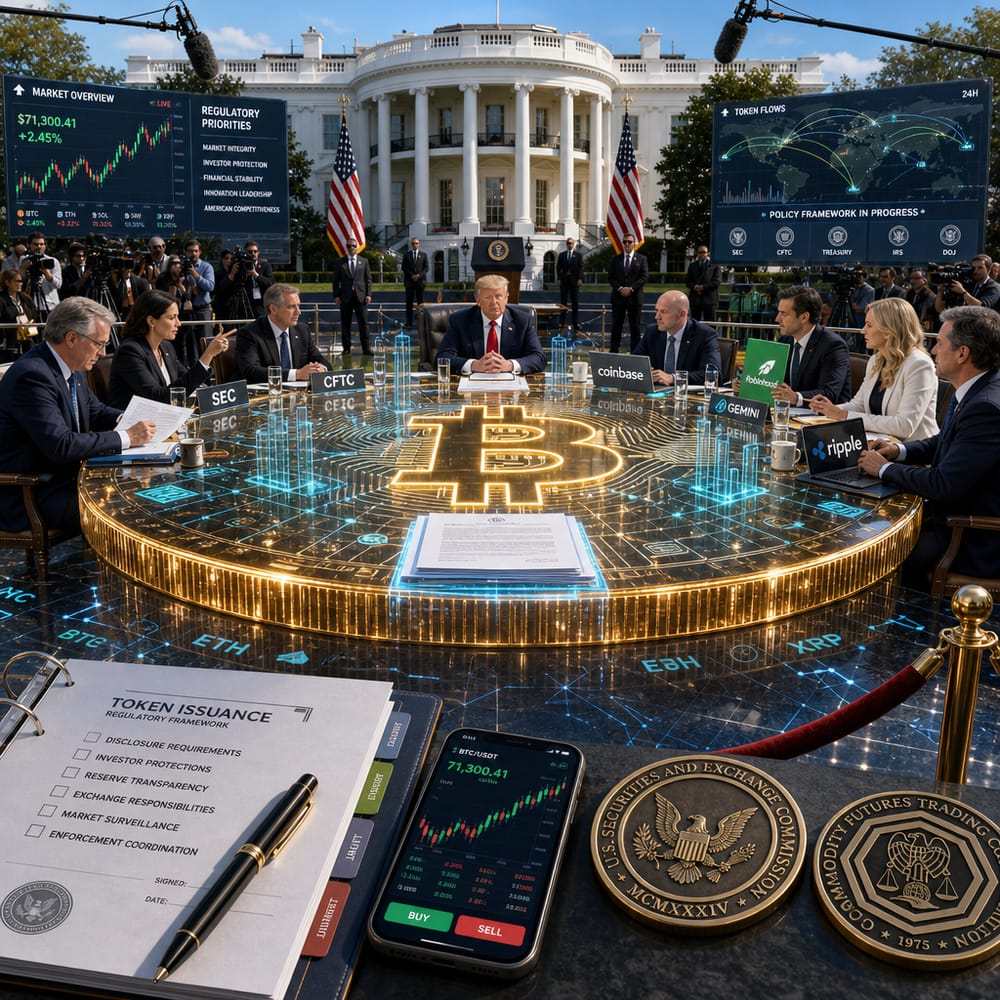
Move over, traditional finance. There's a new sheriff in town, and it's digital, decentralized, and daring. Picture this: President Trump, the SEC, and the CFTC leaders all under one roof, with the biggest names in crypto. Sounds like the start of a high-stakes poker game, right? But it was more like a summit – a gathering of minds to chart the future of crypto regulation. So, why should U.S. retail investors care? Because this summit might be the plot twist that could turn the crypto world upside down.
First, let's talk outcomes. The big takeaway from this meeting was the president's newfound interest in making crypto exchanges like Hyperliquid, which has been surfing on the high-tide waves of popularity with its perpetual futures trading, play nice with Uncle Sam. President Trump, ever the showman, hinted at potential regulations that aim to domesticate this digital wild stallion. He mentioned working with the Commodity Futures Trading Commission (CFTC) to bring Hyperliquid into the U.S. market legally. Cue the applause from crypto proponents and the side-eye from traditional exchanges.
This meeting, though steeped in the usual political fanfare, could actually mean business. Emphasis on "could" because, with politics, nothing's set in stone. But if these regulatory teasers lead to actual frameworks, it could mark a tectonic shift in how cryptos are bought, sold, and traded. Coinbase, Robinhood, Gemini, and Ripple – all companies that have thrived in the current climate – might need to recalibrate their compasses if new laws are passed.
So, how would this summit influence future regulations? Well, picture a regulatory landscape that's less like the Wild West and more like a well-organized circuit. By focusing on token issuance and exchange responsibilities, the government aims to bring more transparency and security – or so they say. Investors might see this as a double-edged sword: On one hand, it could lead to more stability and confidence in the market; on the other, it might stifle the very innovation that makes crypto exciting.
It's not all smooth sailing, though. The crypto industry's main concern is regulatory overreach. The space has thrived on its decentralized, unregulated ethos. The fear is that too much red tape could stifle innovation. But like it or not, if you're in the crypto game, better regulations might just be the secret sauce needed to attract more institutional investors. And that, my friends, could mean more dollars in your digital pockets.
With all this buzz, you'd think the crypto market is sitting on a rollercoaster. And you'd be right. News like this tends to shake things up – just look at how Hyperliquid Strategies (with the slick ticker, PURR) surged 30% following the president's comments. Not bad for a day's work, especially in a market known for its volatility.
But why should you, the retail investor, care about all this? Because understanding the potential impacts of regulation on the crypto market could be the key to your next big investment move. It's essential to keep an eye on these developments and consider how they might affect your current holdings or future investments. Whether you're a crypto die-hard or just dipping your toes in, these regulatory shifts could change the game.
In conclusion, while the White House Crypto Summit may seem like just another political powwow, its implications could be far-reaching. The potential shift in regulations could either be the anchor that stabilizes the market or the weight that holds back its growth. As always, the best strategy is to stay informed, stay flexible, and keep an eye on how this digital evolution unfolds.
Now, let's see if the powers that be can hold their nerve and turn those summit discussions into solid action. Who knows? Maybe one day, you'll be reminiscing about the good old days before crypto went mainstream. Until then, happy trading!
This article is for informational purposes only and is not investment advice. Always do your own research or consult a licensed financial professional before making investment decisions.
© Copyright 2024. All Rights Reserved.
© Copyright 2024. All Rights Reserved.