

When Higher Yields Hurt Stocks
Monday, August 17, 2026
WHEN HIGHER YIELDS HURT STOCKS
Imagine you’re a chef working in a Michelin-star kitchen. You’re juggling a dozen ingredients, each with its own timer, to create a dish worthy of the elite. Now, picture the stock market as that kitchen. The 10-year Treasury yield? It’s the unexpected guest who’s just shown up, and it’s bringing the heat—literally.
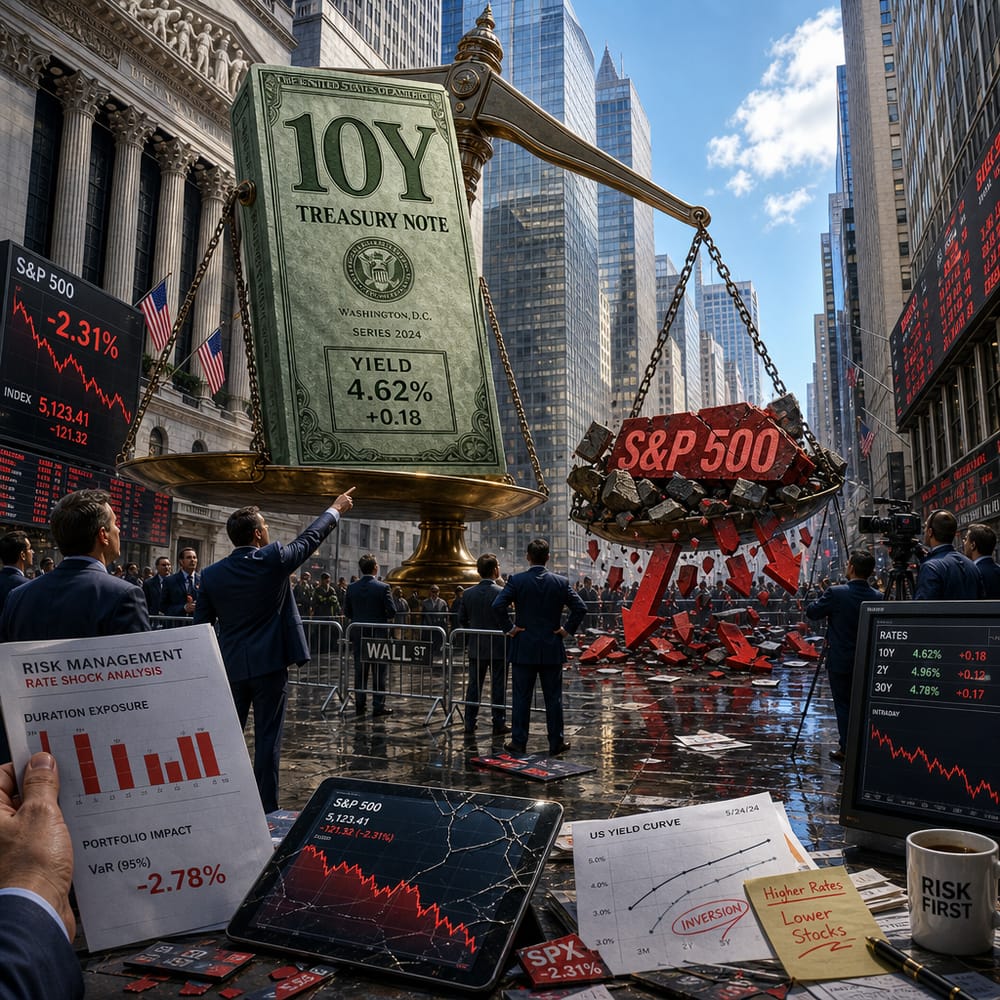
Let’s get one thing straight: the relationship between the 10-year Treasury yield and the S&P 500 is like a seesaw. When yields go up, stocks often go down. Why? Because investors start to think, "Hey, maybe I’ll park my money in these nice, safe Treasury bonds instead of risky stocks." And just like that, the price of stocks, especially the big names in the S&P 500, take a hit.
So why are rising yields making Wall Street break out in hives? Picture yields as the backbone of your typical mortgage or car loan. When they rise, borrowing money becomes more expensive for everyone—from homeowners to multinationals. Higher borrowing costs can mean less money for companies to invest in growth, which can lead to lower revenues and, you guessed it, lower stock prices.
But this yield-stock tango is not just about immediate costs. It’s also about expectations. Investors—those ever-watchful hawks—are constantly assessing the economic landscape, and right now, it's looking a bit like a rollercoaster with a malfunctioning brake system.
So, what’s driving this deepening negative correlation between yields and stocks? Enter stage left: macroeconomic factors. Inflation, employment numbers, consumer spending—all the usual suspects are in the lineup.
Inflation has been a relentless force, reminiscent of a toddler demanding attention. As prices soar, the Federal Reserve looks to cool things down with interest rate hikes. This tug-of-war pushes yields higher, which, as we’ve covered, spells trouble for stocks. But it’s a delicate dance. Raise rates too fast, and you risk sending the economy into a tailspin. Move too slow, and inflation runs rampant, eroding the purchasing power of households and businesses.
And then there’s the global stage, which is about as stable as a soap opera plot. Geopolitical tensions—whether it’s a U.S.-Iran skirmish or economic spat between giants—can send shockwaves through financial markets. Investors crave predictability, and when the world is anything but, they often turn to the relative safety of government bonds, further driving up yields.
Now, if you’re sitting there wondering how this all affects your retirement fund or your stash of stock investments, you're not alone. For retail investors, understanding these movements is crucial. When yields rise, it might be time to reevaluate the mix of stocks and bonds in your portfolio. Diversification isn’t just a buzzword; it’s your safety net in turbulent times.
Higher yields don’t universally spell doom for stocks. Some sectors thrive in this environment. Financial stocks, for example, might see a boost as banks profit from the higher interest rate spreads. So, while your tech stocks might be wincing, your financials might be quietly celebrating in the back room.
In this dynamic dance between yields and stock prices, being nimble is key. Keep an eye on economic indicators—unemployment rates, consumer confidence, and yes, those pesky inflation numbers. They’re your guide in this ever-shifting market landscape.
So, what’s the takeaway? As the 10-year Treasury yield continues its climb, keep your investment strategy grounded. Recognize the signals, adjust your course, and remember: the market is like that Michelin-star kitchen. There’s always more than one way to cook up success. You just have to keep your cool when the heat’s turned up.
This article is for informational purposes only and is not investment advice. Always do your own research or consult a licensed financial professional before making investment decisions.
© Copyright 2024. All Rights Reserved.
© Copyright 2024. All Rights Reserved.