

Whale Accumulation Noted: Addresses Holding 10–10,000 BTC Added Over $1.2B Since Late July
Sunday, August 16, 2026
WHALE ACCUMULATION NOTED: ADDRESSES HOLDING 10–10,000 BTC ADDED OVER $1.2B SINCE LATE JULY
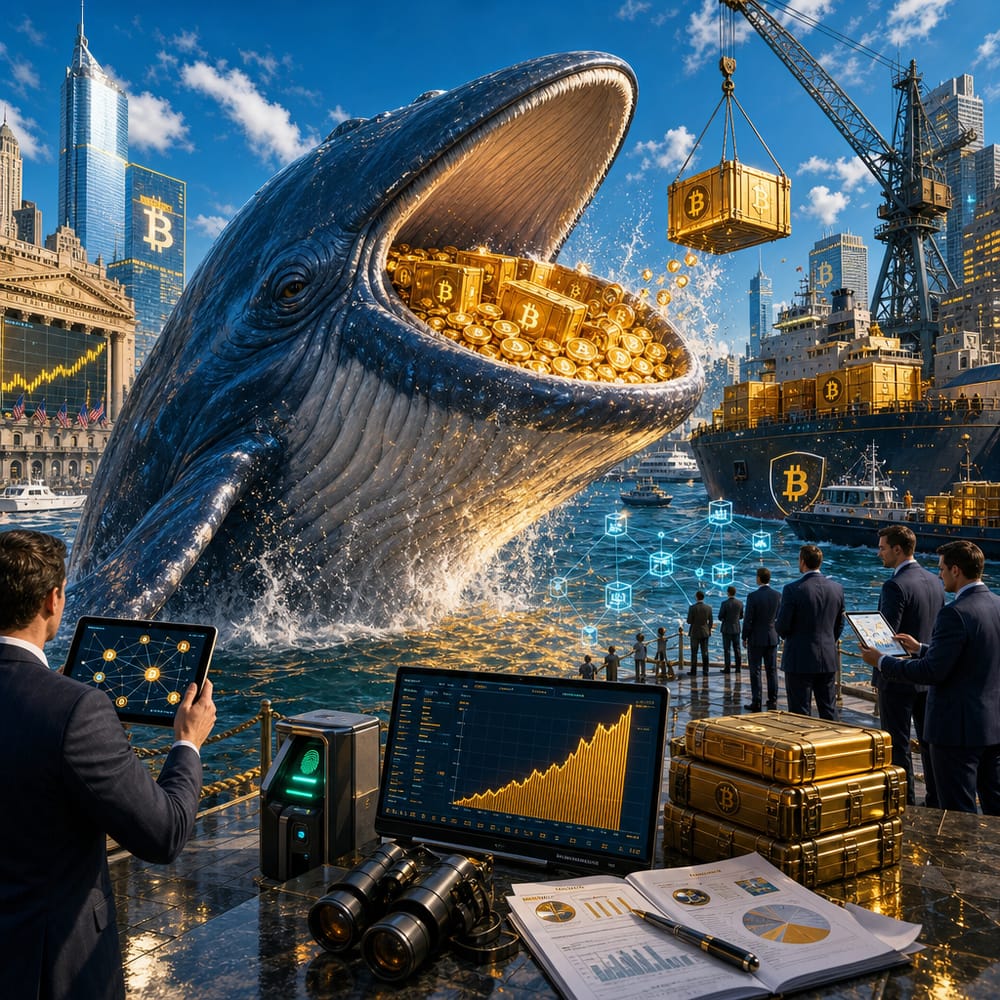
If you've ever wondered what might be lurking beneath the financial waters of Bitcoin, let me introduce you to "whale accumulation." No, it's not a new marine biology term. It's a flashy way of saying that big-time Bitcoin investors—those who own between 10 and 10,000 BTC—are gobbling up Bitcoin like they're at an all-you-can-eat buffet. And since late July, they've picked up more than 20,000 BTC, which translates to over $1.2 billion. Yes, you read that correctly. That's billion with a “B.”
So, what's motivating these whales to hoard Bitcoin like it's the last bottle of spring water during a heatwave? Is it just because they can? Or are there other juicy details beneath the surface that you need to know?
The savvy investors—known affectionately as whales—seem to be signaling something: that a bullish tide might be rolling in. Historically, when the big fish start accumulating, it's often perceived as a telltale sign that Bitcoin's price may see an uptick. Think of it like this: if the smartest kid in class suddenly starts buying up all the homework copies, you can bet they know something about an upcoming pop quiz—and they're preparing to ace it.
There are several currents that might be influencing this surge in whale activity. For starters, let's take a look at the macroeconomic conditions. Inflation fears are like that annoying tune you can't get out of your head, with persistent concerns about the purchasing power of traditional currencies. Bitcoin, with its capped supply and decentralized nature, presents itself as a tempting hedge against the world's fiscal follies.
But the whales may also be eyeing some potentially positive external signals for Bitcoin. The cooling off of wholesale inflation in July suggests a slight easing in the pressure cooker of economic stress. When businesses don't have to shoulder as many cost increases, it could be an omen that consumers—and investors—may find a bit of relief. And when the tide of panic subsides, risky assets like Bitcoin often find their footing.
Then there's the geopolitical dance. As global tensions and conflicts continue to unfold, the Bitcoin whale club might be banking on uncertainty driving more investors towards cryptocurrency as a safe haven. Recent world events, such as the ongoing war in Iran and potential diplomatic headwinds, can ripple through markets everywhere, pushing investors to seek refuge in decentralized assets.
But let's not ignore the current state of the crypto market itself. The never-ending chatter about regulatory developments worldwide and technological advancements within the blockchain space also play pivotal roles. While governments wrestle with how to regulate this digital beast, and big tech companies race to integrate blockchain technology, interest in Bitcoin remains feverishly high.
So, what does this all mean for the everyday retail investor like you and me? Is now the time to channel our inner whale and start diving into Bitcoin ourselves? Well, here's the thing. While it's tempting to follow the whales' lead, it's also crucial to remember that Bitcoin's waters are notoriously choppy. Despite its growth potential, Bitcoin still poses risks that are not for the faint-hearted.
Should Bitcoin's price surge as a result of whale accumulation, it could indeed open up opportunities for savvy investors. But as always, one's crypto strategy should be as carefully crafted as a sushi chef slicing sashimi—not rushed or reckless.
So, whether you're a crypto enthusiast or a cautious spectator, keep an eye on the whales' movements. Their underwater maneuvers could very well shape the tides of Bitcoin's future, for better or worse. And as we all know, in the unpredictable world of finance, knowledge is the best kind of life preserver—especially when you're navigating waters that are teeming with whales.
This article is for informational purposes only and is not investment advice. Always do your own research or consult a licensed financial professional before making investment decisions.
© Copyright 2024. All Rights Reserved.
© Copyright 2024. All Rights Reserved.