

WeWork Downgrade: A Signal of Commercial Real Estate Struggles
Monday, August 17, 2026
WEWORK'S MARKET JITTERS: THE STATE OF COMMERCIAL REAL ESTATE
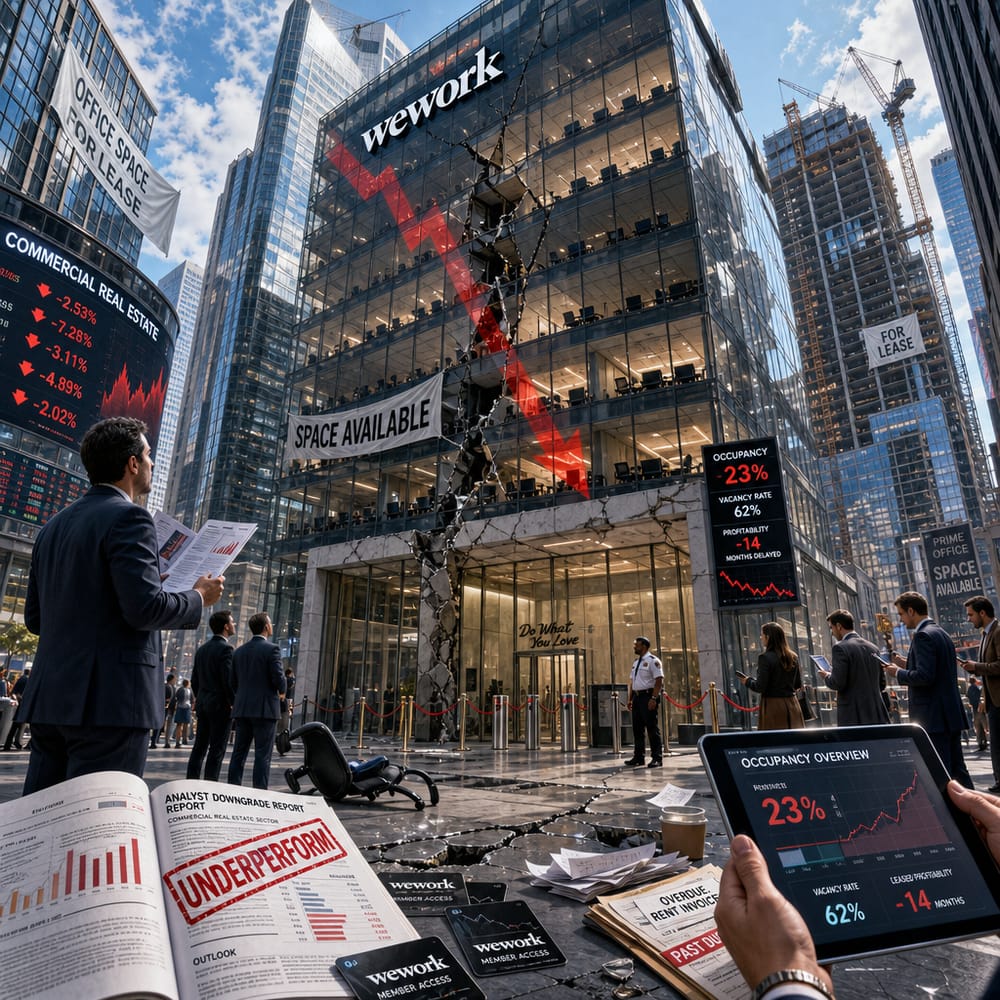
Picture this: WeWork's stock, which was once the poster child for the co-working revolution, has been downgraded to "Underperform" by a major analyst. If you’re wondering whether this is just another dreary day on Wall Street, think again. This isn't just about one company fumbling its way through fiscal challenges—it's a flashing red light for the entire commercial real estate sector.
Let’s dive into why all of this actually matters, shall we? If you’ve ever tried to rent office space, you’d know that WeWork has been like that quirky neighborhood uncle with a never-ending supply of ideas—some brilliant, others making you question his sanity. And while Uncle WeWork rattled the real estate world with its innovative take on shared workspaces, it’s now stumbling through what looks like an awkward adolescence.
The downgrade to “Underperform” is like telling a sprinter they should stick to jogging. But why now, and why does it matter so much? WeWork’s troubles—a toxic combination of low occupancy rates and perpetual deferred profitability—are a microcosm of the issues plaguing the commercial real estate market at large.
Here’s the deal: The world has changed, my friends. Companies realized they didn’t need all those fancy office spaces when their employees could hammer out Excel sheets in pajamas from home. This hybrid work model isn’t just a pandemic-era hack; it’s here to stay. And that’s a conundrum for commercial real estate, including big-name players like WeWork.
Now, you might be thinking, “Okay, but what does this WeWork melodrama mean for other companies in the sector?” Well, it’s not just WeWork that should be biting its nails. Commercial landlords might want to consider cutting rent prices or offering more flexible leases if they want to keep their office buildings from turning into ghost towns.
Picture cavernous, empty floors echoing with the dreams of companies gone remote. Kind of spooky, right?
But let’s look at the broader ripples. If WeWork, with all its branding and market presence, is struggling, what does that say about smaller co-working spaces that don’t have as much capital to ride out the storm? Investors might start considering how well these companies are managing their spaces and if they have the flexibility to adapt to new market demands—or if they’re paddling up a creek without a paddle.
If you’re an investor, you might be scratching your head, wondering how to navigate these swirling waters. One word: diversification. Just like you wouldn’t put all your eggs in one basket, don’t hitch your financial future to the fate of commercial real estate alone. Explore other markets or sectors that are thriving, even in a post-pandemic world. Think tech or renewable energy—places where growth feels more like a guarantee and less like a gamble.
And for those of you in the market, it's time for a reality check. The shiny allure of pre-pandemic corporate towers is fading. This doesn’t mean commercial real estate is doomed. Far from it. Just like any other market correction, this is an opportunity to adapt, innovate, and come out stronger on the other side.
So, what’s the takeaway from WeWork’s downgrade? It’s a wake-up call. Whether you’re an investor, a potential tenant, or a player in the real estate arena, flexibility is key. Office spaces are evolving, and the industry must respond or risk being left behind.
Stay nimble, stay informed, and, whatever you do, don’t become too comfortable. Because, just like Uncle WeWork, the market has a way of surprising us all.
This article is for informational purposes only and is not investment advice. Always do your own research or consult a licensed financial professional before making investment decisions.
© Copyright 2024. All Rights Reserved.
© Copyright 2024. All Rights Reserved.