

Wendy’s (WEN): Sharp Sell-Off Amid Trian’s Retreat from Takeover Talks
Saturday, August 29, 2026
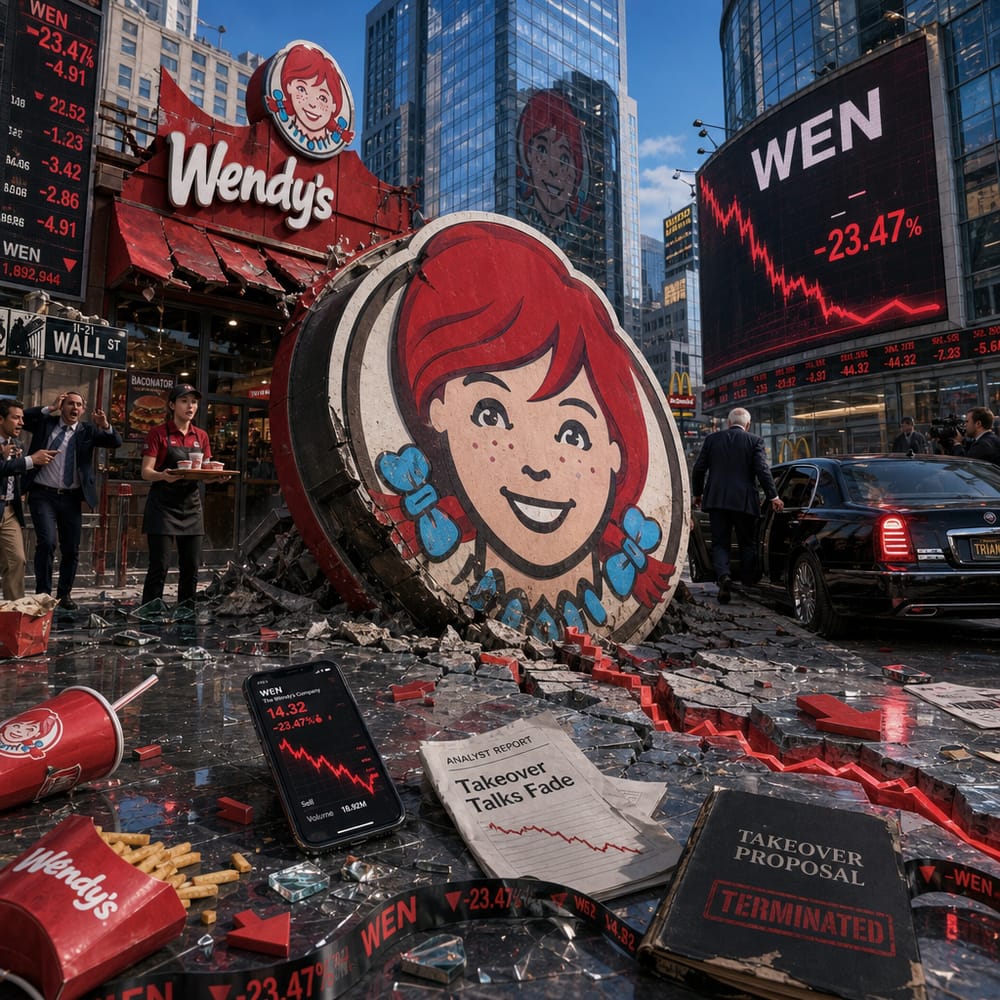
WENDY'S IN A PICKLE: WHAT TRIAN'S RETREAT MEANS FOR THE BURGER GIANT
Imagine biting into your favorite Wendy's burger only to realize that the secret sauce is missing. That's what investors felt this week when Trian Fund Management, the activist hedge fund led by Nelson Peltz, suddenly decided to abandon their takeover talks with the fast-food giant. Wendy's stock nosedived faster than you can say "Frosty," leaving everyone wondering: what's next for the square-patty empire?
Why did Peltz and his band of merry investors pull back? Well, in Wall Street's version of a soap opera, it's always about strategy and money. Trian has been Wendy's largest shareholder for years, and their influence has been as ever-present as that friendly redhead on the sign. Historically, Trian has nudged Wendy's into various strategic maneuvers, from cost-cutting initiatives to the adoption of a more digital-first approach. But now, pulling back from takeover talks has caused a wave of uncertainty to ripple through the market.
As often happens when uncertainty enters the room, Wendy's stock took a sharp dive. Investors are left scratching their heads, wondering about the burger brand's valuation. The stock's plummet might seem as explosive as a ketchup packet underfoot, but the real question is: what happens next? Will another investor swoop in, or will Wendy's chart its own course?
The valuation waters are murky. Wendy's current predicament puts it in a vulnerable position, potentially opening the door for other activist investors or even rival chains with acquisition ambitions. If Wendy's can't come up with a flavor of transformation that investors crave, its shares might continue to hover like a fry dropped under a car seat—hard to reach and easy to forget.
Historically, Trian's involvement has been a two-edged sword for Wendy's. On the one hand, they've championed strategic changes that propelled growth. But on the other, their exit strategy now leaves the company in the lurch. Investors are left pondering: without Trian at the helm, does Wendy's have the juice to maintain its sizzle in the fiercely competitive fast-food market?
As Wendy's stock flounders, it's important to consider the technical support levels—the prices at which the stock might find its footing. Right now, there's chatter among market enthusiasts that Wendy's shares could stabilize between the $18 to $20 range. If it dips below this level, it may signal deeper troubles, as investors might start losing faith like a soggy bun losing its shape.
The market's immediate response to Trian's retreat might feel dramatic, but in the financial world, today's panic often becomes tomorrow's opportunity. It's worth keeping an eye on Wendy's moves in the wake of this upheaval. The company still has its iconic brand, a loyal customer base, and a menu that continues to delight millions.
In the fast-food industry, staying in the spotlight often means keeping up with trends—whether that's testing out new plant-based menu items or doubling down on delivery services. Wendy's might need to steer into innovation more aggressively, perhaps by harnessing technology to enhance customer experience or exploring global expansion opportunities.
In the end, while Trian's decision to step back has caused a stir, Wendy's still has all the ingredients needed to cook up a comeback. Investors and burger lovers alike will be watching closely. Can Wendy's keep flipping those burgers while flipping the narrative on Wall Street? Only time—and perhaps a bit of strategic magic—will tell.
This article is for informational purposes only and is not investment advice. Always do your own research or consult a licensed financial professional before making investment decisions.
© Copyright 2024. All Rights Reserved.
© Copyright 2024. All Rights Reserved.