

Wendy's Faces Stock Decline Amidst Cooling Takeover Interest
Saturday, August 29, 2026
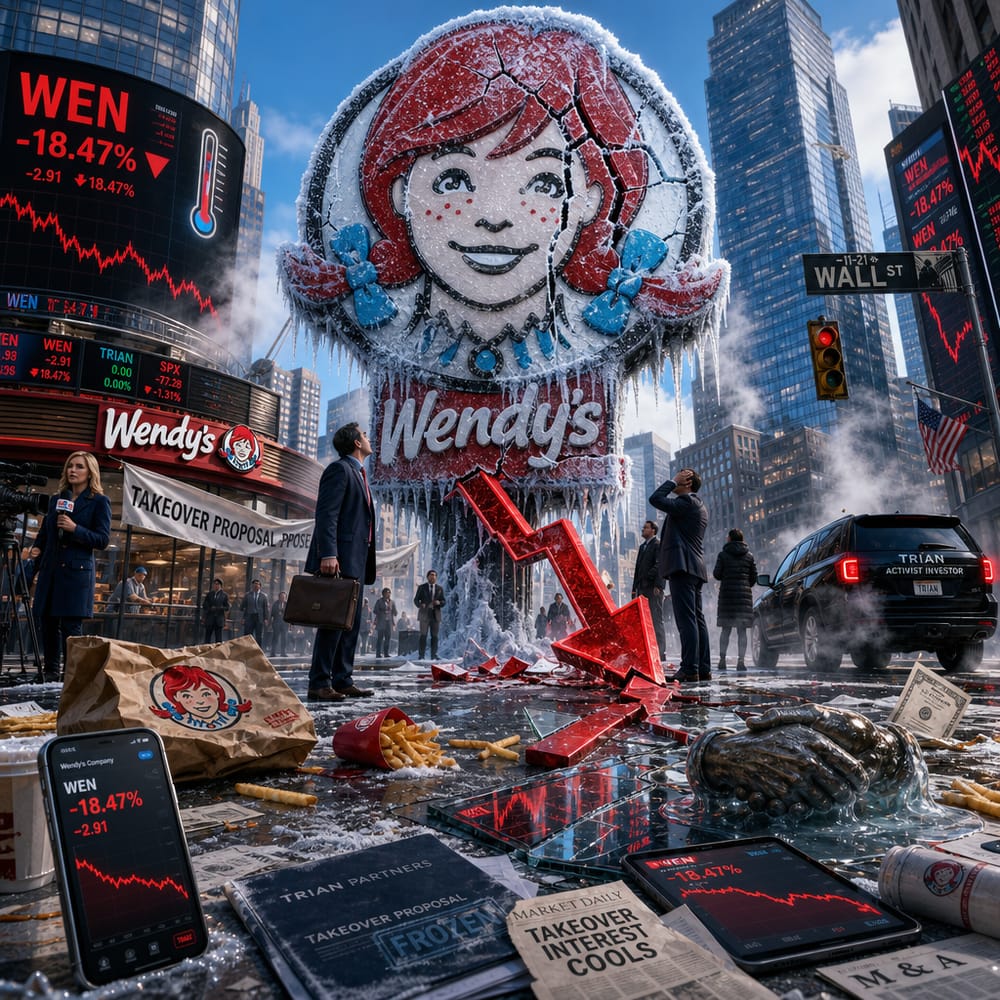
ARE WENDY’S SHARES NO LONGER A HOT COMMODITY?
When it comes to fast food, Wendy's has never shied away from bold flavors and cheeky social media antics. But now, the company finds itself on the wallop end of the frying pan as its stock sizzles downward, much like a forgotten burger patty. The catalyst? Trian Fund Management, the sharp-toothed investment firm led by activist investor Nelson Peltz, recently signaled a loss of appetite for a potential Wendy's takeover. The result was a sharp decline in Wendy's shares, leaving retail investors wondering if this dip is just a flash in the pan or a sign of more fundamental issues in the fast-food sector.
WHAT MAKES A TAKEOVER DELICIOUS?
In the world of mergers and acquisitions, a takeover is like a Big Mac-sized deal—a chance for investors to swoop in, shake things up, and hopefully walk away with extra lettuce and a side of returns. Peltz and Trian have long been captivated by Wendy's, even holding a significant ownership stake for years. But their waning interest in a full-blown takeover has suddenly cooled investor enthusiasm faster than last night's fries.
So what's gone wrong? It seems the fast-food industry, once seen as a recession-proof bastion, is facing a new set of challenges. A diet of high inflation, evolving consumer preferences, and fierce competition from both traditional rivals and upstart brands has made it tougher to deliver consistent value.
ADDING SOME FLAVOR TO WENDY’S FUTURE
What could spice up Wendy's stock again? First, Wendy's could dive into expanding its breakfast menu, an untapped goldmine in the fast-food world where McDonald’s and Dunkin’ have long dominated. A few more savvy menu innovations could provide just the sizzle Wendy's needs to draw in that morning crowd and reinvigorate investor interest.
Another possibility lies in digital transformation and delivery. Amidst tech backlash and economic uncertainty, consumers have demonstrated an appetite for convenience that delivery apps and drive-thru lanes can satisfy. Expanding these services could give Wendy's a more robust slice of sales pie, thus potentially boosting its stock.
ACTIVIST PRESSURE: FRIEND OR FOE?
With Trian backing off, the field is now wide open for another activist investor to step in, maybe even shake up the boardroom or demand strategic shifts. Activist investors often arrive with proposals to cut costs, sell off assets, or change leadership, and while their arrival can be tumultuous, it can also lead to stock price appreciation if the right moves are made.
However, Wendy’s management needs to have a clear plan, or they might find themselves on the defensive end of the spatula, which could lead to a messy scramble for control.
WHAT THIS MEANS FOR THE RESTAURANT INDUSTRY
Wendy's dipping stock also signals a potential shift in the restaurant sector's M&A landscape. Investors might become cautious, demanding more transparency and caution before making hefty bids. This could mean fewer deals and a more selective approach for the right opportunities that promise robust returns on investment.
The sentiment in the restaurant industry is already tense, with activity resembling a slow-cooked stew. Brands are focused on innovation and efficiency while battling rising costs. When a major player like Trian backs off from grabbing a well-known burger chain, it might cause other investors to rethink their culinary strategies.
STAYING AHEAD IN THIS BURGER BRAWL
For retail investors, the current turbulence at Wendy's could either be a juicy opportunity or a cautionary tale. If you're already holding Wendy's stock, it might be worth keeping an eye on any whispers from the boardroom or bold menu revamps. For those on the sidelines, this could signal the time to scout for other tasty investments or even reconsider the fast-food sector's growth potential amidst the broader economic stew.
Regardless, Wendy's situation has all the ingredients of a compelling story in the fast-food financial world, where the only certainty is that the market's hunger for value never goes away. So whether our red-headed friend bounces back with a new recipe for success or faces a future of lukewarm reception, one thing's for sure: this is a tale to watch for signs of a potential turnaround—or further decline—in a sector that never ceases to surprise.
This article is for informational purposes only and is not investment advice. Always do your own research or consult a licensed financial professional before making investment decisions.
© Copyright 2024. All Rights Reserved.
© Copyright 2024. All Rights Reserved.