

Wells Fargo and Dollar General: Analyst Upgrades Signal Confidence in Financials and Retail
Friday, October 09, 2026
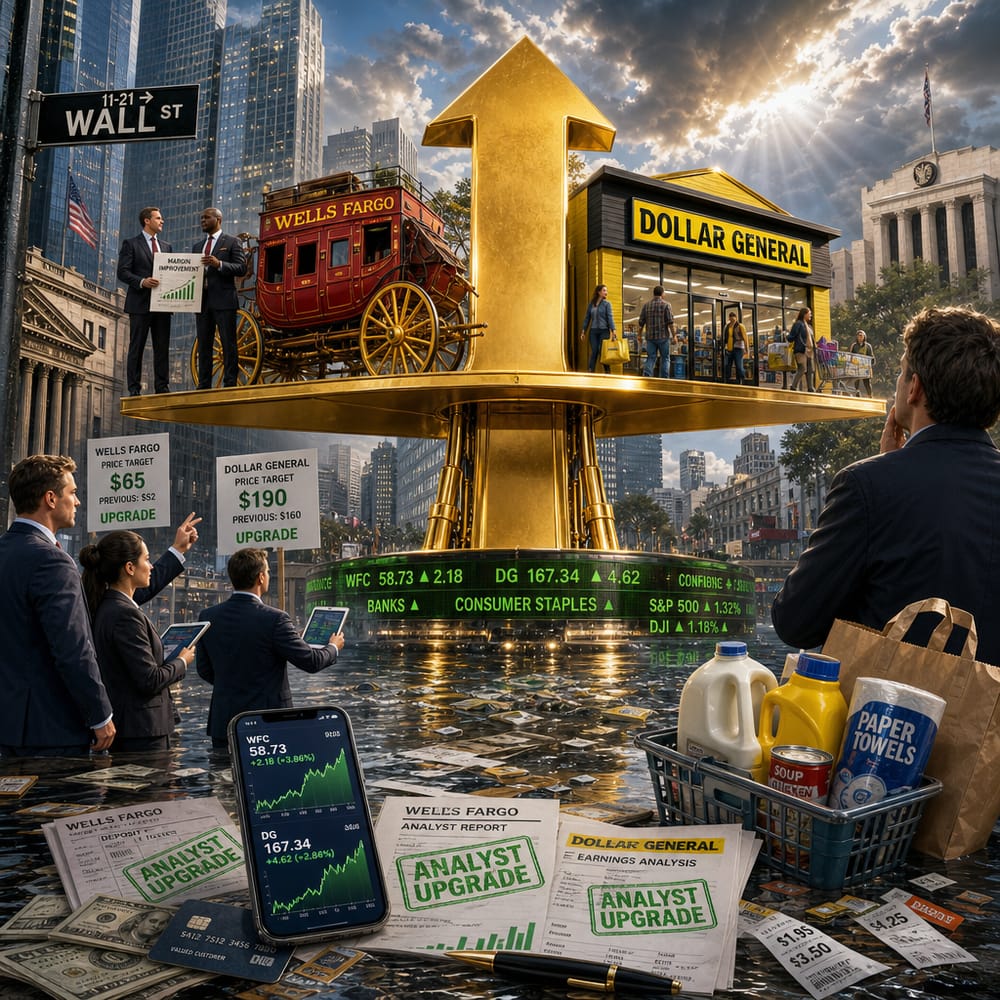
Is there anything more satisfying than a hot cup of coffee and some spicy market news to start your day? Well, folks, grab your mugs because Wells Fargo and Dollar General just got a glowing nod from analysts. Yes, you heard that right. In a time when the market feels like the climatic scene of a Hollywood blockbuster—filled with tension and uncertainty—these upgrades are like a calm, reassuring voice saying, "We've got this."
Let’s break down why analysts are giving these two giants a high-five and what that means for your portfolio.
A TALE OF TWO SECTORS
First, let’s talk Wells Fargo. You know, the financial powerhouse that's been around since the days when people actually sent each other handwritten letters. Recently, analysts have been doing a little dance of joy around Wells Fargo, hinting that its banking margins are looking as robust as a linebacker on game day. Sure, financial institutions might not be the market’s show ponies, but when the economy gets shaky, they’re the reliable workhorses that investors start to appreciate more.
Why the love for Wells Fargo now? Interest rates, my friends. The higher they climb, the wider the bank's profit margins on loans. It's like getting extra cheese on your pizza without the added cost. While some banks are scrambling for a piece of this savory pie, Wells Fargo—with its consumer-friendly image and solid financial footing—is already feasting.
Now, pivot to Dollar General, the unsung hero of the retail world. It's not glamorous, it’s not flashy, but boy does it deliver when times get tough. When the economy throws a fit, consumers gravitate towards stores that give them more bang for their buck. And Dollar General is that comforting presence, ensuring you don’t have to choose between your favorite cereal and paying the rent.
Analysts are upgrading Dollar General because consumer staples, the necessities that keep our lives ticking, are like gold dust during economic uncertainty. As inflation haunts us like an overplayed pop song, Dollar General’s affordability ensures it remains a staple in shopping carts nationwide.
THE SECTOR SHUFFLE
So, what’s the big picture here? It’s all about a classic game of sector rotation. When markets get jittery, investors start shifting their bets from growth sectors—like tech, which can be as volatile as a toddler on a sugar rush—to more defensive options like financials and consumer staples.
Think of it like swapping your flashy sports car for a reliable SUV when the road looks bumpy. Investors are looking for stability, and this pair of upgrades to Wells Fargo and Dollar General signals a potential shift towards safer ground.
WHAT SHOULD YOU DO?
While you’re probably not pondering the fate of the global market over your cereal, understanding these dynamics can help you make smarter choices. Are analysts sending a subtle message that it’s time to park some funds in financials and consumer staples? Perhaps. But remember, investing is like a marathon, not a sprint. It’s about pacing yourself and staying the course.
Keep an eye on these sectors. If you’re looking to weather economic storms, consider bolstering your portfolio with stocks that have a history of resilience. And hey, if Wells Fargo and Dollar General are getting the analyst thumbs-up, maybe it’s time to give them a second look.
In the end, analyst upgrades are like a friend’s Netflix recommendation—worth considering, but always make sure it aligns with your own taste and strategy. While the market plays its endless game of musical chairs, make sure you’re sitting in a comfortable spot. After all, it’s your financial future we’re talking about.
So, as you sip your coffee and scroll through your feed, think about what sectors you want to cozy up to. And remember, even in the most chaotic markets, there’s always a place for savvy investors to find a sense of stability.
This article is for informational purposes only and is not investment advice. Always do your own research or consult a licensed financial professional before making investment decisions.
© Copyright 2024. All Rights Reserved.
© Copyright 2024. All Rights Reserved.