

Weekly Market Recap: Diverging Index Trends Amid Economic Softness
Tuesday, August 18, 2026
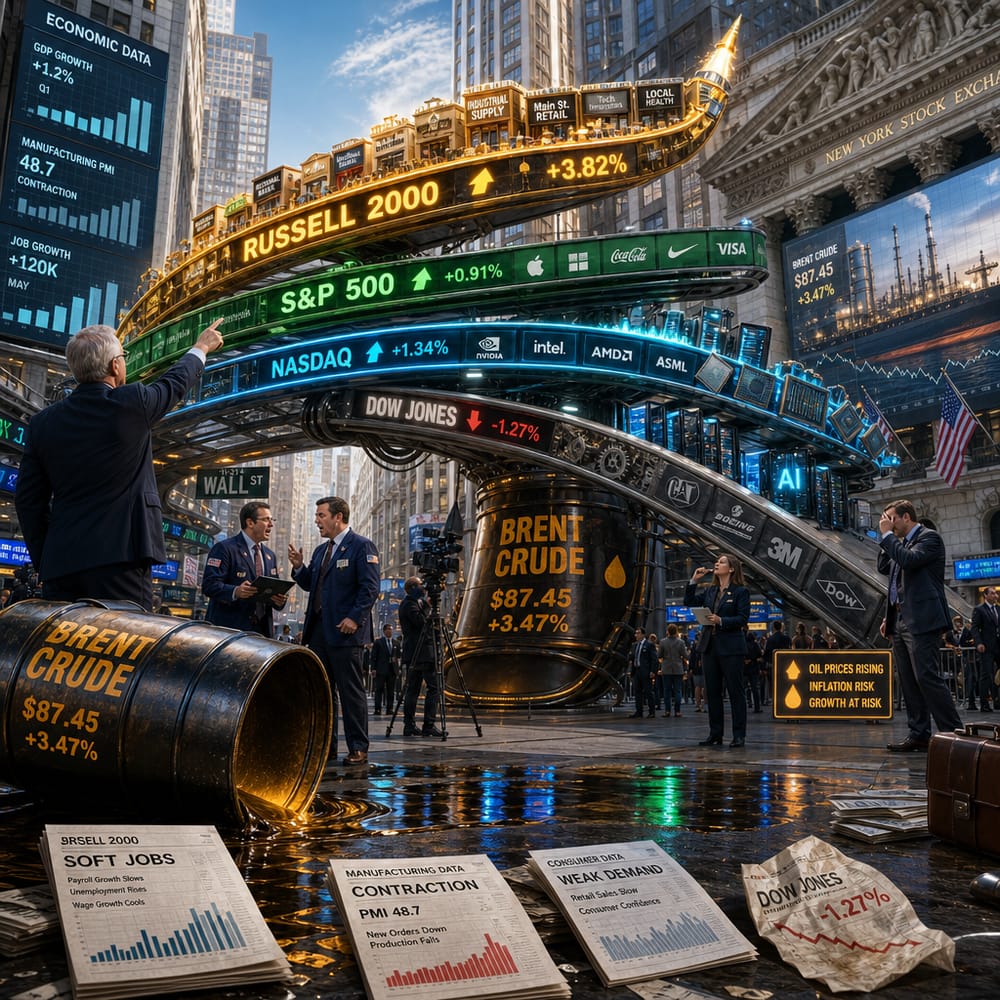
THE CURIOUS CASE OF THE RUSSELL 2000: SMALL STOCKS STEAL THE SPOTLIGHT
When it comes to the stock market, size doesn’t always matter. Just ask the Russell 2000. While the Dow tripped over itself and the S&P 500 and Nasdaq played it safe with modest gains, the Russell 2000 pulled a fast one on Wall Street, strutting to outperformance like a small-cap peacock in a flock of large-cap pigeons. But what's really going on behind the scenes of these index hijinks, you ask? Buckle up, because we're about to take a deep dive into this wild week on Wall Street.
First up, let’s talk about the gentle giant in the room: the S&P 500. Treading water with modest gains, it seems to be taking a cautious approach amidst swirling economic currents. Elevated global bond yields—those pesky numbers that indicate how much Uncle Sam has to coax investors to lend him money—are cutting into investor confidence like an overzealous hairdresser. Add to that the inflated oil prices that are starting to feel like a tax on everyone, from the morning commuter to the global freight shipper, and you've got a recipe for a hesitant market vibe.
Now, if you're wondering why the Nasdaq isn’t dancing the jig of joy with the Russell 2000, blame it on the tech wobble. The semiconductor sector got a little too comfortable and took a nosedive, pulling names like Western Digital and Sandisk along for a less-than-joyful ride. Meanwhile, rising Treasury yields have most investors in a cautious crouch, ready to pounce or retreat depending on which way the wind blows tomorrow.
But hold your horses; the Russell 2000 didn’t come out swinging just because it felt like it. This index, filled with small-cap stocks that you’ve probably never heard of, often behaves like a mood ring for investor sentiment. Right now, the mood seems to be cautiously optimistic. Small caps often benefit from a domestic focus, meaning they're less likely to be caught in the crossfire of international trade squabbles that have recently been bubbling at the surface, like the Strait of Hormuz tensions.
Moreover, during times of economic transition or turbulence, investors sometimes hedge their bets with small caps, hoping these nimble players can dodge the proverbial bullet better than their blue-chip counterparts. It’s as if the Russell 2000 decided to say, "You worry about your bonds and big caps, I'm going to party like it’s 1999."
On the oil front, we've seen Brent crude prices climbing the ladder, driven in part by geopolitical factors and supply disruptions. Rising oil prices can act like a slow poison to market sentiment, squeezing company margins and putting pressure on already anxious investors. For the broader economy, it means higher transportation costs and a likely bump in the inflation numbers that central bankers obsess over like teenagers checking their follower count.
So, why does any of this matter to you, the casual investor, sipping your coffee while doomscrolling through your finance app? Understanding these diverging index trends helps you keep a finger on the pulse of market sentiment. Are investors feeling brave enough to dive into small caps, or are they clutching their blue chips like life vests? It’s a clue into the broader narrative of risk appetite and economic outlook.
Remember, while the big names get the headlines, it's the smaller, scrappier players that can sometimes offer the most intriguing opportunities—or risks, depending on your perspective. Whether you're looking to hobnob with the giants of the Dow or dance with the sprightly spirits of the Russell 2000, it's important to keep your ear to the ground and your wits about you. After all, in this market, the only thing you can predict is its unpredictability.
This article is for informational purposes only and is not investment advice. Always do your own research or consult a licensed financial professional before making investment decisions.
© Copyright 2024. All Rights Reserved.
© Copyright 2024. All Rights Reserved.