

Weekly Jobless Claims Show Further Improvement
Monday, August 24, 2026
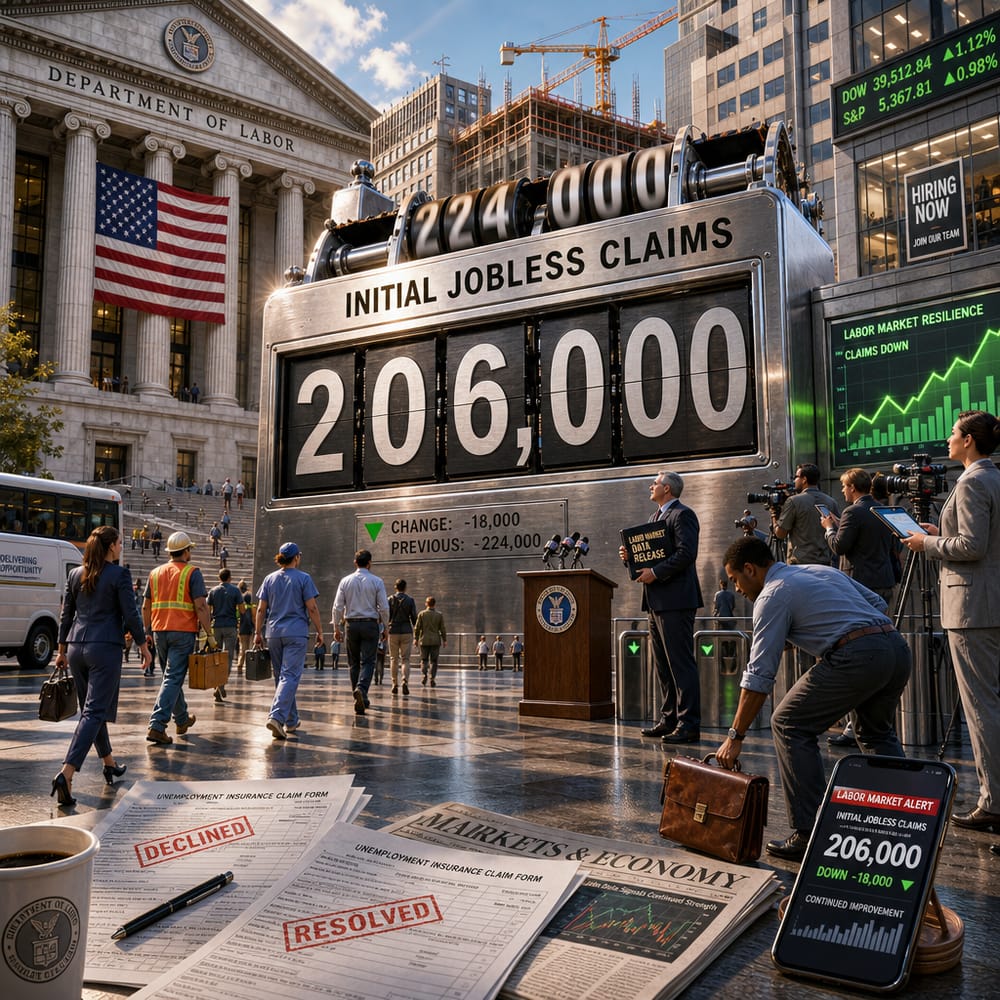
THE JOB MARKET'S SECRET STRENGTH: HOW FEWER JOBLESS CLAIMS COULD SHAKE UP INTEREST RATES
The job market is flexing its muscles again, and it's not just for show. Latest numbers from the Department of Labor reveal a drop in initial jobless claims to 206,000 — the lowest in months. It's as if the labor market is saying, "I've been working out, and I’m ready to lift these economic burdens."
So, what does this really mean, and why should you care? Let’s dig deeper into this economic bodybuilding.
First off, a drop in jobless claims is a bright neon sign that the labor market is not just healthy but potentially thriving. Fewer people filing for unemployment means more folks are holding onto their jobs, and presumably, they’re spending their paychecks. More spending means more demand for goods and services, which is good for businesses, and the cycle of economic cheer continues.
But there’s a puppet master behind the curtain we need to talk about: the Federal Reserve, or the Fed, if you’re on a first-name basis. The Fed’s job is to keep the economy on an even keel, managing inflation and employment levels. When the job market strengthens, it raises an eyebrow at the Fed’s headquarters, hinting at possible tweaks to interest rate policies.
With fewer initial jobless claims, the Fed might see this as a signal to pump up interest rates. Why? Because a robust labor market can sometimes lead to inflation — too much money chasing too few goods. To stall this, the Fed might decide to make borrowing a bit pricier, effectively cooling off spending and keeping inflation in check.
So, what happens if the Fed decides to turn the dial on interest rates? For starters, anything financed by borrowing — think home loans, car loans, and credit card balances — could get more expensive. Mortgage rates, for instance, might leap like they’ve had too many espressos, making it trickier for potential home buyers.
And if you have a tendency to sleep through economics class, here’s the wake-up call: Higher interest rates can also impact the stock market. With bonds potentially offering better returns thanks to higher rates, investors might decide to give stocks the cold shoulder, leading to market volatility.
However, it's not all doom and gloom. A resilient labor market also spells opportunity. Companies that are hiring more could see growth — think tech firms, healthcare providers, and retail giants. These sectors could shine, offering fertile ground for investors who know where to look.
But let’s not forget the ever-present shadow of uncertainty. As the Fed deliberates its next moves, international trade tensions (thank you, escalating U.S.-Canada tariff showdown) and geopolitical concerns (hello, Iran) could throw curveballs into the economic mix. It’s a high-stakes chess game, where every move counts.
For the everyday investor, this is a moment to stay alert. Keep an eye on not only the jobless claims but also the Fed’s moves. Watch how sectors react, and consider consulting a financial advisor to navigate these choppy waters. It’s like being on a roller coaster — thrilling but occasionally hair-raising.
In the end, the drop in jobless claims is a complex dance of numbers, Fed interpretations, and global issues. But understanding these dynamics can give you a leg up, strengthening your financial strategy in a world where the only constant is change.
So, next time you sip your morning coffee and scroll through the latest headlines, remember: the labor market’s brawn could tip the balance in ways you least expect. It’s not just about fewer claims — it’s a reminder of how interconnected our economic tapestry really is. Stay tuned, stay smart, and keep your financial game strong.
This article is for informational purposes only and is not investment advice. Always do your own research or consult a licensed financial professional before making investment decisions.
© Copyright 2024. All Rights Reserved.
© Copyright 2024. All Rights Reserved.