

Weekly Jobless Claims Remain Near Historic Lows
Thursday, October 08, 2026
THE UNSINKABLE LABOR MARKET: WHAT LOW JOBLESS CLAIMS MEAN FOR YOU
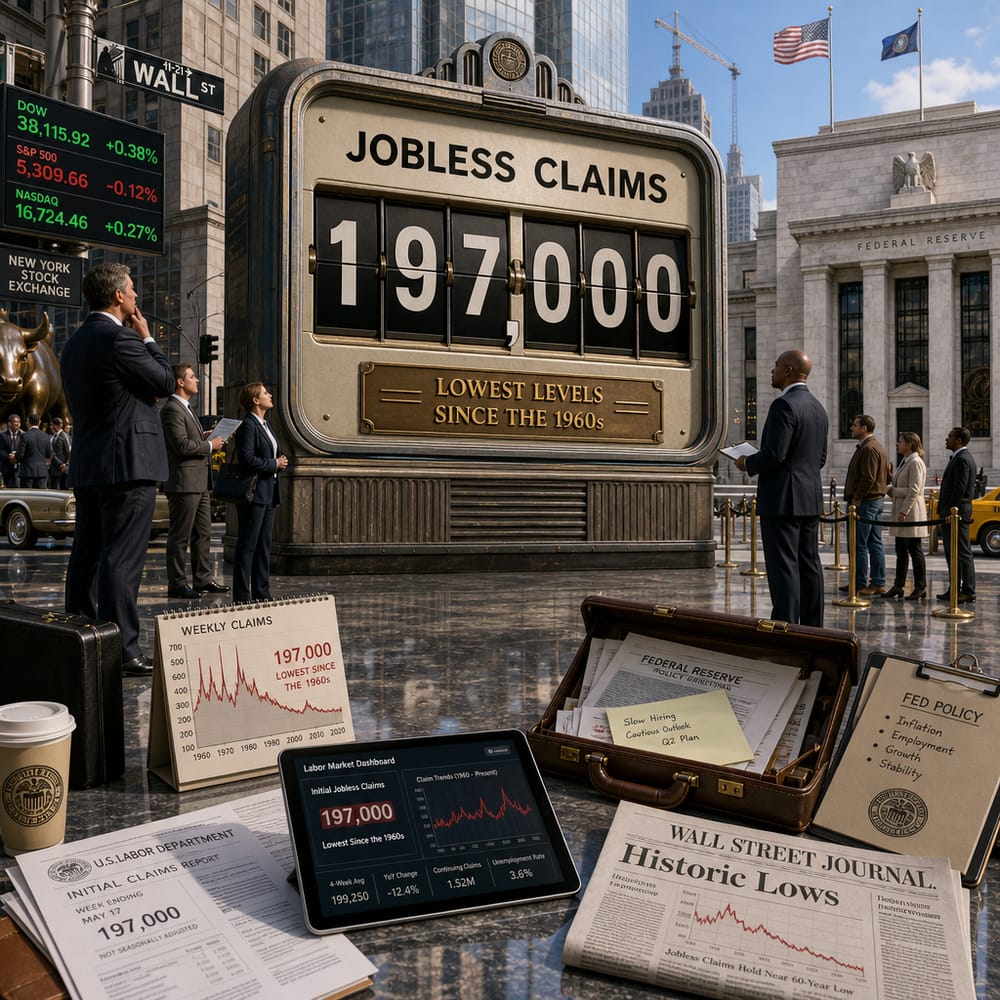
In a world where tech stocks are wobbling like a toddler on a sugar high and oil prices are jumping higher than your heart rate after a triple espresso, there’s one thing that's surprisingly steady: the U.S. labor market. If you’re hoping to spot a layoff storm on the horizon, you might want to pack away that umbrella. The number of people filing for unemployment benefits—a.k.a. jobless claims—has fallen to a cool 197,000. That’s a number so low it’s got historians reminiscing about the 1960s when the Beatles were new, and bell-bottoms were the rage.
So, why is this important? Well, a labor market that refuses to budge can have a domino effect on everything, including the decisions the Federal Reserve (the Fed to its friends) makes about interest rates. And those decisions? They could hit your wallet harder than a surprise avocado price hike.
WHAT'S BEHIND THE LOW JOBLESS CLAIMS?
Picture this: an economic landscape where employers, instead of firing, are holding onto their staff tighter than Apple fans on the latest iPhone launch day. Why? Because finding the right talent is like hunting for the last parking spot at the mall on Black Friday. Businesses know the pain of hiring is real, and once they snag the right person, they’re doing everything short of throwing a parade to keep them.
But it's not all sunshine and daisies. Despite these low layoffs, hiring isn't exactly setting records. The job market right now is like a game of musical chairs with fewer new seats. Companies may be holding onto their current workers, but they’re not adding new faces to the company Christmas card. This "low-hire, low-fire" environment is a double-edged sword—great for job security if you're employed, not so much if you’re on the hunt.
FEDERAL RESERVE AND INTEREST RATES: WHAT'S THE CONNECTION?
Now, let’s talk about the big kahuna: the Federal Reserve. The Fed’s job is to keep the economy running smoothly, like a well-oiled machine. One of the tools in its belt is adjusting interest rates. If the labor market is strong—meaning most people are working and getting paid—it could signal the Fed to increase interest rates to keep inflation from ballooning like a Thanksgiving Day parade float.
However, the "low-hire, low-fire" situation could make the Fed cautious. The job market might look solid, but if companies aren’t hiring, that could be a red flag for future economic growth. It's like having a car that runs great, but with a half-empty gas tank—you can only go so far before you need to refuel.
RISKS OF A "LOW-HIRE, LOW-FIRE" MARKET
But hold your applause; this labor market setup isn’t entirely risk-free. A stagnant hiring market can mean fewer opportunities for job seekers and potentially slower economic growth. If companies aren’t expanding their workforce, it might translate to less innovation and productivity. It’s like trying to win a marathon with one sneaker—possible, but not ideal.
Moreover, if the Fed decides to hike interest rates based on low unemployment figures without accounting for the lack of hiring, it could inadvertently slow down the economy. Higher interest rates can make borrowing more expensive for businesses and consumers, putting a damper on spending and investment—that's the economic equivalent of raining on a picnic.
WHAT'S NEXT FOR THE FED?
St. Louis Fed President Alberto Musalem hinted that interest rates might have to rise over the next six to nine months to tackle inflation. The question is, will the Fed see the labor market’s shiny exterior and decide to hike rates, or will it peek under the hood and notice the hiring hiccup?
In the end, the Fed needs to tread carefully. Rate hikes are like seasoning—too much too fast can ruin the dish. They’ll need to find that perfect sprinkle to keep the economy flavorful but not too spicy for the average consumer.
KEEPING YOUR EYES ON THE MARKET
For everyday investors like you and me, staying tuned to labor market updates is just as important as catching the latest binge-worthy series. The way the job market trends can impact everything from the Federal Reserve's moves to the stocks in your portfolio. A resilient job market might signal strong economic health, but it’s crucial to consider what’s happening under the surface.
So, while the current jobless claims report might whisper sweet nothings about economic resilience, remember to think of the bigger picture. As we navigate through this 'low-hire, low-fire' conundrum, stay curious, stay informed, and keep an eye out—you never know what the next plot twist might bring.
This article is for informational purposes only and is not investment advice. Always do your own research or consult a licensed financial professional before making investment decisions.
© Copyright 2024. All Rights Reserved.
© Copyright 2024. All Rights Reserved.