

Week’s Performance Snapshot: S&P 500 and Russell 2000 Slide as Volatility Creeps In
Tuesday, August 25, 2026
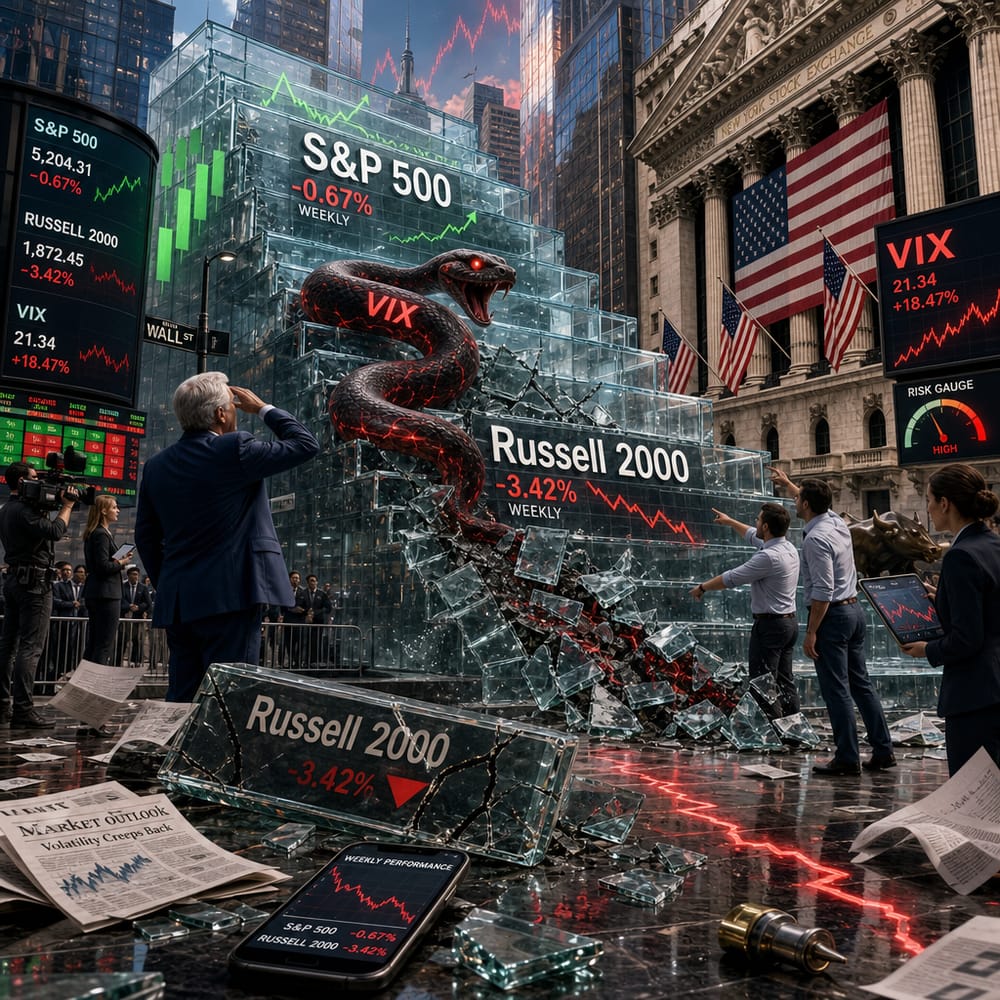
IT'S A WHIRLWIND: S&P 500 AND RUSSELL 2000 SEE SAWS WHILE VOLATILITY LOOMS
Buckle up, investors! If you've been glued to your screens watching the markets this week, you're not alone. The financial rollercoaster has left seasoned traders and newbie investors alike wondering what’s coming next. The S&P 500 had a positive week, but don’t reach for the champagne just yet. Meanwhile, the Russell 2000 has taken quite the tumble, thanks to a cocktail of volatility and small-cap pressures. Let’s dive into this whirlwind and see what’s driving the frenzy and what it means for you.
MARKET VOLATILITY: THE ELEPHANT IN THE ROOM
First off, let's talk volatility. That's the market equivalent of that friend who never RSVPs — unpredictable and a little nerve-wracking. The VIX, often called the “fear gauge,” is reflecting just that, creeping up as investors try to make sense of the current landscape. When volatility rises, it can be a sign that the market is uneasy and that a correction may be on the horizon. Scared yet? You should be, but only just enough to keep your wits about you.
So, what’s stirring this pot of anxiety? A mix of factors, really. Falling Treasury yields have buoyed tech stocks, with semiconductors like Nvidia and AMD making gains, which in turn lifted the Nasdaq. Lower yields typically make stocks more attractive as they reduce the cost of borrowing, feeding the bullish fire in sectors like tech. But don’t pop the confetti too soon because this rally in tech has been offset by losses in more traditional sectors.
On the other side of the coin, geopolitical tensions and economic uncertainties add layers of complexity. The U.S. decision to focus on economic sanctions over military action against Iran has sent oil prices dropping, stirring the global economic pot even more. This creates a ripple effect that can impact everything from energy costs to consumer confidence.
SMALL-CAP STRUGGLES
Enter the Russell 2000, the index that tracks smaller companies and often serves as a litmus test for domestic economic health. This week, it’s been feeling the heat, shedding value as investors shy away from riskier bets. In times of uncertainty, investors tend to flock to larger, more established companies. It’s like preferring a sturdy old sedan over a flashy sports car when the weather looks stormy. The decline in the Russell 2000 could suggest that investors are bracing for a slowdown in the U.S. economy, putting pressure on those small caps that are more vulnerable to domestic downturns.
NAVIGATING THE STORM
Alright, so you’re probably thinking: "Great, the market's a mess. What should I do?" First off, breathe. Increased volatility isn’t necessarily a call to action, but rather a cue to be more mindful of your investment strategy.
Diversification is your best friend in times like these. Spread your investments across sectors and asset classes to cushion against sudden market swings. Consider the balance of your portfolio and whether you’re comfortable with your current level of risk. Maybe it's time to rebalance or explore safer havens like bonds or dividend-paying stocks.
And remember, market dips can be opportunities in disguise. Keep an eye out for buying opportunities in sectors that have been unfairly hammered by sentiment over fundamentals. This isn't about timing the market (a fool’s errand, if you ask me) but rather about being attuned to value.
KEEPING YOUR COOL
Lastly, don't get swept up in the noise. Market chatter can often amplify panic, but staying calm and informed is your best defense. Keep an eye on economic indicators and listen to Fed announcements like clues in a mystery novel.
So, while the market has been a mixed bag this week, remember that volatility is part of the investing journey. Just like any thrilling ride, there are ups, downs, and unexpected turns. Buckle in, stay informed, and you’ll be better prepared to navigate whatever the market throws your way.
This article is for informational purposes only and is not investment advice. Always do your own research or consult a licensed financial professional before making investment decisions.
© Copyright 2024. All Rights Reserved.
© Copyright 2024. All Rights Reserved.