

Wednesday's Wild Volatility: S&P and Nasdaq Recover from Steep Intraday Losses
Thursday, November 26, 2026
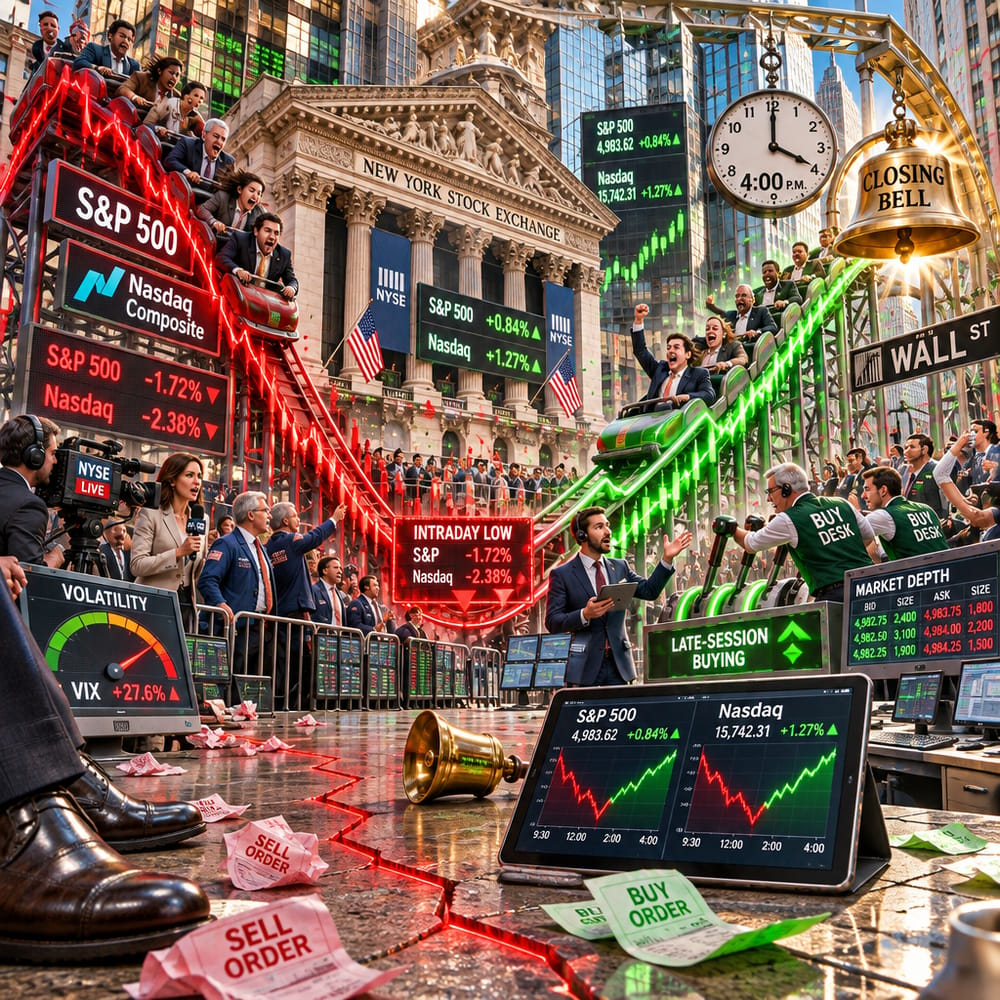
WHAT DRIVES STOCKS TO SWING LIKE A PENDULUM?
Hang on to your hats, folks, because Wednesday’s market moves were the financial equivalent of riding a rollercoaster blindfolded. The S&P 500 and Nasdaq decided to compete in the Swing Olympics, experiencing steep dumps before rallying back to almost flat as the closing bell rang. It was the kind of day that makes you question if stock exchanges have a secret deal with antacid manufacturers.
Let's break it down, shall we? The day started with an unexpected nosedive. Investors were feeling jittery, and not just because they skipped their morning coffee. The culprit? A cocktail of uncertainties that would make any clear-headed investor wonder if they wandered into a speakeasy during Prohibition.
FIRST THE PLUNGE: WHY THE INITIAL SELLOFF?
First, tech stocks pulled a disappearing act worthy of a magician. News of tech glitches affecting major players like Microsoft and Apple hit the wires faster than you can say "IT panic." With whispers of AI uncovering more bugs than a summer picnic, investor anxiety was palpable. But this wasn't just a tech tantrum. Broader concerns about slowing economies, both local and international, added fuel to the fire. Seasonal retail forecasts were looking as gloomy as a November sky, dampening the spirits of consumer-centric sectors.
Then, there’s the international stage playing its part. News coming out of Europe about Pablo Hernández de Cos stepping up as the European Central Bank’s new head added a layer of geopolitical uncertainty. While de Cos comes with a resume that screams “I’ve got this,” the market doesn’t love change, especially when it involves a potential shift in Eurozone monetary policies.
THE BIG RECOVERY: WHO LED THE CHARGE BACK UP?
But just when you thought you could pack it in and call it a day, the market pulled a classic Hollywood comeback. Late in the session, a wave of buying sent stocks back up, like a lifeguard rescuing a floundering swimmer. Tech stocks, which took a beating earlier, found new life thanks to news that helped ease some fears about AI regulation. Investors saw some bargain opportunities and dove back in headfirst.
It wasn’t just the tech sector that dusted itself off. Retail stocks, buoyed by better-than-expected results from a couple of major players, decided to shake off their earlier slump. Consumers might be holding onto their wallets tighter, but some sectors are finding clever ways to adapt and thrive.
Oil stocks, too, played a pivotal role. After initially being dragged down by reports of crashing refining profits, the sector rebounded. This swing was partly due to OPEC+ holding steady on production cuts, which investors interpreted as a sign that prices might stabilize.
SHIFTING SENTIMENT: HOW INVESTOR ATTITUDES EVOLVED
So, what changed the mood as the day wore on? Well, sometimes a market day feels like a group therapy session—initial anxiety gives way to perspective and then a slightly more optimistic outlook. The sentiment shifted from fear to cautious optimism as investors realized the sky wasn’t falling; it was just a cloudy day.
Key institutional investors made moves that signaled a belief in an eventual rebound, and this vote of confidence was contagious. Retail investors, often more skittish, began to follow the lead, piling back into sectors that looked oversold.
And let's not forget the role of algorithmic trading. These robots of Wall Street have the emotional depth of a teaspoon, but their cold, calculated moves helped stabilize the market by the day’s end, scooping up undervalued assets at lightning speed.
In essence, Wednesday was a reminder of just how capricious and complex the markets can be. But hey, if it was easy, where would the fun be? So next time the market feels like it's on a caffeine high followed by a sugar crash, remember: there's always a story behind the numbers, and sometimes it's worth sticking around for the second act.
This article is for informational purposes only and is not investment advice. Always do your own research or consult a licensed financial professional before making investment decisions.
© Copyright 2024. All Rights Reserved.
© Copyright 2024. All Rights Reserved.