

Weakness in Annual Jobs (July Report) Contrasts With Strong Weekly Claims
Saturday, August 29, 2026
WHY YOUR JOB MIGHT BE THE FED’S NEXT BIG WORRY
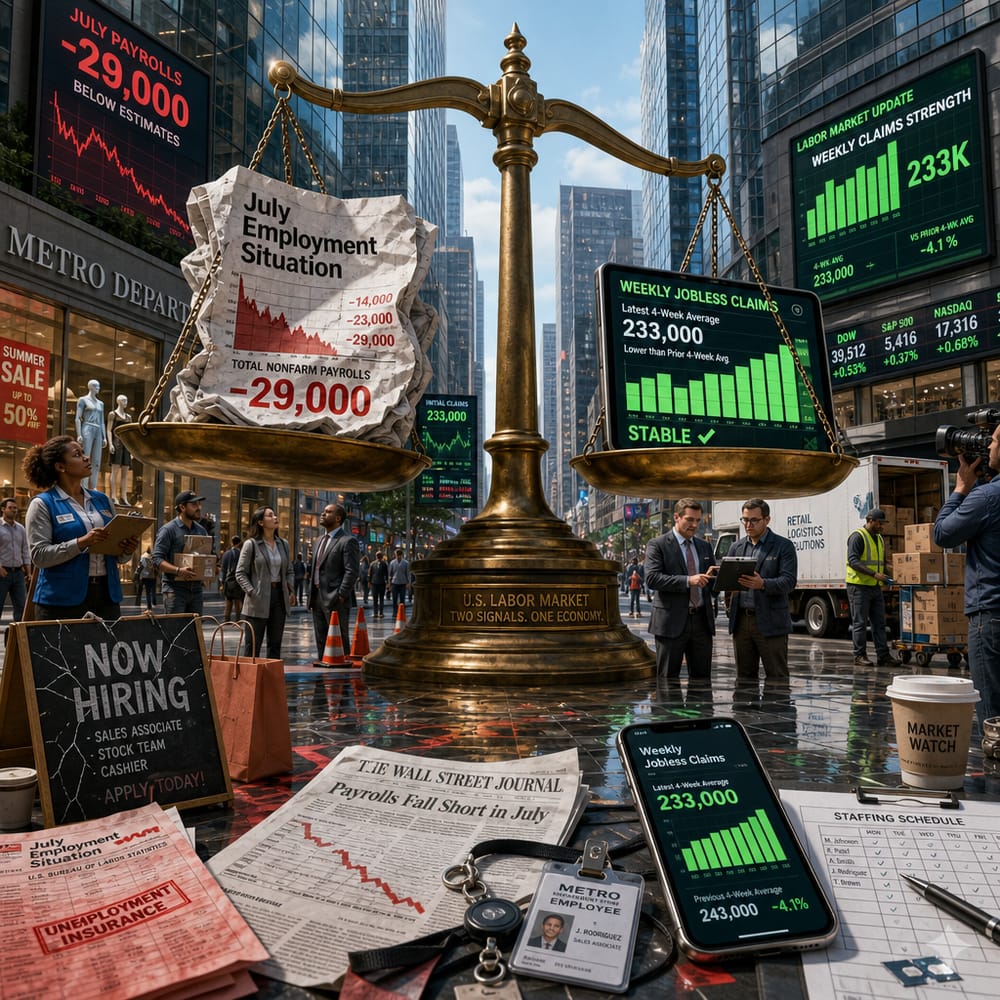
In the ever-spinning whirlwind of economic news, one might ask: what’s the job market really telling us right now? The July Employment Situation report throws a bit of a curveball with its net job decline, even as weekly jobless claims remain unexpectedly robust. It’s enough to make you scratch your head and wonder what in the world is going on. Let’s take a closer look.
THE DECEPTIVE JOB MARKET DANCE
Picture this: the job market’s latest performance looks like a cha-cha gone awry. On one hand, July’s payroll report decided to take a nap, revealing a shrinkage in job numbers. This might seem like a red flag waving frantically, signaling a potential slowdown in the economy. But wait, just a second — weekly jobless claims stayed strong, almost flaunting a stubborn resilience. You can imagine the Fed officials scratching their heads, pondering this puzzling dance.
So, who’s the real villain behind July’s job decline? It seems like a classic case of economic whodunit. One possibility is the seasonal slump in hiring as summer jobs wind down, especially in sectors like retail which usually bask in the glory of summer recruitment. Add to that the growing whispers of a cooling economy, and you have a recipe for employment lethargy. It’s like the job market decided to hit the snooze button while we were expecting it to get up and start grooving.
THE FED’S DILEMMA: TO HIKE OR NOT TO HIKE?
Let’s face it, Fed policymakers must feel like they’re playing a high-stakes game of economic Jenga as they navigate these mixed signals. The labor market is a crucial piece in their tower of decisions, especially with inflation stubbornly hanging around like an uninvited guest who just won’t leave.
Now, while weekly jobless claims might appear robust, reminiscent of a resilient marathon runner, the overall labor market’s hiccup in July throws a wrench into the Fed’s careful calculations. They’re left pondering whether this is a mere blip or the start of a more ominous trend. If the job market starts to truly falter, it could be just the push that nudges the Fed towards hitting pause on their interest rate hikes.
BALANCING ACT OR ECONOMIC TIGHTROPE?
For the everyday investor, this economic balancing act is a front-row seat to a financial thriller. If the Fed decides the labor market is softening faster than anticipated, we might see interest rates staying lower for longer. This could breathe life into interest-sensitive sectors like housing and retail, potentially leading to growth and investments in these areas. Picture a highwire act, with the Fed trying to maintain balance amid the swirling economic gusts.
However, there’s a catch — inflation. Like an ever-present specter lurking in the background, inflation pressures could force the Fed to reconsider its options. The specter of rising prices still haunts them, as Fed Chairman Kevin Warsh’s recent remarks indicate. He’s keeping a watchful eye on inflation as it threatens to leap out from the shadows and disrupt their delicate balancing act.
WHAT DOES THIS MEAN FOR YOU?
For the retail investor, this is more than just an economic spectacle — it’s a call to action. Keep a close eye on the labor market’s next moves, as they could be a precursor to broader economic shifts. Retail and interest-sensitive sectors might just be the harbingers of investment opportunities if the Fed hits the brakes on rate hikes.
In essence, while July’s job report might have stumbled slightly, it’s not all doom and gloom. The key lies in watching how the Fed plays its next move in this intricate game of economic chess. Stay nimble, keep your ears to the ground, and remember: in the world of finance, the unexpected is often where the real story unfolds.
So, next time you scroll through your news feed and see headlines about the job market, don’t just swipe left. Dig in, get curious, and stay informed. Because in this economic drama, you are not just an audience member — you’re a player, and it’s your move.
This article is for informational purposes only and is not investment advice. Always do your own research or consult a licensed financial professional before making investment decisions.
© Copyright 2024. All Rights Reserved.
© Copyright 2024. All Rights Reserved.