

Weak Retail Data Weighs on Stocks; S&P and Nasdaq Slip Ahead of Fed Minutes
Thursday, August 20, 2026
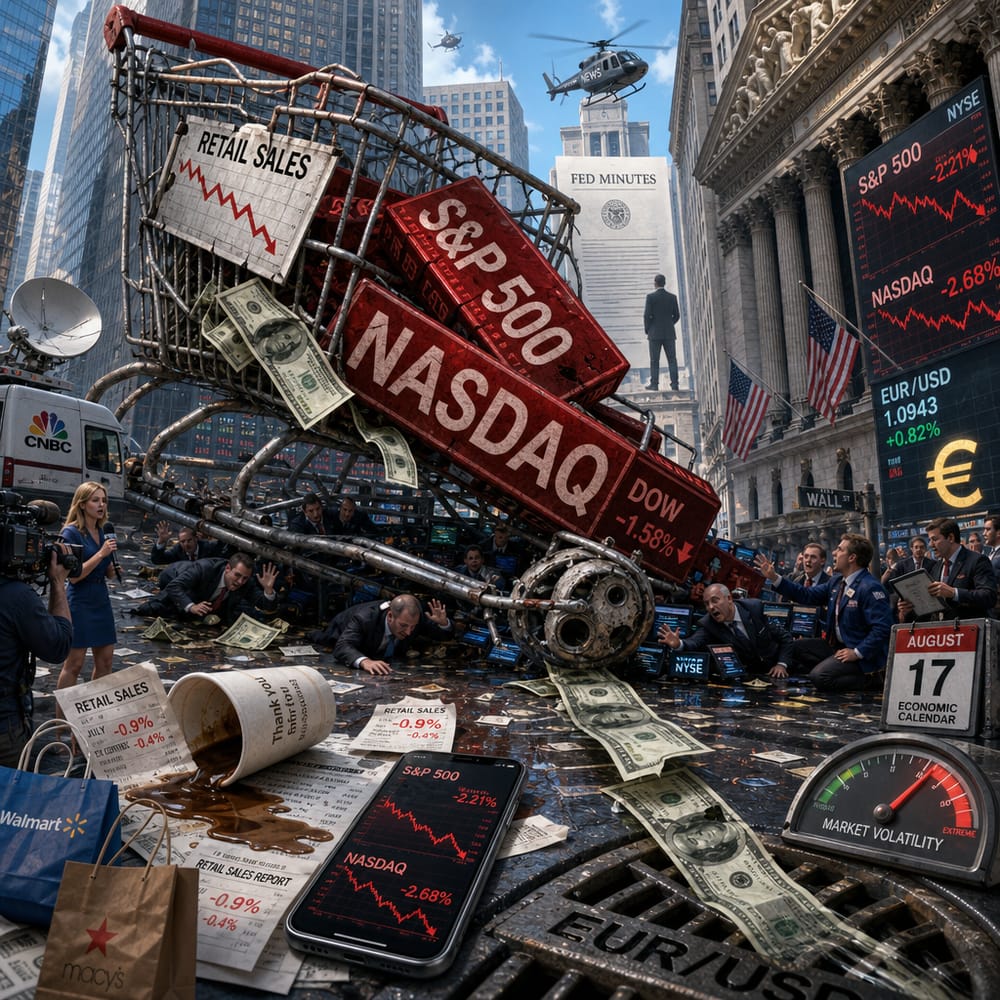
WEAK RETAIL DATA WEIGHS ON STOCKS; S&P AND NASDAQ SLIP AHEAD OF FED MINUTES
If there's one thing we’ve learned recently, it's that what goes up must eventually come down, and last week, retail data decided to take the express elevator south. On August 17, U.S. retail sales did the unexpected by taking a nosedive, leaving the stock market gasping for air and the U.S. dollar reeling at two-month lows against the euro. It’s like the financial markets just found out their gym membership was a scam—cue the panic.
So why should you care about one bad day in retail land? Well, because this little hiccup in consumer spending could be hinting at something bigger and more ominous: the dreaded R-word—recession. Or it could just be a fluke. Either way, investors are suddenly on high alert, and they’re casting nervous glances at the Federal Reserve's next moves like they're waiting for a plot twist in a thriller movie.
WHAT THE WEAK RETAIL DATA INDICATES
Let's break this down—retail sales are essentially a consumer confidence thermometer. When folks are spending, it often signals they’re feeling pretty good about their wallets and the economy. But when those sales take a swan dive, like they did in August, it can indicate that people are tightening their purse strings, possibly anticipating stormy weather ahead. Are they battening the hatches because they foresee economic woes, or are they just over last season’s must-have gadget? Either way, it’s making Wall Street sweat.
HOW THIS IMPACTS THE FED'S UPCOMING DECISIONS
Here’s where it gets interesting and a tad mysterious. The Federal Reserve—or the Fed, as we cool kids call it—plays a massive role in the economic orchestra, essentially conducting the tempo by adjusting interest rates. And lately, they’ve been hiking those rates like it’s a Fitbit contest. But with this fresh batch of weak retail numbers, suddenly, there’s chatter that maybe the Fed will tap the brakes on those rate hikes.
In financial speak, raising interest rates makes borrowing money more expensive, and ideally, it pumps the brakes on inflation. But if consumers are already pulling back, the Fed might consider slowing rate hikes or even pausing to avoid pushing the economy into a full-on ice bath. The anticipation around the Fed’s July meeting minutes is hotter than a midsummer sidewalk. Investors are anxiously awaiting any hints about whether they'll continue their aggressive hikes or opt for a more cautious approach.
WHAT THIS MEANS FOR MARKETS AND INVESTORS
Now, here’s where you come in. If you’ve got your retirement, your kid’s college fund, or just a few dollars squirreled away in stocks, what the Fed decides can significantly impact your savings. Last week, the S&P 500 and the Nasdaq Composite took a dip, dragged down by the retail slump and the uncertainty surrounding the Fed's next steps. It’s like watching a slow-motion scene in a disaster movie, except this one’s happening in your portfolio.
The U.S. dollar, meanwhile, struggled to hold its ground. As the dollar slipped to two-month lows against the euro, it hinted that international investors weren’t buying what the Fed was selling—or, in this case, weren’t buying the idea of aggressive rate hikes if consumer spending is cooling.
DO YOU BREATHE EASY OR BATTON DOWN THE HATCHES?
So what’s an everyday retail investor to do when faced with such uncertain times? First, take a deep breath. While the market can be as temperamental as a caffeinated toddler, it’s essential to keep a long-term view. Markets naturally go through cycles, and even amid chaos, there are opportunities.
Diversification remains a solid strategy. Think of it as not putting all your eggs—or stocks—in one basket. Whether the Fed decides to continue its rate hikes or take a breather, having a diverse portfolio can help you weather economic storms.
And keep an eye on those Fed meeting minutes. Like reading the last page of a mystery novel, they might give you a hint of what’s to come—but without the spoilers. Adjust your strategies accordingly, but remember, even the brightest economists don’t have crystal balls, just educated guesses.
In the end, whether the Fed decides to slow down rate hikes or not, stay informed, stay nimble, and remember that in the grand tapestry of financial history, this too shall pass. And in the meantime, maybe avoid impulse buys on your favorite retail sites—unless it’s a good sale, of course.
This article is for informational purposes only and is not investment advice. Always do your own research or consult a licensed financial professional before making investment decisions.
© Copyright 2024. All Rights Reserved.
© Copyright 2024. All Rights Reserved.