

Weak Payrolls Fuel Rally: S&P, Nasdaq, and Russell 2000 Surge on Signaling of Fed Pause
Saturday, October 03, 2026
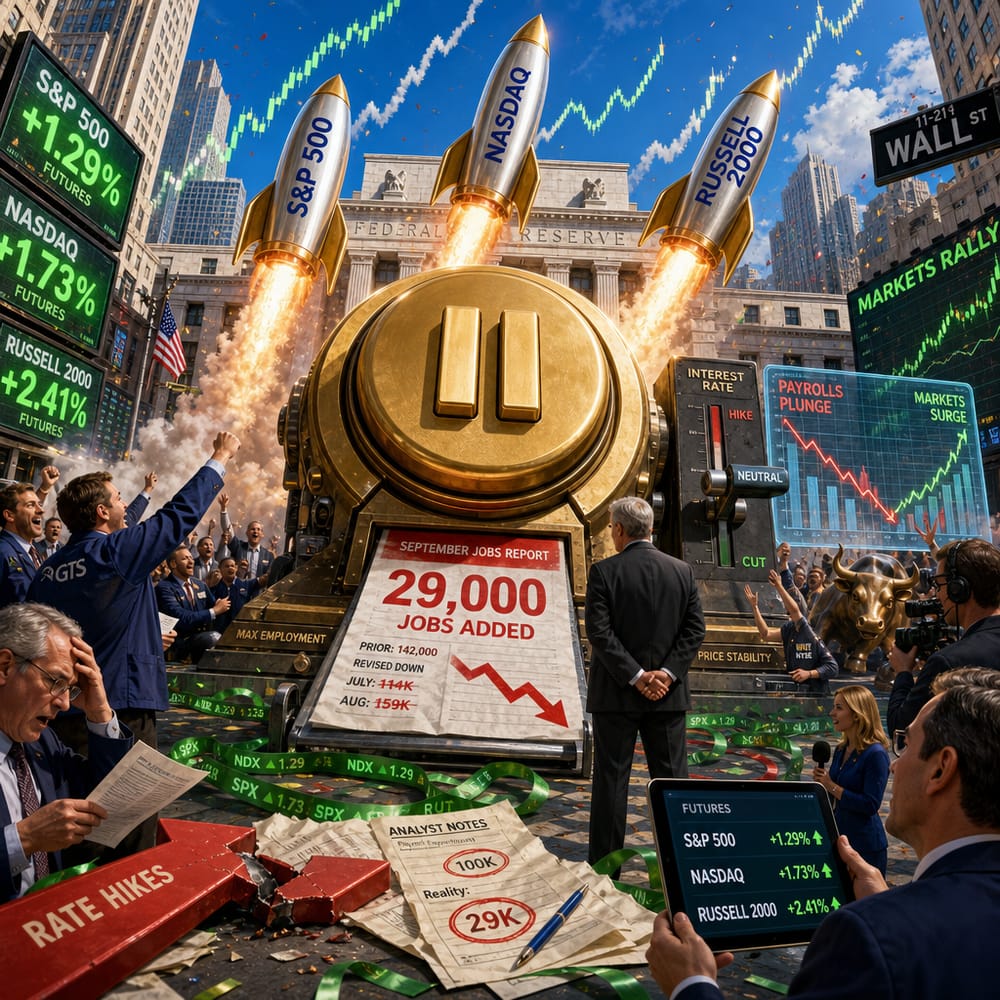
BAD NEWS IS GOOD NEWS? WHY A LACKLUSTER JOBS REPORT SENT STOCKS SOARING
Sometimes the financial world feels a bit like opposite day. Case in point: when the U.S. economy limps across the job market finish line with a feeble 29,000 jobs added in September, you’d think the stock market might take a nosedive in dramatic solidarity. But surprise! The S&P 500, Nasdaq, and Russell 2000 are throwing what appears to be a bull market bash. So, what gives? Let's dive into this topsy-turvy tale of weak payrolls and why stocks are celebrating like it's 1999.
THE JOBS REPORT THAT TURNED HEADS
First, the basics. The U.S. unemployment rate climbed to 4.2% in September, while the economy managed to muster a mere 29,000 new jobs—way off the mark from the experts’ expectations. This tepid growth is a stark deviation from the pre-pandemic heyday when jobs were sprouting like daisies in spring.
So, how did this lukewarm report manage to spark such a market rally? It's all about reading between the lines. The underwhelming jobs data might be a sign that the Federal Reserve, the U.S.'s economic puppeteer, might ease its grip and take a breather on the interest rate hikes.
THE FEDERAL RESERVE AND INTEREST RATES
Why do interest rates matter so much? When the Fed hikes rates, borrowing money becomes more expensive. Businesses slow down their investments, and consumers might think twice before swiping that credit card. It’s like the brakes on a car—meant to slow things down when the economy starts overheating with too much growth and inflation.
But now, with this weak jobs report, it seems the economy isn't running as hot as anticipated. This slowdown could mean the Fed will hit pause on those pesky rate hikes. Lower rates often spell good news for equities because they make borrowing cheaper, encouraging spending and investment. Investors, ever the optimists, are banking on this pause and they're showing their excitement by pushing stock prices higher.
WHO'S CELEBRATING ON WALL STREET?
So, who’s dancing on Wall Street right now? The celebrations echo loudest in tech-heavy sectors. The Nasdaq, as you might expect, is particularly buoyant. Cheaper money fuels innovation and growth in tech, and with the potential of lower rates, investors are betting on tech companies to continue their upward trajectory.
Small-cap stocks, represented by the Russell 2000, also relished this news. These stocks are generally more sensitive to domestic economic conditions and benefit disproportionately from lower interest rates. Small businesses with less access to capital during high-interest periods might find some relief here, giving them a chance to shine in the upcoming quarters.
THE BIGGER PICTURE
Of course, while investors cheer the prospect of a Fed pause, it’s not all sunshine and rainbows. With the labor market softer than a marshmallow, there are genuine concerns about the broader economic outlook. The jobs report also casts shadows on wage growth, which has slowed, likely meaning Americans' paychecks are stretching less far in the face of stubborn inflation.
Moreover, as the market enjoys a sugar high from rate pause prospects, the question lingers: how sustainable is this rally if economic fundamentals don’t improve?
LOOKING AHEAD
The future remains a beautiful mystery wrapped in a Federal Reserve riddle. Will they or won't they pause rate hikes? So far, the market sentiment leans towards a pause—at least until the next set of economic data rolls in. Investors should keep a close eye on upcoming reports, paying particular attention to inflation figures and consumer spending, as these will be critical in shaping Fed policy.
In the meantime, if you’re a retail investor caught in this whirlwind, remember to maintain some perspective. The market's reaction to short-term news can be volatile, but long-term investing principles remain your trusty guide through the chaos.
So, here's to hoping that good news might soon be actual good news. Until then, enjoy the surprising rally and keep your seatbelt fastened—it’s sure to be a wild ride.
This article is for informational purposes only and is not investment advice. Always do your own research or consult a licensed financial professional before making investment decisions.
© Copyright 2024. All Rights Reserved.
© Copyright 2024. All Rights Reserved.