

Weak June Jobs Report Eases Fed Rate-Hike Fears
Tuesday, July 07, 2026
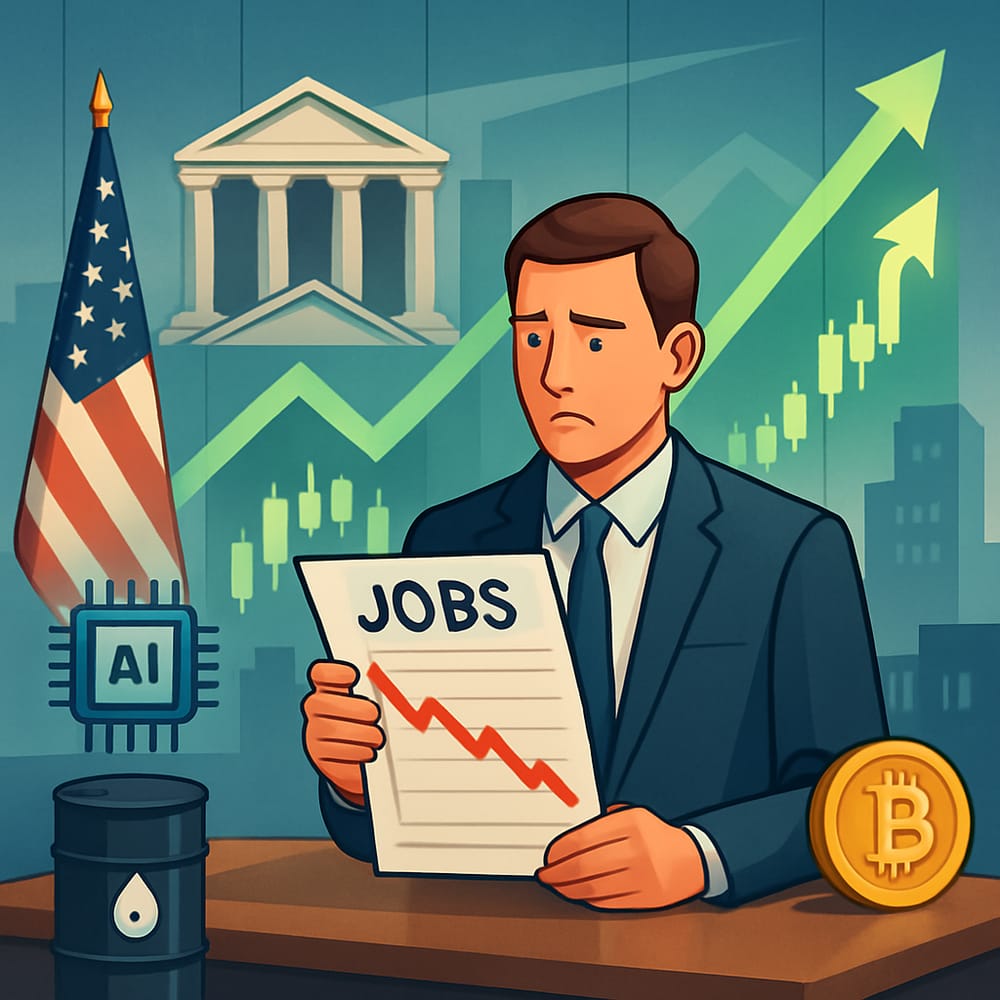
JOBS REPORT SHOCKER: LOW NUMBERS, HIGH HOPES FOR STOCKS
Hold on to your hats, folks. The June jobs report just rolled in, and it’s looking thinner than a supermodel on a juice cleanse. The U.S. economy added a measly 57,000 jobs—far short of the economist predictions that were about as optimistic as a first-year college student on move-in day. But before you start panic-selling and clutching your pearls, let’s break down why this seemingly bad news might just be the good news we didn’t know we needed.
Let's start by setting the scene: Imagine you’re the Federal Reserve, holding the economic reins like a cautious charioteer. You're trying to balance inflation with growth, all while keeping the horses (read: interest rates) in check. The trick is not to let them gallop too fast or slow down to a trot. The weak jobs numbers are like a gentle whisper in the Fed's ear, saying, "Hey, maybe ease up on those rate hikes."
Without a private crystal ball, no one can say for certain what future Fed moves will look like. But thanks to this underwhelming report, the market is now betting that the Fed's once-feared parade of interest rate hikes might just turn into a few light sprinkles instead of a full-on monsoon. This eases the pressure on equities, making them look like a tastier investment snack.
The inflation beast, which has been lurking under the economic bed for a while now, might find itself a little less scary. If job growth stalls, it usually means people aren't making more money, and if people aren't making more, they're not spending as much either. Translation: Inflation could ease up. And if inflation takes a breather, investors can stop obsessing over their morning coffee prices and shift their focus back to making smart stock plays.
So, who gets to ride this wave of investor optimism? Let me put on my fortune-teller hat and peer into the sectors that could get a boost. Tech, always the teacher's pet in the low-rate class, stands to benefit as borrowing costs potentially shrink. Lower interest rates make all those innovative, capital-hungry projects look a lot more attractive, and tech companies are all about the future—AI, clean energy, space travel, you name it.
Meanwhile, consumer discretionary sectors might get a little pep in their step too. If borrowing costs are low, you might just decide that now is the time to upgrade your phone, your car, or maybe even take that vacation you've been eyeing. When consumers loosen their purse strings, companies that rely on discretionary spending tend to perform well.
But while we’re on a sunny note, let's not forget the shadowy corners. We're still in a tricky dance with global factors—geopolitical tensions, anyone? Oil prices are having their own little drama, thanks to reports of Iranian attacks in the Strait of Hormuz. If tensions rise, oil prices could spike, messing with inflation just when we thought we had it cornered like a crafty cat.
And speaking of drama, who could ignore the ongoing narrative of AI investments turning heads? Yes, even with job growth looking more like a tranquil pond than a raging river, AI spending remains a hot topic, as evidenced by the scuffles at companies like Samsung.
So, what’s the takeaway for the casual investor checking their portfolio during their lunch break? The jobs report might seem like a downer, but it's setting the stage for potential gains in the equity markets by easing interest rate concerns. Keep an eye on tech and consumer discretionary sectors, and don't let the oil drama distract you too much. If you play your cards right, this could be the quirky plot twist that makes your investment story more interesting.
In essence, stay sharp, stay savvy, and maybe, just maybe, embrace the unexpected joys of a weak jobs report. Sometimes, what seems like a setback is just a setup for a comeback.
This article is for informational purposes only and is not investment advice. Always do your own research or consult a licensed financial professional before making investment decisions.
© Copyright 2024. All Rights Reserved.
© Copyright 2024. All Rights Reserved.