

Weak July Jobs Report Shakes Labor Market Outlook
Sunday, August 16, 2026
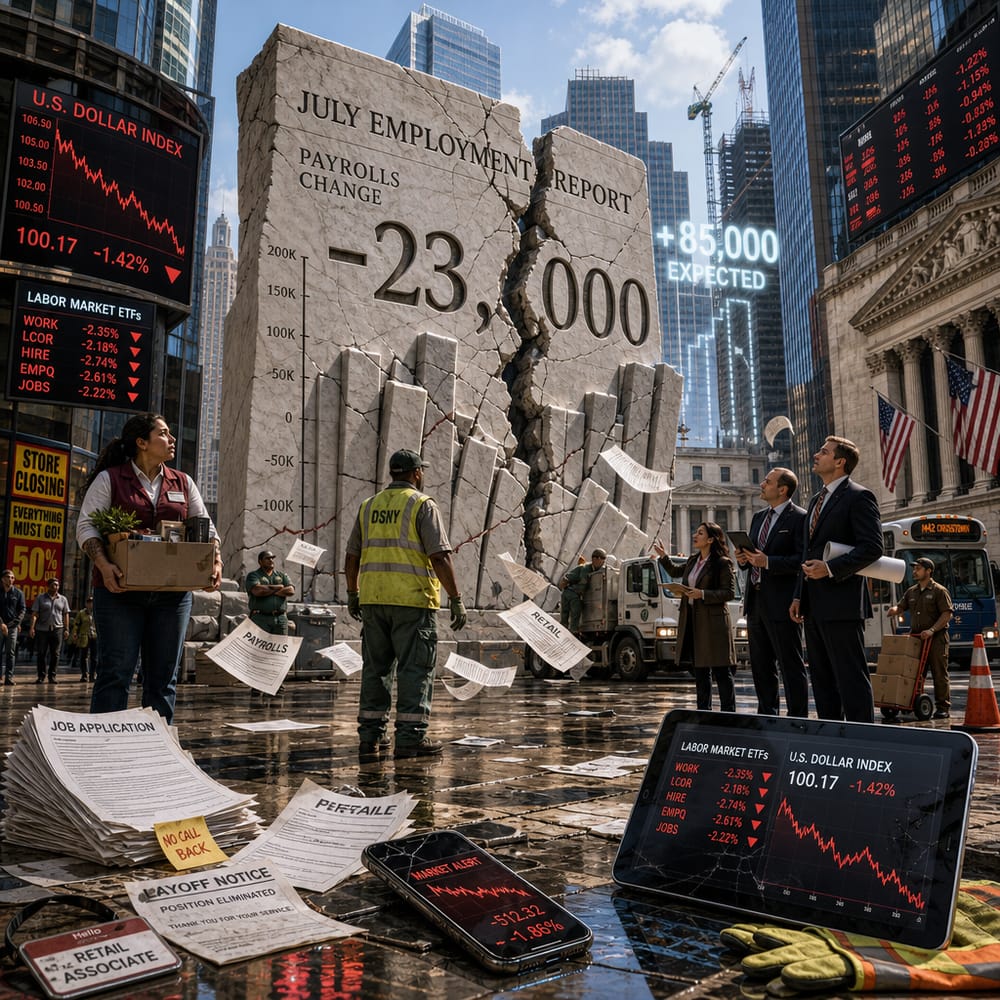
JOBS REPORT JOLT: WHY JULY'S UNEXPECTED DROP MATTERS
Brace yourselves for a plot twist that no one saw coming. The July jobs report just dropped like a bombshell, revealing a loss of 23,000 jobs when everyone had been expecting a healthy gain of 85,000. That's like getting coal in your stocking when you asked for a new smartphone. Hiring seemed like it was cruising on a smooth road, and then — bam! — someone slammed on the brakes.
But let's not just say "meh" and scroll past. This is more than a hiccup. It’s a flaring red sign in the labor market that could ripple far and wide, touching everything from the Federal Reserve’s game plan to your investment portfolio. So, what’s the scoop and why should you care? Pull up a chair and let’s untangle this.
HIT WHERE IT HURTS: LOCAL GOVERNMENTS AND RETAIL
First, let's dissect where the job losses came from. Local government and retail sectors bore the brunt. Local governments cut jobs like they were on a budget diet — not exactly the fat cats we imagined. Meanwhile, retail isn't just about Black Friday chaos anymore; it’s about cutting back when people aren’t spending like they used to. These sectors are the boots on the ground of our economy, so when they catch a cold, you bet the rest of us are reaching for the tissues.
This isn’t just an academic exercise in "Huh, that's interesting." This affects everyday folks who are now either pounding the pavement looking for work or grappling with the instability of wondering if their job is next. And that uncertainty is something you feel every time you hesitate to splurge on a latte or think twice about booking that vacation.
THE FED MAY HAVE TO DANCE TO A NEW TUNE
Here's where things get even juicier. The Federal Reserve is in a bit of a pickle. It was all set on raising interest rates to cool down an economy that was supposedly overheating. Think of it as a thermostat that needs adjusting. But with the job market taking a dive, the Fed might be thinking about holding off on cranking up the rates in their September meeting. They’re like a parent caught between tightening the reins and letting the economy figure itself out.
Rate hikes are meant to curb spending by making borrowing more expensive, but with job losses piling up, the Fed could decide to pump the brakes on those hikes, lest they risk squeezing the economy too tight and popping the proverbial balloon. It’s a delicate dance, and investors are watching with bated breath.
IMPACT ON INVESTMENTS
For investors, this unexpected jobs report is like a surprise plot twist in your favorite show. It could alter the storyline of your investments. The U.S. Dollar Index, which tracks the dollar against a basket of foreign currencies, could feel the pressure. A weaker labor market might mean a weaker dollar as expectations shift about future rate hikes.
Labor market ETFs are another potential hotspot. These funds have been riding the wave of a hot job market, but with this cold splash, it's time to re-evaluate. Investors might need to rethink their strategies — are these ETFs still the golden ticket, or is it time to take a fresh look at their portfolio?
THE BIGGER PICTURE
So, what’s the takeaway? This jobs report isn’t just a number. It’s a reflection of where we are and where we might be headed. For the Fed, it’s a puzzle to solve. For investors, it’s a call to stay nimble. And for those in affected sectors, it’s a reminder of the fragile balance we walk between optimism and caution.
Sure, it's tempting to shrug it off as just another economic blip. But these numbers tell a broader story about our economy's engine room. Whether you're pinning hopes on the Fed to keep things steady or recalibrating your own financial journey, remember that beneath the data points are real-world impacts.
So, as the next wave of market moves and Fed statements rolls in, keep your eyes peeled and your mind nimble. The story is far from over, and surprises are the only guarantee in this economic thriller.
This article is for informational purposes only and is not investment advice. Always do your own research or consult a licensed financial professional before making investment decisions.
© Copyright 2024. All Rights Reserved.
© Copyright 2024. All Rights Reserved.