

Weak July Jobs Report Could Delay Rate-Hike Pressure
Saturday, August 22, 2026
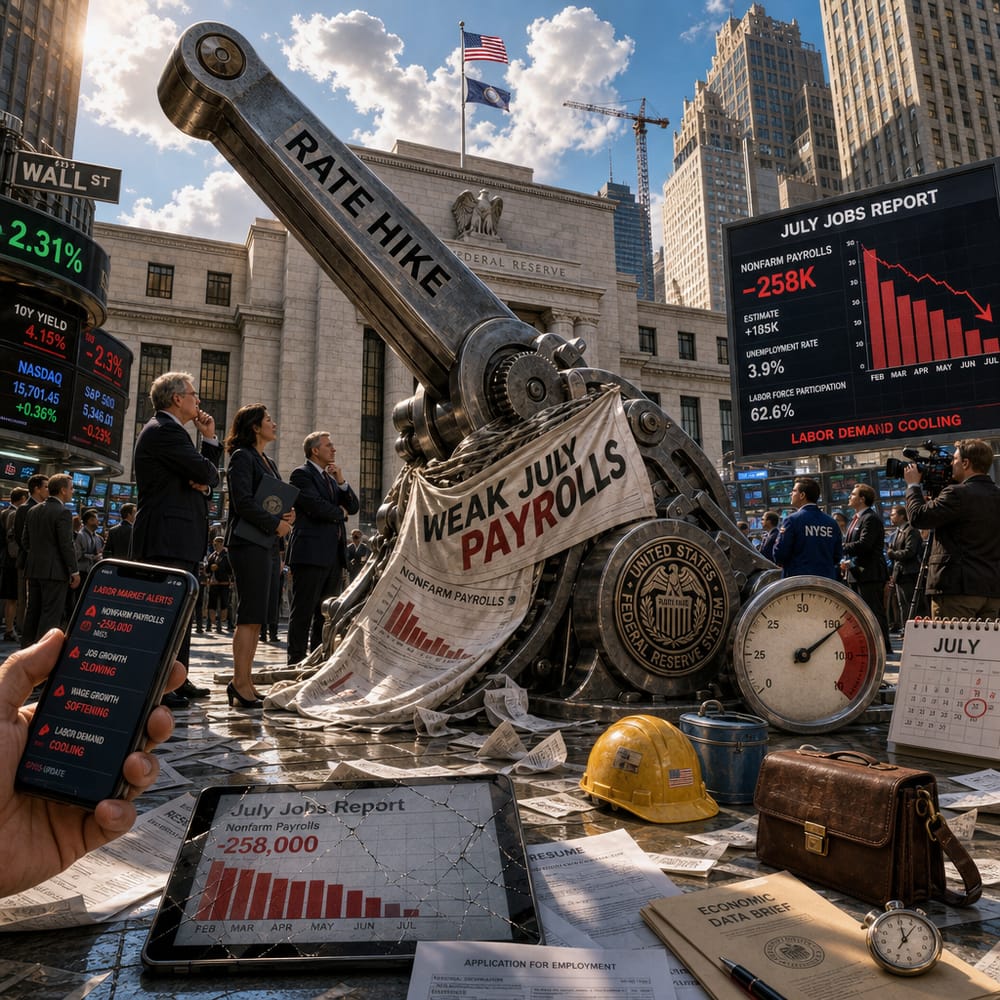
FED WATCH: WILL WEAK JULY JOBS REPORT PUT RATE HIKES ON ICE?
Picture this: It’s a hot July morning, and instead of basking in rays of economic sunshine, the U.S. jobs report rolls in like a wet blanket. Nonfarm payrolls took a nosedive, leaving many of us scratching our heads and wondering if the Federal Reserve will finally pump the brakes on those pesky interest rate hikes. Spoiler alert: The answer isn’t as clear-cut as a beach day in Miami.
As the U.S. economy tiptoes through a minefield of mixed signals, the labor market just threw a curveball that could bench the Fed’s rate-hiking game plan. Fewer jobs were added this July, and while that might give those eager-beaver rate hikers pause, it’s hardly time to pop the champagne. The labor market’s vulnerability could take some wind out of the Fed's sails, but what does that mean for us everyday folks, and which sectors are feeling the pinch?
IMPACT ON THE USUAL SUSPECTS
First up on the lineup of sectors feeling the heat from the weak jobs report are industries like leisure and hospitality. These sectors have been riding a rollercoaster of hiring frenzies and slumps as the economy teeters between reopening triumphs and pandemic hangovers. With employment numbers dipping, businesses that thrive on discretionary spending—think restaurants, hotels, and entertainment venues—might see slower foot traffic and tighter wallets.
Meanwhile, construction and manufacturing, the grizzled veterans of economic cycles, also took a hit. Fewer jobs in these industries could spell trouble for broader economic growth, as they are often seen as economic bellwethers. These industries, already grappling with supply chain hiccups and material costs, could face delays in projects and production, impacting everything from new housing starts to the latest gadget on store shelves.
DELAYED RATE HIKES: A DOUBLE-EDGED SWORD
Now, onto the Fed’s conundrum. A weaker labor market would typically mean a softer touch on rate hikes, giving borrowers a breather. But hold your horses. Inflation is still the elephant in the room, and unless it starts taking a backseat, the Fed might stick to its guns. The central bank’s balancing act is like trying to walk a tightrope in roller skates, where one misstep could send economy watchers into a tizzy.
If the Fed decides to slow its roll and delay rate hikes, it could be a boon for borrowers. Think more manageable mortgage rates and business loans, which could translate into a slight uptick in consumer spending and investment. However, there’s a catch: too much leniency could keep inflation simmering, negating any short-term gains with price surges at the pump or grocery checkout.
BANKING ON BALANCE
For investors keeping a keen eye on their portfolios, the Fed’s next moves could be a game-changer. Rate-sensitive sectors like technology and utilities could find some relief if interest rate pressures ease. Tech firms, in particular, might breathe a little easier, as lower borrowing costs often translate into higher capital for innovation and expansion.
However, it’s not all rosy. Financials, which thrive on higher interest rates, might feel the pinch. Banks and lenders often perform better when rates climb, so any delay in hikes could temper their earnings outlook.
FINAL THOUGHTS
The weak July jobs report is a reminder that while the economy might feel like a game of chess, sometimes it plays out more like a game of Jenga—one wrong move and the whole tower wobbles. As the Fed deliberates over its next steps, investors and consumers alike should brace for a bumpy ride. Whether rate hikes hit pause or keep trudging forward, the implications will ripple through wallets and markets, nudging each of us to stay vigilant and perhaps a bit nimble with our financial game plans.
So, while the Fed ponders its next move, keep your seatbelt fastened, because in the world of economics, the only constant is change, and it doesn't come with a crystal ball.
This article is for informational purposes only and is not investment advice. Always do your own research or consult a licensed financial professional before making investment decisions.
© Copyright 2024. All Rights Reserved.
© Copyright 2024. All Rights Reserved.