

Weak July Jobs Report Cools Fed Hike Odds
Thursday, August 20, 2026
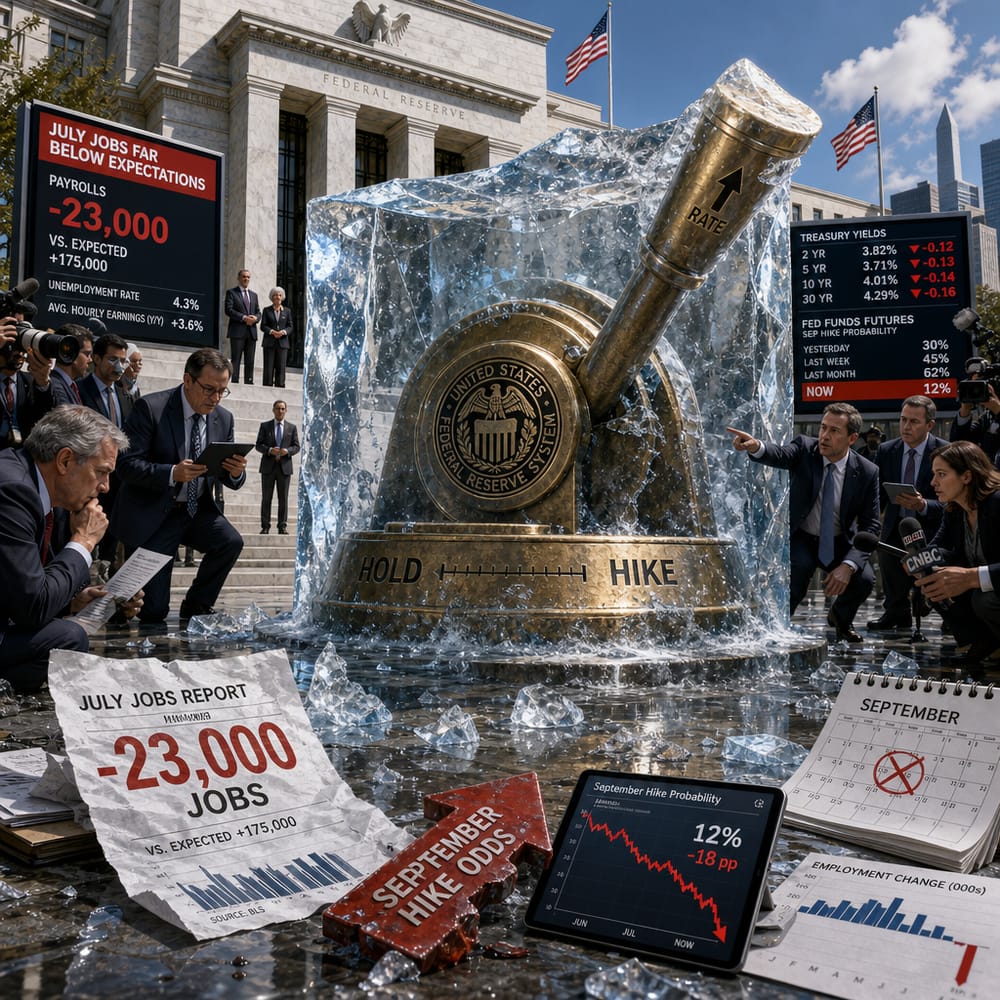
WEAK JULY JOBS REPORT COOLS FED HIKE ODDS
When a jobs report drops like a stone—23,000 jobs vanished into thin air last month—you can bet your last dollar that the Federal Reserve feels the tremors. The Fed’s decision on rate hikes is like a high-stakes poker game, and the July jobs report just shuffled the deck.
For those just tuning into the rate hike drama, let’s recap: The Fed has been walking a tightrope, trying to keep inflation in check without sending the economy tumbling into a recession. A robust job market usually gives them the green light to raise interest rates—think of it as a way to cool down an overheated economy. But a weak job market? That's like finding a "do not pass go" card in their Monopoly set.
The latest jobs report is a game-changer. It showed that 23,000 jobs disappeared in July, a stark contrast to the robust gains many had expected. This labor market hiccup could give the Fed a reason to hit the pause button on any planned September rate hikes. After all, you don't pour water on a fire that's already out.
But why did the jobs go AWOL in the first place? It turns out, several sectors are feeling a pinch. Retail, for instance, is getting whacked as cost-of-living pressures pinch shoppers' wallets, leading to declining sales and job cuts. JD Sports, a major player in the sportswear space, recently slashed profit forecasts, blaming inflation. They’re not alone—inflation is making shoppers as skittish as cats in a room full of rocking chairs.
Anyway, back to the Fed. A weaker job market could mean more breathing room for Jerome Powell and his crew. They're trying to juggle the double whammy of inflation and a potential recession, and this soft labor report might just be the excuse they need to keep interest rates steady for a while longer.
For investors, though, this is far from a simple game of heads or tails. The markets are a complex beast, and the Fed’s potential pause on rate hikes is just one more twist in the tale. Interest rates affect everything from mortgage rates to business loans. If the Fed holds off, borrowing costs stay lower, potentially giving a boost to stock prices—at least, for now.
But let's not get carried away. The Fed still has inflation to worry about. Prices are still climbing, and Powell's team needs to ensure they don’t spiral out of control. Keeping rates low might give the economy a little more juice, but if prices keep rising, the Fed might have to eventually reach for the rate hike switch.
So, what should retail investors do with this information? Well, it's time to pay close attention to sectors potentially impacted by these shifts. Look at industries that could benefit from prolonged low rates—think tech and real estate. They're the ones likely to see a bump if the Fed decides to keep things on ice.
At the same time, keep an eye on sectors like consumer goods and retail, which are already feeling the crunch. Inflation is hitting consumers hard, and if wages don’t keep up, these industries might face more job cuts and profit slumps.
In the end, the July jobs report might have cooled the odds of a Fed rate hike, but it’s no guarantee of stability. Investors need to stay nimble and informed. There are plenty of moving parts—global tensions, inflation, and potential Fed maneuvers. It’s a classic case of watch, wait, and see. The Fed may have temporarily put its rate hike cards back in the deck, but the game is far from over. Stay sharp out there.
This article is for informational purposes only and is not investment advice. Always do your own research or consult a licensed financial professional before making investment decisions.
© Copyright 2024. All Rights Reserved.
© Copyright 2024. All Rights Reserved.