

Weak July Jobs Report Alters Rate-Hike Expectations
Saturday, August 15, 2026
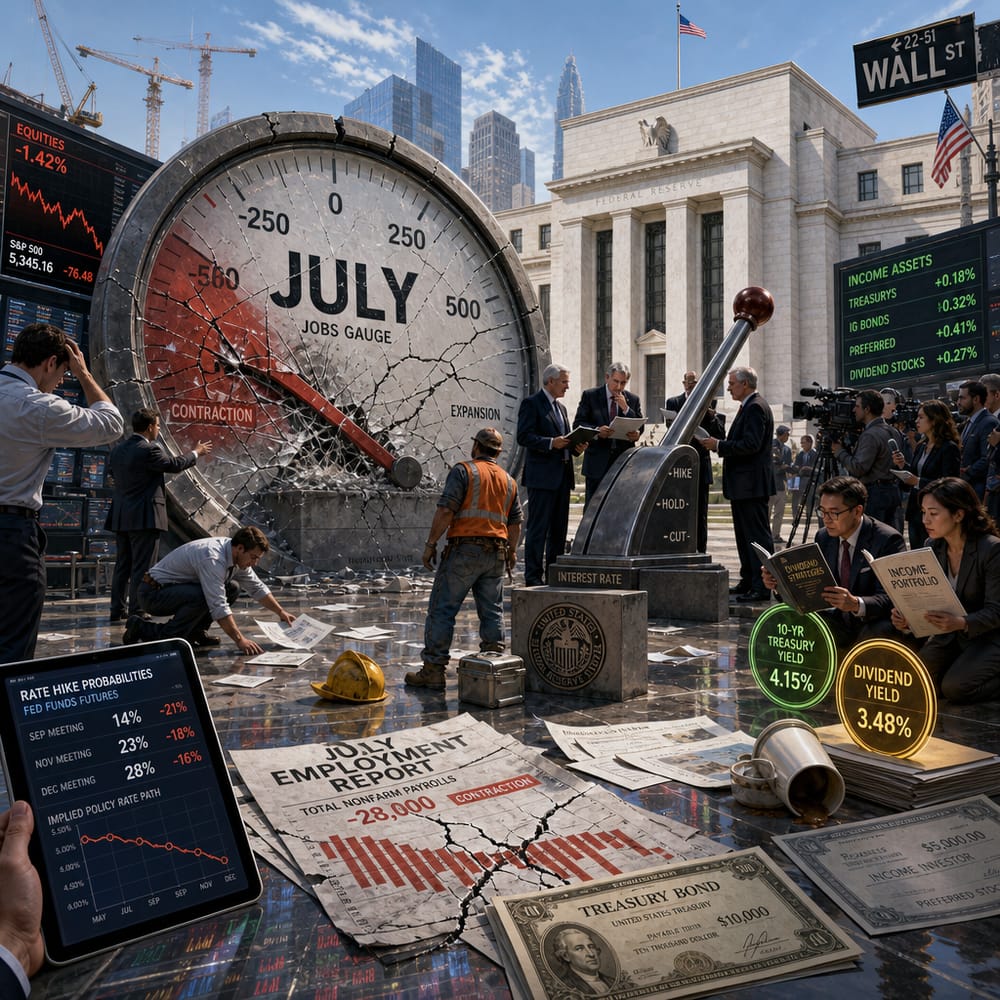
WHAT A WEAK JULY JOBS REPORT MEANS FOR YOUR WALLET AND THE FED
Like a mid-summer sequel that nobody asked for, July came in with a plot twist: the jobs report missed the mark. If you’re wondering why this matters to your latte budget or your retirement plans, buckle up. This isn't just another snooze-inducing economic report; it’s a sneak peek into the Federal Reserve’s playbook and your financial future.
July's jobs report was the economic equivalent of a damp fireworks display. Expectations were sky-high, but the reality was a fizzle. Instead of the robust job growth many were counting on, the numbers were shakier than a Jenga tower on game night. And when these numbers miss, everyone from Wall Street bigwigs to everyday investors takes notice.
SECTORS IN THE EYE OF THE STORM
First, let’s break down where the job losses hit hardest. The tech sector, normally a stalwart, saw some stumbles. Blame it on a tech correction or the AI-driven shifts on the horizon, but jobs there just aren’t as plentiful as they once were. Retail and hospitality also took a hit. Despite summer's usually sunny disposition, these sectors found themselves in a bit of a storm, with consumers tightening belts and companies feeling the pinch.
THE FED'S NEXT MOVE: PAUSE OR PLAY?
As the dust settles from the jobs report, all eyes are on the Federal Reserve’s upcoming September meeting. Remember, the Fed’s job is like that of a tightrope walker—balance is everything. They’d been on a rate-hiking spree like a kid on a sugar rush, but this weak report could press pause. When job growth slows, the Fed might ease off the rate hikes to avoid pushing the economy into a tailspin. Higher rates make borrowing more expensive, which cools spending and investment. But if jobs are already shaky, too many hikes could feel like adding an ice cube to a snowstorm.
If the Fed becomes more dovish (translation: less inclined to hike rates), expect some fireworks in equities—yes, the stock market you’ve been nervously refreshing on your phone. Lower rates usually juice up stocks as borrowing costs fall and investors hunt for better returns than what a savings account can muster.
CONSUMER SPENDING: HOLDING THE PURSE STRINGS?
With a weaker job market, consumer spending—the mighty engine of the U.S. economy—could stall. Picture this: fewer jobs mean fewer paychecks, which means, yep, less spending. That not only affects everything from your favorite coffee shop to car dealerships, but it also puts a damper on economic growth. It’s a domino effect—less spending leads to lower profits for companies, which could lead to more layoffs, and around we go.
For investors, this is crucial intel. Spending patterns can guide where to invest or divest. Companies reliant on discretionary spending—think luxury goods or high-end eateries—might not fare as well. Meanwhile, staples like groceries and healthcare tend to weather these storms better.
WHAT'S NEXT FOR YOUR INVESTMENTS?
Income-generating assets, like bonds or dividend stocks, could be the real dark horse here. If rate hikes slow, these assets become more appealing. Lower interest rates reduce the yield on new bonds, making existing ones with higher rates more attractive. Ditto for dividend stocks, which offer steady payouts and can be a haven in turbulent times.
In these uncertain waters, diversification remains your lifeboat. Spread your investments across sectors, mix in some international exposure, and don’t be afraid to hold a bit of cash. After all, cash is like the Swiss Army knife of assets—it’s versatile, flexible, and ready for anything.
So there you have it—the unexpectedly weak jobs report isn’t just a blip on the data radar. It’s a potential game-changer that could steer the Fed, sway markets, and impact your financial game plan. Stay savvy, keep your finger on the pulse, and you’ll be navigating these choppy waters like a pro.
This article is for informational purposes only and is not investment advice. Always do your own research or consult a licensed financial professional before making investment decisions.
© Copyright 2024. All Rights Reserved.
© Copyright 2024. All Rights Reserved.