

Weak July Jobs, Rates on Hold—but CPI Could Shift the Fed’s Timing
Wednesday, August 12, 2026
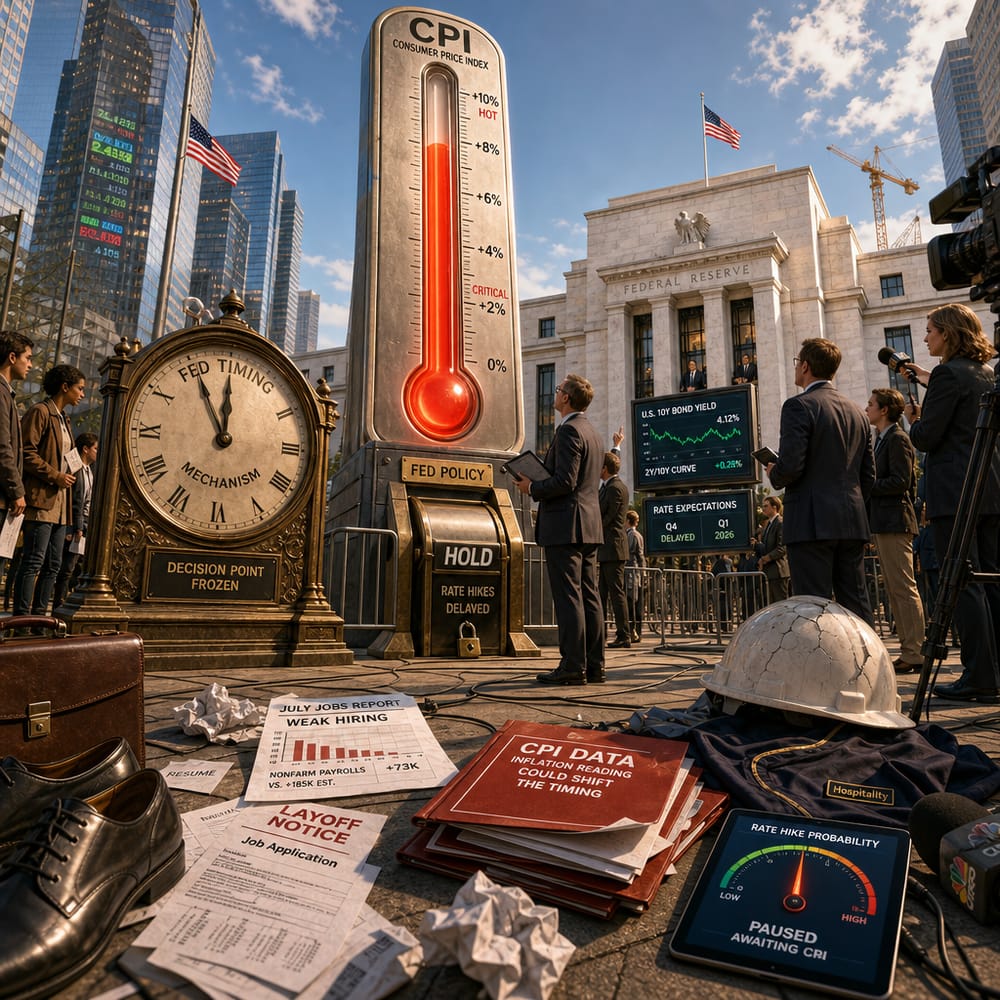
Brace yourselves, folks. The Federal Reserve's next move might just depend on whether today's CPI data plays the role of hero or villain. July's job report was weaker than grandma's tea, prompting financial analysts to push back expectations of a rate hike. But the plot thickens as today's inflation data could give Fed policymakers a frenzied plot twist.
First, let’s unpack the job data. Imagine running a marathon, only to face-plant at the finish line. That’s what the labor market pulled in July. The numbers slumped, hinting at a cooling economy. This sluggish job growth led many to believe that the Fed would hit the snooze button on raising interest rates. Why? Because fewer jobs usually indicate less spending power, which can help keep inflation in check. And the Fed's primary mission is to balance employment with inflation.
But hold up—today's CPI, or Consumer Price Index, could flip that script. CPI measures the average change over time in the prices paid by urban consumers for a basket of goods and services. Think of it as the pulse of inflation. If this pulse is racing, the Fed might have to reach for that rate hike faster than anticipated.
Let's break down the interest rate issue. When the economy is too hot—prices soaring, inflation climbing—a rate hike acts like a bucket of ice water, cooling things down. But with job growth faltering, a rate increase might be like adding extra weight to a sinking ship. The Fed's current predicament is the monetary equivalent of a tightrope walk over a volcano.
On the flip side, if today's CPI data suggests inflation is still bubbling like a pot about to boil over, the Fed might have to act. After all, their job is to keep inflation in check without stifling growth. It’s a delicate balance, like juggling flaming swords while riding a unicycle.
So, why does today’s CPI data matter so much? It’s all about timing. If inflation is rising faster than a freshman’s credit card bill, we might see the Fed pulling the trigger on higher rates sooner rather than later. But if the CPI data shows that inflation is more fizzle than sizzle, the Fed might hold off on any hasty maneuvers.
The stakes are high. Rising rates could impact everything from your mortgage to your favorite tech stocks. Remember, tech is one of those sectors that loathes higher rates like a cat despises water. Higher rates make borrowing more expensive, and that can slow down the tech industry's fast-paced innovation—and our beloved AI-driven future.
Speaking of which, the AI industry is caught in its own inflationary buzz. The cost of building out AI infrastructure might be weighing in on inflation, despite promises from tech titans like Musk and Altman about a utopian future with infinite abundance and dropping prices. The reality is, we’re not there yet, as evidenced by the recent AI spending spree contributing to inflationary pressures.
Meanwhile, mortgage rates taking a slight dip has been a small mercy for homebuyers. Yet, this is a glass half-full scenario. Rates are still much higher than last year, and a potential rate hike could send those numbers climbing again, making the dream of homeownership feel as distant as Mars for many.
Ultimately, we’re all waiting for that CPI data drop. It’s the wildcard in the Fed’s strategy game. A tame inflation report could keep the Fed's guns holstered, prolonging the low rates that have fueled much of the market’s growth spurt. A spicy report, however, might trigger a shift in strategy faster than you can say "interest rate hike."
So, keep those notifications on and watch the CPI data like a hawk. The Federal Reserve's decision in the coming weeks could hinge on this very number, affecting everything from your savings interest to stock market maneuvers. It's a dance of data and decisions, and we’re all along for the ride.
This article is for informational purposes only and is not investment advice. Always do your own research or consult a licensed financial professional before making investment decisions.
© Copyright 2024. All Rights Reserved.
© Copyright 2024. All Rights Reserved.