

Weak Jobs Data Sparks Market Rally
Saturday, October 03, 2026
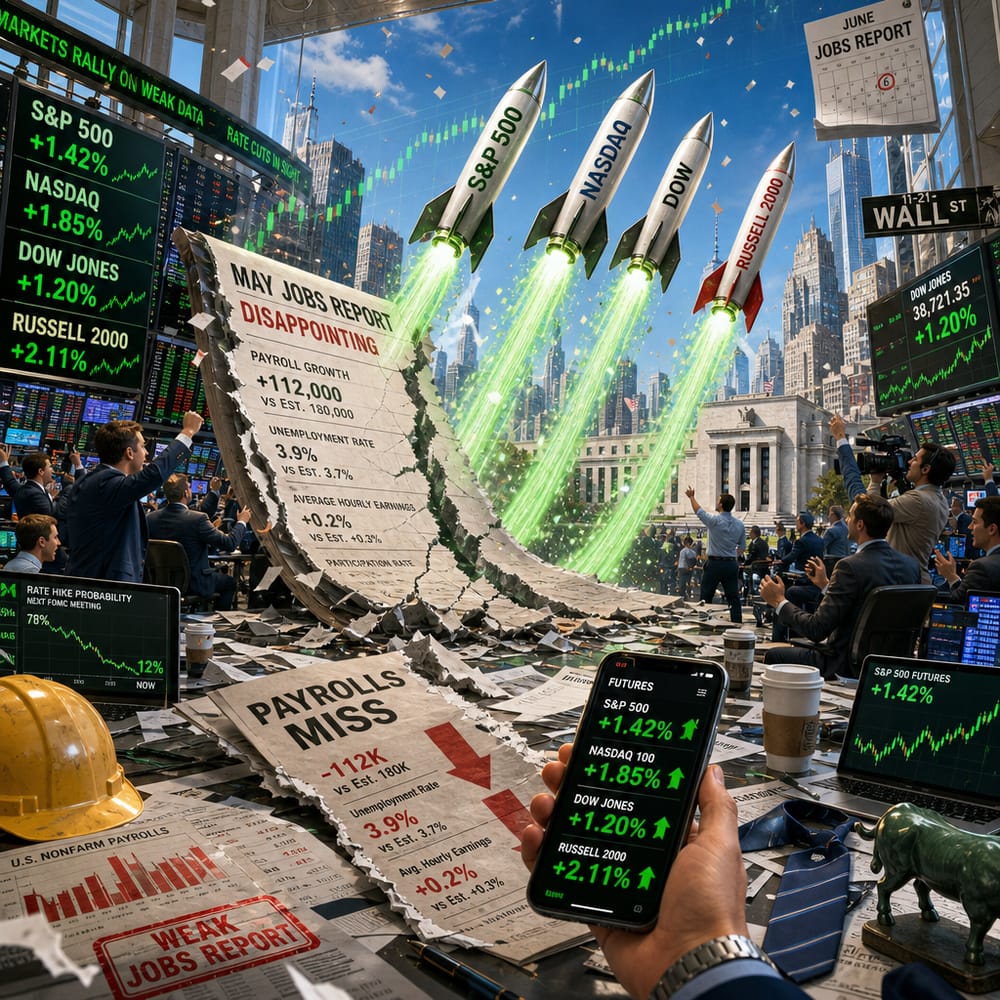
WEAK JOBS DATA FUELS A STRONG MARKET
Let’s get one thing straight: the stock market is a bit like a teenager. Moody, unpredictable, and sometimes it reacts in completely baffling ways. Take this week’s episode, for instance — the U.S. economy coughed up a weak jobs report, and what did the stock market do? It threw a party.
Yes, you heard that right. A jobs report so flimsy it might as well have been printed on tissue paper led to a market rally. The S&P 500, the Nasdaq, the Dow, and even the Russell 2000 all decided it was time to let loose. But why, you ask? Let’s dive into this curious case of market euphoria over economic frailty.
THE PARADOX OF "BAD NEWS IS GOOD NEWS"
In a dramatic twist that only Wall Street could truly appreciate, bad economic news sometimes plays like sweet music to investors' ears. You see, a less-than-stellar jobs report might just be the whisper the Federal Reserve needs to rethink its aggressive stance on interest rates. When the economy's employment picture looks bleak, investors start betting that the Fed might hit the brakes on its rate hike campaign. Lower rates mean cheaper borrowing, and cheaper borrowing typically sends investors rushing to buy stocks like kids to a candy store.
This time, the U.S. economy added just 29,000 jobs last month, sending the unemployment rate up to 4.2%. To put that into perspective, that 29,000 is like trying to fill Yankee Stadium and only getting the front row. It’s no wonder investors started daydreaming about the Fed easing up on rates sooner rather than later.
SECTOR REACTIONS: WHO'S CELEBRATING?
Not all sectors react the same way to weak jobs data. Tech stocks, typically the poster children of interest rate tantrums, were particularly buoyant. Lower expected rates are catnip for tech companies; they thrive on borrowed money and like seeing future earnings discounted at lower rates. So, when the Fed hints it might go easy, tech stocks start flexing their muscles. Cue the Nasdaq doing its victory lap.
On the flip side, sectors like utilities, often seen as safe havens, weren’t as thrilled. These guys bask in the glow when rates are high because they offer steady dividends. In a lower-rate environment, their appeal dims a bit as investors seek riskier, higher-return assets.
FED POLICY: SO, WHAT NOW?
This rally underscores just how sensitive markets are to any hint of the Fed’s next move. The central bank’s battle with inflation has been a tricky dance, trying to slow down the economy just enough without tripping it up entirely. With inflation still prowling around like an unwelcome guest, the Fed’s been hiking rates faster than a caffeine-fueled mountain climber.
But with jobs data showing a potential cooldown for the economy, there’s room for the Fed to pause and catch its breath. The idea is that if employment cools, inflation might not be far behind. And if inflation takes a chill pill, the Fed might ease off the rate hikes. It’s a delicate balance, and right now, all eyes are on the Fed’s next move.
CAN THIS RALLY LAST?
Now, before you start popping the champagne and planning your early retirement, let’s pump the brakes. This rally, as exhilarating as it seems, rests on shaky ground. The broader economic backdrop is still wobbly. With high interest rates lurking and global tensions — courtesy of both geopolitics and trade — waiting to cause chaos at a moment's notice, it’s wise to tread carefully.
Sure, lower rates are great for the markets, but they’re often a sign that the economy isn’t firing on all cylinders. Plus, if this jobs report is a mere blip and not a trend, the Fed could resume its rate-hiking marathon.
In short, while the markets are enjoying their moment in the sun, there might be a few rain clouds on the horizon. For now, though, let’s relish in the peculiar fact that sometimes, in the topsy-turvy world of stocks, less is indeed more.
This article is for informational purposes only and is not investment advice. Always do your own research or consult a licensed financial professional before making investment decisions.
© Copyright 2024. All Rights Reserved.
© Copyright 2024. All Rights Reserved.