

Warsh's Jackson Hole Speech: Rate Hike Hints
Saturday, August 29, 2026
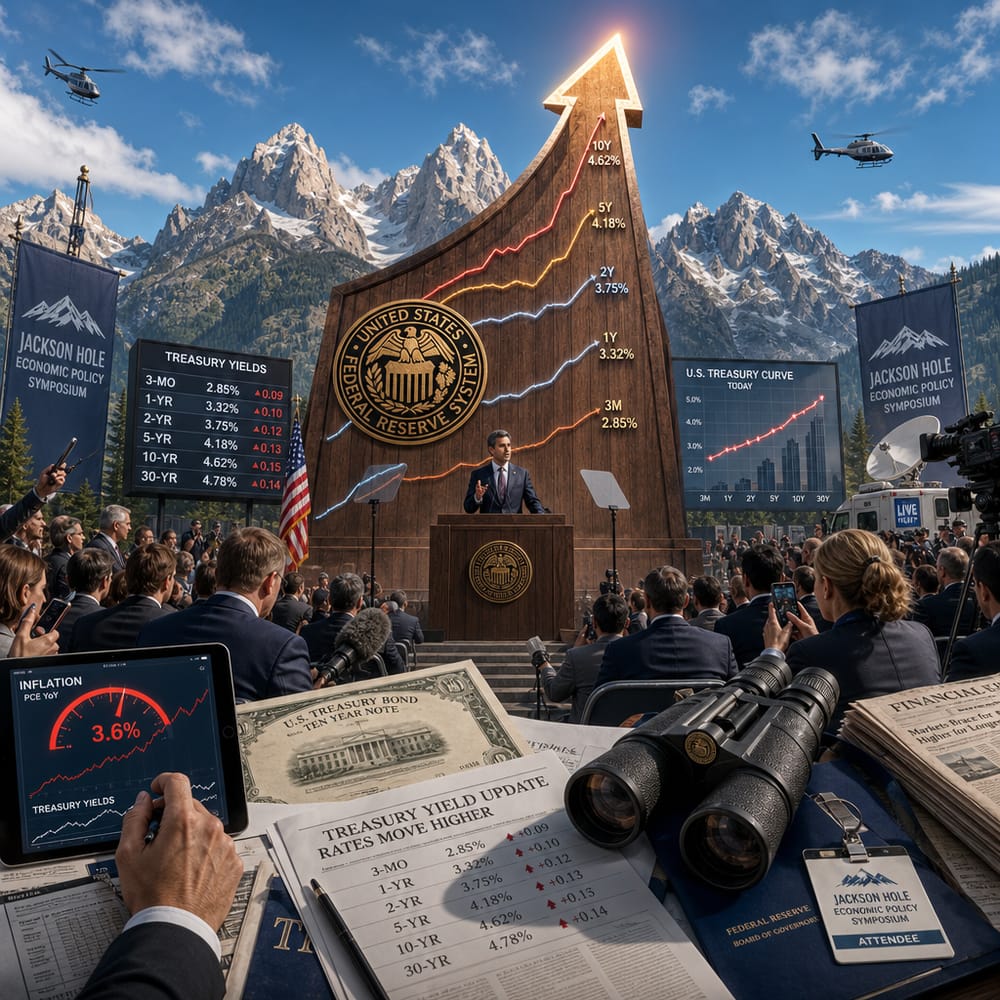
KEVIN WARSH'S JACKSON HOLE SPEECH: THE RATE HIKE RUMORS ARE SWIRLING
Let's face it: predicting what the Federal Reserve will do next with interest rates is like trying to predict the weather in the middle of El Niño. Just when you think you've got it figured out, the winds change, and you're left scrambling for cover. But here's the thing: every year, like clockwork, the world's top economists, finance ministers, and central bankers descend on Jackson Hole, Wyoming, for a powwow that's more about economic signals than ski slopes. And this year, Fed Chair Kevin Warsh's speech stirred up quite the storm.
So, what's the big deal with Warsh giving his two cents in the cowboy country? Well, for starters, this wasn't just any speech. Warsh tipped his hat to the elephant in the room—persistent inflation—and hinted that rate hikes might be in the cards. And in the world of finance, when the Fed sneezes, the markets brace themselves for a cold.
INFLATION: THE UNWANTED GUEST
Warsh didn't sugarcoat it. Inflation, he said, is concerning. And when the Fed boss starts throwing words like "concerning" around, you best pay attention. Inflation is like that unwanted guest who shows up at your party and refuses to leave. It's been hanging around, disrupting the good times, and Warsh’s comments suggest that its eviction might come in the form of higher interest rates.
But why does that matter? In simple terms, when the Fed hikes rates, borrowing gets pricier—everything from mortgages to credit card debt gets a little more painful. It’s a move designed to cool off spending, tame inflation, and bring things back into balance.
A NEW ERA OF FED COMMUNICATION
Warsh, however, is no ordinary Fed Chair. He's made it clear that this Fed is dialing back the crystal ball routine, where every speech is a peek at the rate future. This new approach leaves traders scratching their heads, trying to decipher the Fed’s next move. Imagine trying to solve a puzzle with half the pieces missing—that’s the market's new normal.
So what gives? Warsh's strategy means that markets will react more to economic data and less to Fed tea leaves. The days of relying on the Fed’s forward guidance might be gone, but that doesn’t stop investors from trying to read between the lines.
FED POLICY IMPLICATIONS AND MARKET REACTIONS
Now, what does all this mean for future Fed policy? First off, Warsh's hints could very well set the stage for a rate hike at the next Federal Open Market Committee (FOMC) meeting. The Fed's been in a dance with inflation, and the music might soon shift towards tighter monetary policy. Higher interest rates could pump the brakes on the economy to prevent things from overheating.
And if you think the market is going to take this lying down, think again. The bond market, for one, is likely to start adjusting to the idea of higher yields. U.S. Treasury yields, which are like the pulse of the financial world, might tick upward as investors demand better returns for the risk of holding onto bonds in a rising rate environment.
But it’s not all doom and gloom. Some sectors actually thrive on higher rates. Banks, for instance, can rake in more profits as the spread between what they earn on loans and what they pay on deposits widens. On the flip side, stocks that rely on cheap borrowing might feel the squeeze.
PLAYING THE WAITING GAME
So, investors, what’s your move? Warsh has given us a dose of reality, and the markets will need to adjust accordingly. Keep an eye on economic indicators like employment and inflation data as they’ll be the Fed’s guiding stars. And as the FOMC meeting looms, expect some market jitters.
Navigating these waters requires a nimble strategy. Diversification becomes even more crucial, as does a clear understanding of your risk tolerance. After all, the markets might be a wild ride, but with the right approach, you can weather the bumps.
In the end, Warsh’s Jackson Hole remarks are more than just words—they’re a signal of potential shifts in the economic landscape. So, keep your ear to the ground and be ready to adapt, because when it comes to Fed policy, the only constant is change.
This article is for informational purposes only and is not investment advice. Always do your own research or consult a licensed financial professional before making investment decisions.
© Copyright 2024. All Rights Reserved.
© Copyright 2024. All Rights Reserved.