

Walmart's Stock Plunge: A Deeper Look
Thursday, August 20, 2026
WALMART'S STOCK PLUNGE: A DEEPER LOOK
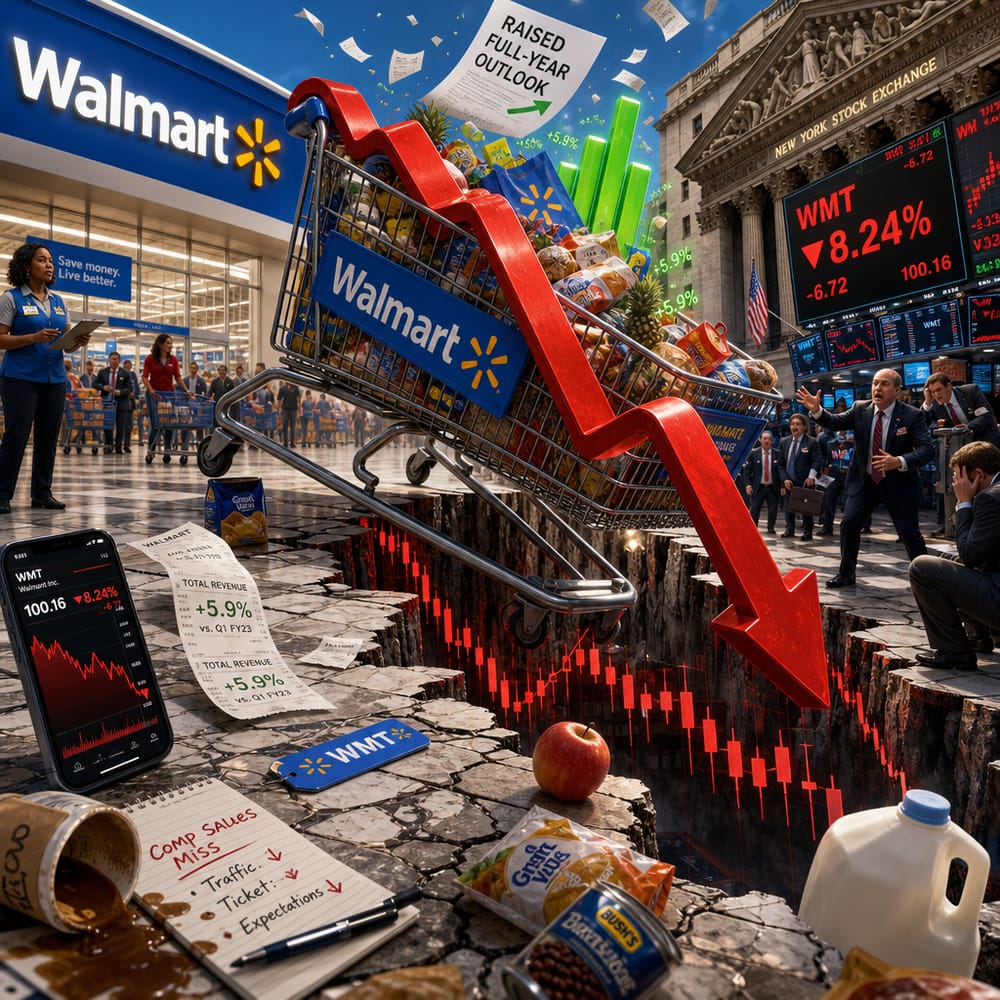
What do you call a retailer that posts solid earnings and still manages to spook investors into a stock slump? Apparently, you call it Walmart. This retail giant, often the St. Bernard of the stock market—big, reliable, and unlikely to surprise—took an unexpected tumble, seeing its shares drop by over 8%. This, despite flaunting a healthy 5.9% rise in its Q2 revenue and delivering a rosy forecast for the year. If you're scratching your head wondering how things went so topsy-turvy, you're not alone. Let's dive into the curious case of Walmart's stock plunge.
THE EARNINGS REPORT: A MIXED BAG
First, let's take stock of what Walmart threw on the table. Revenue ticked upwards by 5.9%, and e-commerce sales made hearts flutter with a 23% global climb. Not too shabby, right? The retailer even upped its full-year outlook, brushing off those pesky tariffs with a commendable refund. Yet, if you peek a bit closer at the fine print, not everything was hunky-dory. U.S. comparable sales, a key measure of health in retail, grew by only 2.6%, falling short of Wall Street's 3.5% expectation. Looks like the market was hoping for a touch more magic from the nation's top retailer.
WHY THE DROP?
The shortfall in comparable sales seemed to be the culprit that sent stocks spiraling. Wall Street analysts, those ever-fickle creatures, were miffed by what some called "one of the biggest misses in years." Investors had hoped for Walmart to not merely meet expectations but to wildly surpass them. Turns out, in the land of retail giants, even a minor slip can feel like a landslide. It’s akin to turning up for your championship game wearing mismatch socks. Technically, you’re there, but nobody’s going to let you hear the end of it.
THE INVESTOR ANGST
Now, let's talk investor sentiment. They’re a jittery bunch, our market players, and they’ve got reasons. While Walmart’s numbers were solid, the broader economic landscape is peppered with landmines. Rising Treasury yields have been casting a long shadow over the market, leaving investors jittery about the future. Higher yields often spell higher borrowing costs, making it pricier for consumers to whip out those credit cards and splurge. For a retailer like Walmart, which thrives on consumer spend, this could mean choppier waters ahead.
LOOKING AHEAD
Investors are also playing a game of “What’s Next?” with Walmart. With inflation peeking around corners like a mischievous child and the economy showing no signs of a smooth ride, there's a lot on the plate for retail forecasts. Walmart’s projected net sales growth of 3% to 3.75% for Q3 seems comforting, but will it be enough to quell investor nerves? This cautious optimism has not been enough to stave off fears of a potential slowdown, especially if inflation holds its ground and eats into consumer wallets.
THE WIDER CONTEXT
Adding to the drama, the overall stock market hasn’t exactly been a picnic. With the Dow diving alongside Walmart, and the S&P 500 and Nasdaq also not being their chipper selves, there’s an air of unease across the board. Rising oil prices, geopolitical tensions, and those pesky Treasury yields are creating a backdrop against which any negative news gets amplified.
FINAL THOUGHTS
So, what does this mean for you, the retail investor? While it might sound counterintuitive, dips like these can sometimes be the perfect buying opportunity for the long-term holder. If you believe in Walmart’s sturdy fundamentals and its knack for bouncing back, this stock hiccup could be your chance to grab some shares at a bargain. But remember, always do your homework. Stock markets, like life, are unpredictable, and the road ahead is probably as clear as a foggy morning in San Francisco.
In the end, Walmart’s stock saga is a textbook case of how the market’s expectations can sometimes be as volatile as a teenager’s mood swings. As always, the savvy investor would do well to keep an eye on the long game while navigating the twists and turns of day-to-day market fluctuations.
This article is for informational purposes only and is not investment advice. Always do your own research or consult a licensed financial professional before making investment decisions.
© Copyright 2024. All Rights Reserved.
© Copyright 2024. All Rights Reserved.