

Walmart's Q2 Earnings: A Mixed Bag
Saturday, August 22, 2026
WHY WALMART’S STOCK STUMBLED AFTER A GOOD SHOW
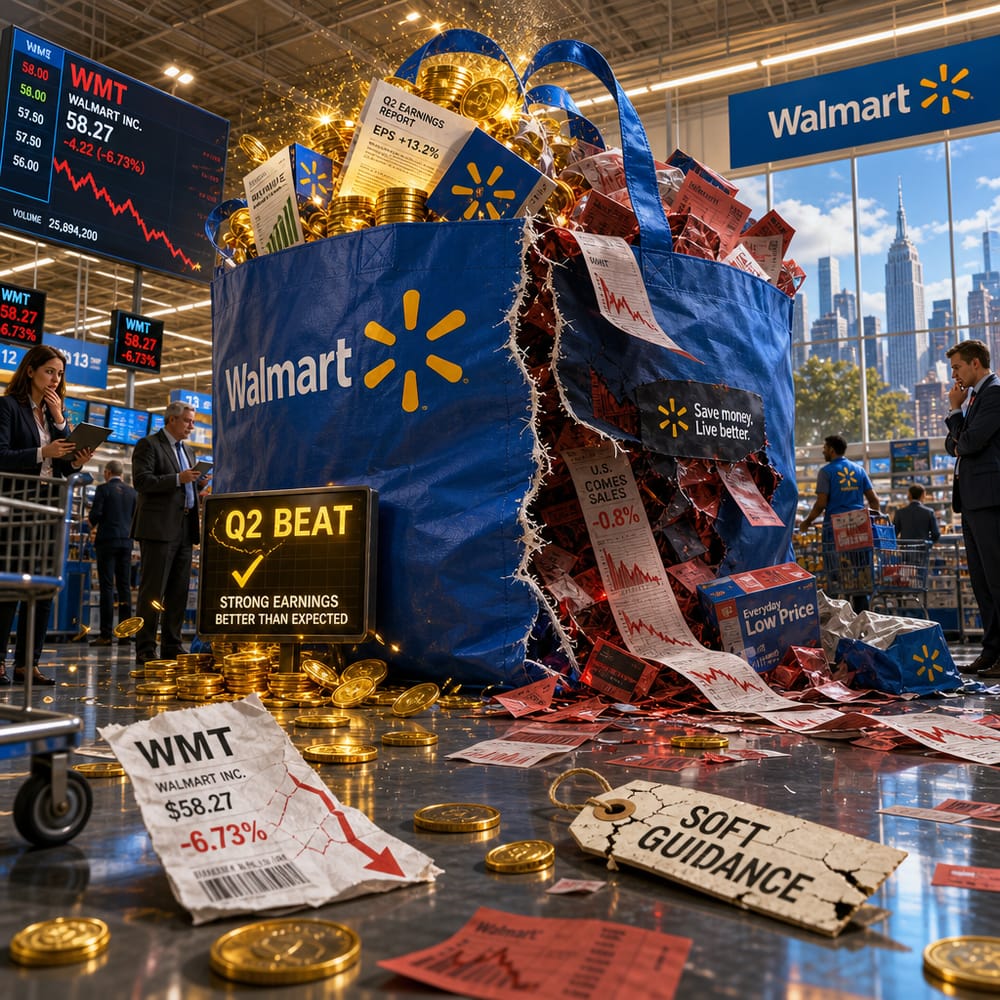
Let’s get one thing straight: if someone handed you a report card with mostly A’s and a few B’s, you’d probably expect a solid pat on the back, not a time-out in the corner. But in the high-stakes world of Wall Street, even golden child Walmart found itself in detention despite flexing its Q2 muscles with better-than-expected earnings.
So, what was the deal? Walmart didn't just show up; it brought home a hefty $6.4 billion in net income. And thanks to a $2.9 billion gift from Uncle Sam in the form of a tariff refund, the retail giant's financial books looked shinier than ever. Still, its stock took an unexpected nosedive, dropping over 9%. Here’s why Wall Street wasn’t celebrating with confetti.
THE STOCK DROP CONUNDRUM
Though Walmart’s earnings were something to write home about, it was U.S. sales growth—or, rather, the lack of it—that sent stocks spiraling. With a mere 2.6% growth in sales excluding fuel, down from 4.6% the previous year, it seems shoppers weren’t exactly opening their wallets wider. And when it comes to Walmart, slow sales growth raises eyebrows. After all, Walmart isn’t just any retailer; it’s the retail barometer for consumer spending across America. Just ask your neighborhood economist.
Analysts grumbled about Walmart’s “soft guidance,” which is just fancy lingo for saying, “We’re not expecting rainbows and unicorns in our next earnings report.” Wall Street doesn’t like soft anything, including forecasts. Walmart’s caution signaled potential turbulence ahead, thanks largely to those pesky higher gas prices taking a bite out of discretionary spending.
THE BIGGER PICTURE FOR RETAIL
This earnings report isn’t just a Walmart tale; it’s a narrative for the entire retail sector. In a country where consumer spending is the cornerstone of economic vitality, the retail industry is like a canary in a coal mine. If Walmart struggles, it hints that American consumers are clutching their purses a little tighter.
The slowdown in physical store sales implies a shift toward online shopping, but even e-commerce can't fully compensate when shoppers are pinching pennies. Higher fuel costs are one villain, but so are more affordable GLP-1 weight loss drugs, diverting dollars away from other purchases. As gas prices climb, Americans might just be prioritizing filling their tanks over filling their shopping carts.
ANALYSTS WEIGH IN
The analyst world has always been a mixed bag of optimism and caution. On one hand, Walmart’s robust online sales and tariff refund-induced price cuts could be a savior. But analysts are also wary about the future. With the constant ebb and flow of economic factors—from gas prices to interest rates—Walmart may face a rocky road ahead.
Some analysts suggest keeping an eye on Walmart’s ability to adapt. Will its price-cut strategy pay off in the long term? Can its online platform continue to capture a larger market share? These are the questions that make analysts bite their nails. What they don’t doubt, though, is Walmart’s resilience and its ability to pivot. After all, this isn’t Walmart’s first rodeo.
SO, WHAT'S NEXT?
The disconnect between Walmart’s earnings and stock performance serves as a reminder that numbers aren’t everything. When it comes to Wall Street, it’s all about expectations and future outlooks. While Walmart is far from a sinking ship, this bout of stock turbulence is a wake-up call for the retail sector at large. It’s a signal that the tides of consumer behavior are changing, and only those who adapt will keep sailing smoothly.
For the everyday investor scrolling through their phone, it might be tempting to jump ship when a stock takes a dive. But in the case of Walmart, it’s worth considering the company’s robust roots and enduring adaptability. After all, in the rollercoaster that is retail—and indeed the broader economy—Walmart still plays a starring role.
This article is for informational purposes only and is not investment advice. Always do your own research or consult a licensed financial professional before making investment decisions.
© Copyright 2024. All Rights Reserved.
© Copyright 2024. All Rights Reserved.