

Walmart's Post-Earnings Stock Reaction
Thursday, August 20, 2026
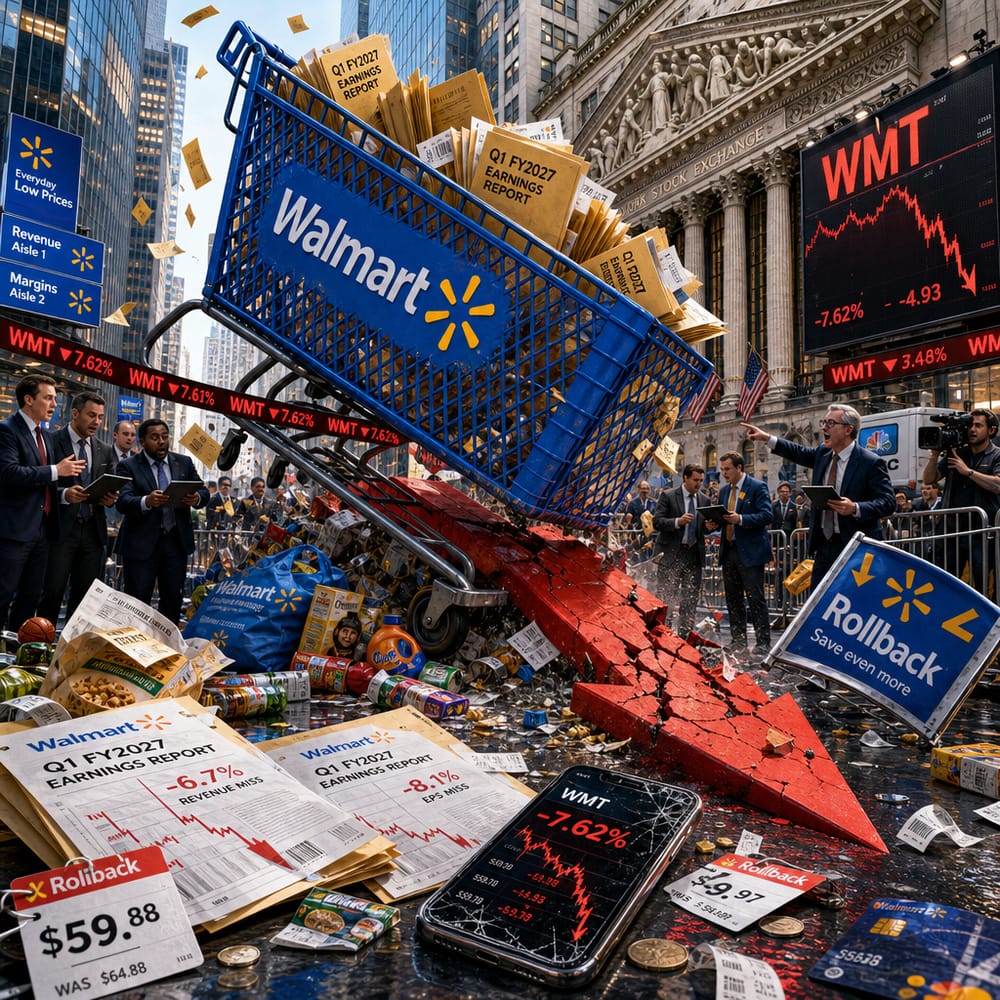
WALMART'S POST-EARNINGS STOCK SLIDE: WHAT'S REALLY BEHIND THE DROP?
Pop quiz: What happens when the world’s biggest retailer posts solid quarterly growth, raises its annual forecast, and still sees its stock tumble? You break out the financial detective hat and dig deeper. That’s exactly what happened to Walmart after its Q1 FY2027 earnings report. Investors, ready your magnifying glasses.
You might think an earnings beat and a sunshiny outlook would have shareholders breaking out the bubbly. Instead, Walmart's stock decided to play party pooper, dropping faster than an overripe avocado at a half-price sale. So, what gives?
THE ELEPHANT IN THE ROOM: GUIDANCE AND EXPECTATIONS
Walmart's quarterly sales climbed up, up, and away, posting a 5.9% increase with e-commerce sales jumping a whopping 23%. Not too shabby, right? But here’s the twist—despite the retailer hiking its full-year outlook, some investors seemed to be left wanting. Wall Street, always the greedy cousin at Thanksgiving, had set high expectations. While Walmart set the bar, analysts and market expectations had it doing the limbo beneath unwarranted expectations.
Remember, the market isn’t just a numbers game; it’s a mind game. Even though Walmart revised its annual sales growth outlook slightly upward to 4-5%, compared to its previous range of 3.5-4.5%, the whispers on Wall Street were of bigger leaps.
The conservative guidance, while practical, might have looked like a cautious grandma to some investors—safe but not exactly adrenaline-pumping.
HISTORICAL CONTEXT: THE GHOST OF EARNINGS PAST
Historically, Walmart’s stock has often been a steady ship sailing calm waters post-earnings. But even the steadiest vessels hit the occasional storm. Compared to past earnings calls, this dip was more pronounced, reminiscent of an overzealous rollercoaster that missed its braking point. Usually, a beat and raise would send stock prices happily marching upward, but this time, the confluence of cautious forward guidance and sky-high expectations hurled Walmart off its steady perch.
SECTOR ROTATION: SHOPPING AROUND
Another factor that could be weighing on Walmart is sector rotation. Investors sometimes play musical chairs with their money, moving from one sector to another faster than a toddler losing interest in a new toy. With recent volatility and excitement elsewhere, particularly in tech and energy, Walmart's appeal as a safe-haven stock might be losing some of its luster.
ANALYST INSIGHT: FUTURE IN FOCUS
So, what do the gurus on Wall Street think about Walmart's future performance? In short, they're mixed. Some analysts see the tariff refund from the U.S. government as a boon to keep prices low and attract more customers, especially as inflation pinches wallets. Plus, Walmart’s steady growth in e-commerce could continue to be a bright spot, a sign that the retail giant isn't just resting on its Supercenter laurels.
Others, however, raise a skeptical eyebrow at the health and wellness sector struggles, which saw a slight dip due to new drug price caps. They argue that while Walmart's core retail business remains strong, these headwinds could become a full-blown gust if not managed well.
THE BOTTOM LINE
In the end, Walmart's post-earnings slide is a testament to the volatility and unpredictability of the stock market. While the company’s fundamentals remain strong, the market’s fickle heart was not entirely wooed by steady growth and cautious optimism. So, should you scoop up Walmart stock while it's down or wait for clearer skies? It depends on your risk appetite and investment horizon.
But remember, in the stock market, as in life, things are rarely as simple as they seem. So, savvy investor, keep your eyes open and your strategy flexible, because in the financial world, today's downturn could be tomorrow's opportunity in disguise.
This article is for informational purposes only and is not investment advice. Always do your own research or consult a licensed financial professional before making investment decisions.
© Copyright 2024. All Rights Reserved.
© Copyright 2024. All Rights Reserved.